
Cyberattack on French Blood Bank: Hackers Change Freezer Temperature From -30°C to 110°C, Raising Patient Safety Concerns
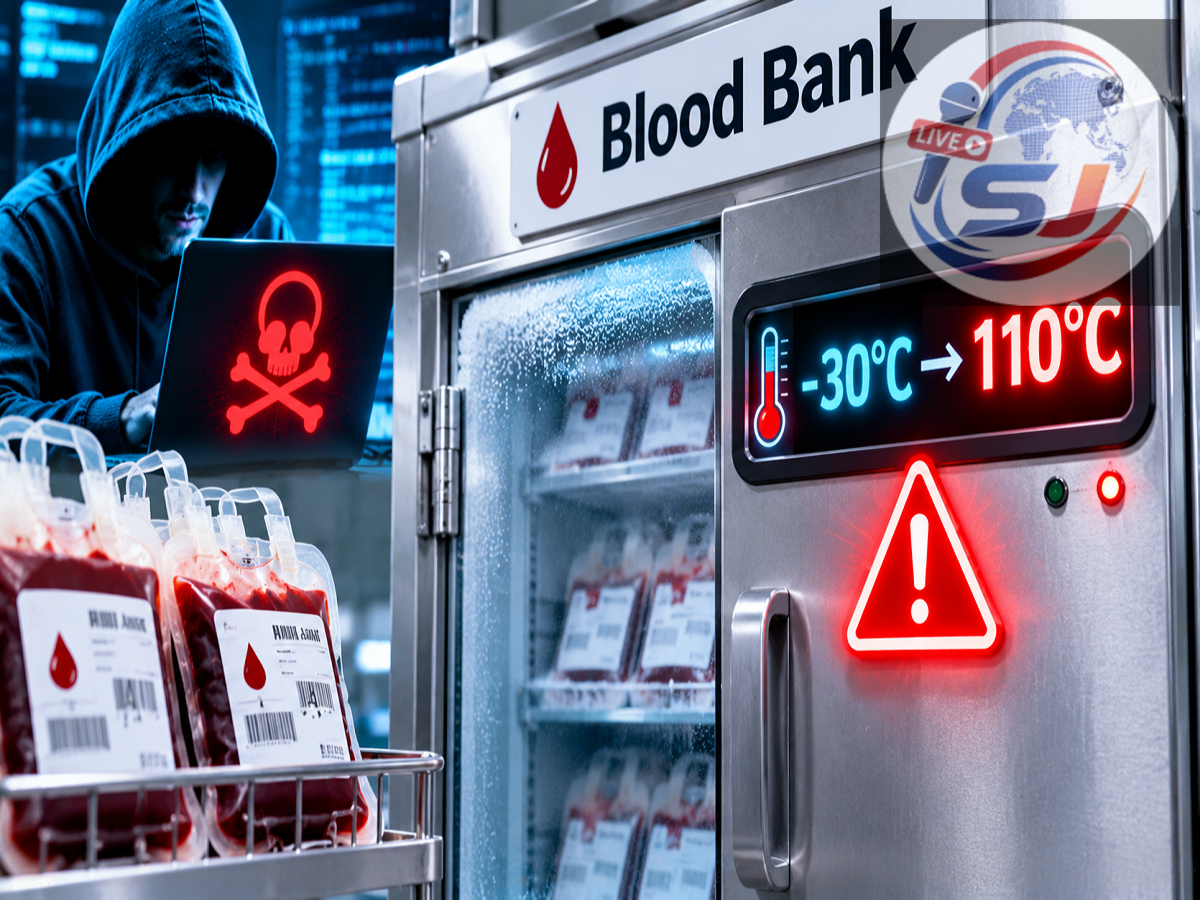
Blood Bank Cyberattack 2026: Cybercriminals are no longer limiting their attacks to stealing personal information, passwords or money. A reported cybersecurity incident in France has highlighted how hackers can potentially interfere with critical medical equipment and put patient safety at risk.
According to a Live Hindustan report published on November 4, 2026, attackers allegedly manipulated temperature settings in a refrigeration system used by France's national blood service, Établissement Français du Sang (EFS).
The incident reportedly involved cooling equipment maintained by a third-party service provider called Coolworld. The attackers allegedly changed a temperature setting from approximately -30°C to 110°C, raising serious concerns about the safety of blood plasma stored in affected refrigeration systems.
However, authorities reported no disruption to operations, and there was no confirmed information about damaged plasma, interrupted transfusions or patient injuries.
What Happened in the French Blood Bank Cyberattack?
The reported attack targeted refrigeration infrastructure associated with France's national blood service.
Blood banks depend on carefully controlled storage temperatures to preserve blood components and other medically sensitive materials.
According to the report, hackers allegedly gained access to systems associated with Coolworld, a company that provides refrigeration equipment and maintenance services to the blood service.
The attackers reportedly modified a temperature setting from around -30°C to 110°C.
Such a drastic change, if applied to actual storage conditions, could threaten the integrity of temperature-sensitive medical supplies.
It is important to distinguish between changing a system's temperature setting and confirming that the equipment physically reached that temperature.
The supplied report does not establish that the stored plasma reached 110°C.
Frozen Blood Plasma Was Among the Materials at Risk
Initial reports suggested that the affected refrigeration equipment contained blood donor samples being stored for safety testing.
However, further reporting indicated that frozen plasma intended for patient transfusions was also associated with the affected systems.
According to the Live Hindustan article, which cited reporting by Cybetatech and French newspaper Le Canard Enchaîné, facilities in the Bourgogne-Franche-Comté region were affected.
The French Health Ministry reportedly stated that the incident did not affect operations.
No confirmed details were provided about plasma being discarded or patients suffering harm.
Nevertheless, the incident raised concerns because blood products require carefully maintained storage conditions.
How Was the Temperature Manipulation Detected?
The suspicious activity reportedly came to light when an on-call technician noticed unusual temperature readings during the night.
The abnormal readings prompted a response from the technical team.
According to the report, the issue was identified early enough for personnel to intervene before operations were disrupted.
This highlights the importance of continuous monitoring and trained personnel in healthcare facilities.
Automated equipment may help maintain safe conditions, but independent monitoring and prompt human intervention can be equally important when something goes wrong.
The report did not specify the precise technical method used by the attackers or how they obtained access to the affected systems.
Why Is Temperature Control Important for Blood Plasma?
Blood plasma is the liquid component of blood and contains important proteins, including clotting factors.
Plasma products may be used in medical treatments, including certain bleeding emergencies and transfusion-related procedures.
Their safe storage depends on the product type and applicable medical standards.
Frozen plasma must be maintained within specified temperature conditions to preserve its quality and clinical suitability.
Unexpected temperature changes can create concerns about whether the product remains safe for use.
Medical facilities therefore rely on specialised freezers, temperature monitoring systems, alarms and documented storage procedures.
If a refrigeration system experiences an abnormal temperature excursion, trained personnel must assess the affected products according to established medical protocols.
A temperature-setting change alone does not establish that the stored products became unusable.
How Can a Cyberattack Affect Medical Refrigeration Systems?
Modern medical refrigeration equipment may use connected monitoring systems to help technicians manage temperatures, detect faults and respond to alarms.
These systems can improve efficiency, particularly when equipment is monitored remotely.
However, connectivity can also create cybersecurity exposure if access controls or software protections are inadequate.
An attacker who obtains unauthorised access to a connected control system might attempt to change settings, interfere with monitoring or disrupt equipment operation.
The possible consequences depend on the system's design and the protections in place.
For healthcare organisations, such incidents are especially concerning because the affected equipment may support time-sensitive medical services.
Third-Party Service Providers Can Create Additional Security Risks
One of the most significant aspects of the reported incident is the alleged involvement of a refrigeration maintenance provider.
Hospitals, laboratories and blood banks frequently rely on external companies to install, service and monitor specialised equipment.
These arrangements can involve remote technical access or connected maintenance platforms.
If a service provider's systems are compromised, attackers may potentially gain a route towards equipment used by its customers.
This type of exposure is commonly described as third-party or supply-chain cybersecurity risk.
However, the exact access route in the French incident has not been established in the supplied report.
The case illustrates why healthcare organisations need to consider not only their internal cybersecurity arrangements but also the security practices of vendors supporting essential equipment.
Cyberattacks Can Threaten More Than Personal Data
Many people associate hacking primarily with stolen passwords, leaked personal information, online banking fraud and ransomware.
However, attacks involving connected physical equipment can have broader consequences.
Depending on the target, a successful intrusion may interfere with services that depend on machinery, automated controls or monitoring systems.
In healthcare environments, such systems can support refrigeration, laboratory operations, medical devices and building infrastructure.
An attack on these systems could potentially create operational problems even if no personal information is stolen.
The reported French incident demonstrates why cybersecurity should also be considered a patient safety and operational resilience issue.
What Can Hospitals and Blood Banks Do to Reduce Cybersecurity Risks?
Healthcare organisations can reduce exposure by combining cybersecurity controls with reliable operational safeguards.
Some important protective measures include:
-
Restrict remote access: Allow only authorised personnel and approved service providers to access critical equipment.
-
Use strong authentication: Protect maintenance accounts with unique credentials and multifactor authentication wherever supported.
-
Separate critical systems: Keep sensitive equipment networks appropriately isolated from ordinary office and guest networks.
-
Maintain independent temperature monitoring: Use suitable alarms and monitoring arrangements capable of detecting abnormal conditions.
-
Install security updates: Apply manufacturer-approved software and firmware patches through controlled maintenance procedures.
-
Review vendor security: Assess how external contractors connect to and manage equipment.
-
Prepare emergency procedures: Maintain documented response plans for refrigeration failures, suspected tampering and other disruptions.
These are general cybersecurity and operational recommendations, not a description of the exact measures used in the French incident.
French Blood Bank Cyberattack: Key Details
| Particular | Reported Information |
|---|---|
| Country | France |
| Healthcare Organisation | Établissement Français du Sang (EFS) |
| Reported Service Provider | Coolworld |
| Affected Infrastructure | Refrigeration systems |
| Reported Temperature Setting Change | Approximately -30°C to 110°C |
| Region Mentioned | Bourgogne-Franche-Comté |
| Detection | Unusual readings noticed by an on-call technician |
| Operational Disruption | None reported by the French Health Ministry |
| Confirmed Patient Harm | None reported |
| Confirmed Plasma Spoilage | Not established in the supplied report |
Why This Incident Matters for Healthcare Cybersecurity
The incident highlights a challenge facing healthcare organisations as more essential equipment becomes connected to digital monitoring and maintenance platforms.
Connected technology can improve efficiency and help staff respond quickly to equipment problems.
At the same time, organisations must ensure that these systems cannot be easily manipulated by unauthorised users.
A strong cybersecurity programme should therefore include both information protection and safeguards for equipment that supports clinical operations.
Regular monitoring, controlled vendor access, independent alarms and clear emergency procedures can help reduce the consequences of attempted interference.
Final Thoughts
The reported cyberattack involving refrigeration systems used by France's national blood service has raised important questions about the security of connected healthcare equipment.
Attackers allegedly manipulated a temperature setting from approximately -30°C to 110°C, potentially threatening the safe storage of frozen blood plasma.
Fortunately, unusual readings were reportedly detected by an on-call technician, allowing personnel to respond before operations were disrupted.
There is no confirmed information in the supplied report indicating that plasma was damaged, transfusions were interrupted or patients were harmed.
The incident nevertheless serves as a reminder that cybersecurity threats can extend beyond financial losses and data theft to equipment supporting essential medical services.