
Cyber Fraud Alert 2026: Fake ₹30,000 Government Subsidy Message Goes Viral on WhatsApp, PIB Issues Warning
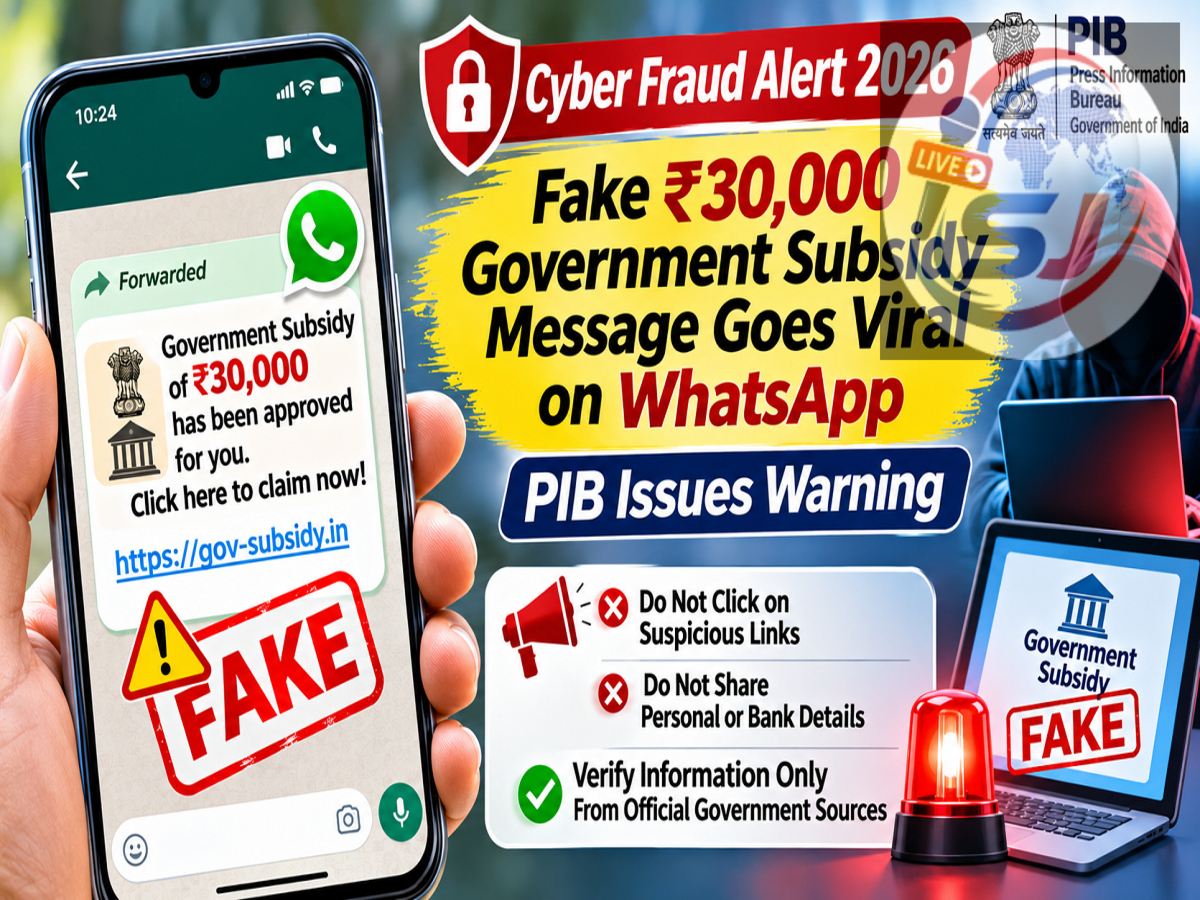
Cybercriminals are increasingly exploiting the popularity of government welfare schemes to target unsuspecting citizens. A fraudulent message circulating on WhatsApp and other social media platforms is now claiming that the central government is offering financial assistance of ₹30,000 to every Indian citizen.
The viral message encourages recipients to apply for the alleged financial benefit through an online registration link. However, the Press Information Bureau's fact-checking unit, PIB Fact Check, has reportedly dismissed the claim as completely false.
Citizens have been advised to avoid suspicious links, protect their confidential banking information and verify government-related announcements through authorised sources before taking any action.
Fake ₹30,000 Government Subsidy Scheme Targets Citizens
The misleading WhatsApp message claims that the central government has introduced a welfare initiative called the Government Universal Subsidy Program 2026.
According to the fraudulent message, every Indian citizen is eligible to receive ₹30,000 in financial assistance. Recipients are encouraged to complete an online application by visiting a website mentioned in the message.
Such messages are often designed to create excitement and urgency, encouraging individuals to submit personal information without verifying the authenticity of the offer.
Cybercriminals may use fake government scheme announcements to collect sensitive information, including Aadhaar details, mobile numbers, banking credentials and other personal data.
The government has clarified, according to the source report, that the viral claim regarding this universal subsidy programme is fake.
PIB Fact Check Exposes Fraudulent WhatsApp Message
The Press Information Bureau's fact-checking division reportedly shared a screenshot of the misleading message through its official account on social media platform X.
The agency categorised the claim as fake and warned citizens against applying through the suspicious registration link.
PIB has also advised individuals not to disclose confidential financial information or personal details on unfamiliar websites claiming to offer government subsidies.
Fraudsters frequently misuse the names of government departments, official-looking logos and welfare programmes to make their messages appear genuine.
Citizens should remember that the presence of a government logo or an official-looking application form does not establish the authenticity of a scheme.
How Fake Government Scheme Scams Can Put Your Money at Risk
Fraudulent subsidy messages can expose individuals to several financial and cybersecurity risks.
After opening a suspicious link, users may be redirected to a fake registration website requesting sensitive information under the pretext of verifying eligibility.
Such websites may attempt to collect Aadhaar numbers, PAN details, bank account information, debit card credentials or One-Time Passwords (OTPs).
In some cases, fraudsters may demand a registration or processing fee before releasing the promised financial assistance.
Providing confidential information or approving fraudulent payment requests could result in unauthorised transactions, identity theft and financial losses.
Warning Signs of a Fake Government Subsidy Message
| Suspicious Claim or Activity |
What Citizens Should Do |
|---|---|
| Guaranteed ₹30,000 financial assistance for everyone |
Verify through official government sources |
| Unknown registration website |
Avoid opening the link |
| Request for banking passwords or OTP |
Never disclose confidential credentials |
| Demand for advance registration fees |
Verify the applicable official rules |
| Pressure to apply immediately |
Avoid making rushed decisions |
| Request to forward messages to others |
Do not circulate unverified information |
| Unverified government logos or certificates |
Check the authenticity of the announcement |
| Request to install an unknown application |
Download apps only from trusted official sources |
How to Protect Yourself From Government Scheme Fraud
PIB has urged citizens to remain cautious while receiving messages related to government financial assistance, subsidies and welfare benefits.
Following basic cybersecurity practices can help reduce the risk of becoming a victim of online fraud.
-
Never click on suspicious links received through WhatsApp, SMS, email or social media.
-
Do not share banking passwords, debit card PINs, UPI PINs or OTPs with unknown individuals.
-
Verify government scheme announcements through official websites.
-
Avoid downloading applications from unfamiliar links.
-
Never approve an unknown UPI payment request to receive a subsidy.
-
Do not pay registration charges without confirming their legitimacy.
-
Avoid forwarding misleading messages to friends and family members.
-
Report suspicious accounts, websites and messages to the appropriate authorities.
Remember that entering a UPI PIN authorises a payment from your account. It is not required simply to receive money.
How to Verify Whether a Government Scheme Is Genuine
Individuals seeking information about government welfare programmes should rely on authorised government platforms rather than forwarded social media messages.
The following official platforms can help citizens verify scheme-related information:
| Official Platform |
Website |
|---|---|
| Government of India National Portal |
|
| Press Information Bureau |
|
| MyScheme Portal |
|
| National Cyber Crime Reporting Portal |
|
| Sanchar Saathi Portal |
The MyScheme portal helps individuals discover government welfare programmes and understand their eligibility criteria, required documents and application procedures.
What to Do If You Become a Victim of Cyber Fraud
Individuals who have accidentally shared confidential information or lost money through a fraudulent government subsidy link should take immediate action.
Contact your bank and request appropriate measures to secure the affected account. Financial cyber fraud should also be reported immediately through the national cybercrime helpline at 1930.
Victims can submit an online complaint through the National Cyber Crime Reporting Portal at www.cybercrime.gov.in.
Preserve screenshots of suspicious messages, transaction records, website links and other relevant evidence, as these may assist authorities during the investigation.
Suspicious fraud-related communications received through calls, SMS or WhatsApp can also be reported through the Chakshu facility on the Sanchar Saathi portal.
Government Subsidy Scam: Verify Before You Apply
The viral claim promising ₹30,000 to every Indian citizen under the alleged Government Universal Subsidy Program 2026 has been identified as fake in the reported PIB clarification.
Citizens should avoid responding to such messages or providing confidential information in exchange for promised financial benefits.
Staying informed, verifying announcements through official government channels and following essential cybersecurity precautions can help protect both personal information and hard-earned savings.