
Cyber Fraud Alert 2026: DoT Warns Against Fake Money Requests From Friends' Numbers, Shares Safety Tips
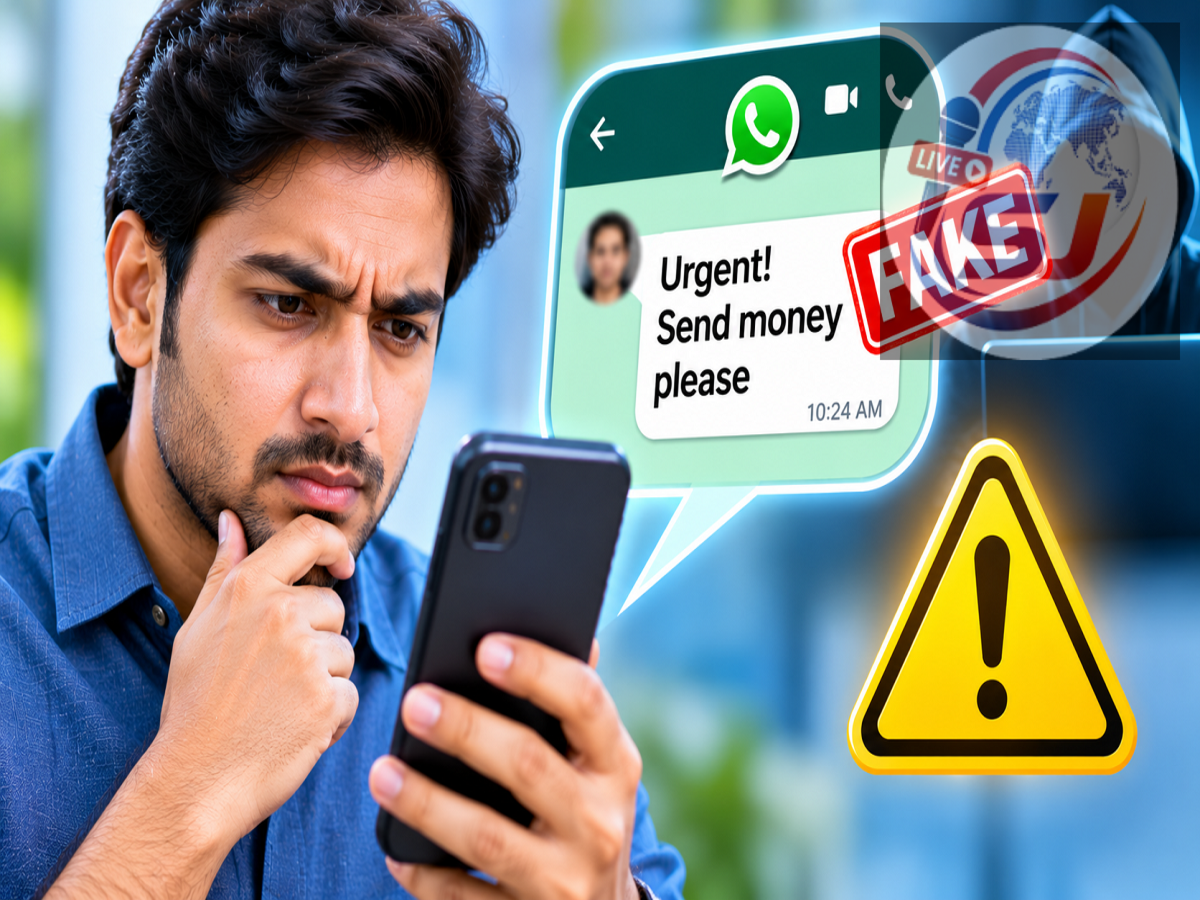
Cyber Fraud Alert 2026: The Department of Telecommunications (DoT), Government of India, has issued an important cybersecurity advisory warning mobile phone users about fraudulent messages requesting money from familiar phone numbers. The department has advised people to verify unexpected financial requests directly with the person concerned before transferring any money.
In its latest public awareness message, DoT highlighted that receiving a payment request from a friend's or relative's phone number does not automatically mean the message is genuine. Cybercriminals may exploit compromised messaging accounts, stolen devices or other deceptive techniques to impersonate trusted contacts and convince people to transfer money.
The department has also advised users to act quickly if suspicious messages are being circulated from their own phone numbers or messaging accounts. Informing friends and relatives immediately can help prevent further financial losses.
The advisory forms part of the government's broader cyber awareness efforts associated with the Sanchar Saathi initiative, which encourages citizens to remain alert to telecom-related fraud and suspicious communications.
DoT Cyber Safety Advisory 2026: Important Information
| Particulars | Details |
|---|---|
| Issuing Authority | Department of Telecommunications (DoT) |
| Government | Government of India |
| Main Warning | Fraudulent money requests from familiar numbers |
| Common Risk | Impersonation of friends or relatives |
| Recommended Action | Verify requests through a direct phone call |
| If Your Account Is Misused | Immediately alert your contacts |
| Telecom Fraud Reporting | Sanchar Saathi – Chakshu |
| Cybercrime Reporting Portal | cybercrime.gov.in |
| Cyber Financial Fraud Helpline | 1930 |
DoT Warns: Do Not Trust Every Money Request From a Known Number
The Department of Telecommunications has urged mobile users to exercise caution when receiving unexpected requests for financial assistance.
A message may appear to come from a close friend, family member or colleague, making the recipient more likely to respond without questioning its authenticity.
Fraudsters often rely on this familiarity to create a false sense of trust.
For example, a message may claim that the sender urgently needs money for a medical emergency, travel problem or unexpected financial difficulty.
The recipient may be asked to transfer funds immediately through UPI, internet banking or another digital payment method.
However, the person whose number appears in the message may have no knowledge of the request.
DoT's advisory recommends a simple precaution: contact the person directly and confirm the request before sending money.
How Do Fraudsters Send Messages From Familiar Numbers?
There are several ways in which criminals may impersonate trusted contacts.
One possible method involves gaining unauthorised access to a person's messaging account.
If criminals take control of an account, they may send fraudulent messages to people in the account holder's contact list.
Another possibility involves a stolen or compromised mobile device.
Fraudsters may also create fake profiles using familiar names and photographs or use deceptive sender information to make communications appear trustworthy.
In some cases, a criminal may contact the victim from a different number while pretending to be someone they know.
The precise technique varies, and receiving a suspicious message does not necessarily mean that the actual phone number or SIM card has been compromised.
Nevertheless, users should treat unexpected payment requests with caution, even when the sender appears familiar.
Received an Urgent Money Request? Follow These Safety Steps
DoT has emphasised the importance of verifying financial requests before making payments.
People who receive unexpected messages asking for money should follow these precautions:
1. Call the Person Directly
Instead of immediately responding to the message, contact the friend or relative through a trusted phone number already saved in your contacts.
2. Confirm the Reason for the Request
Ask the person whether they genuinely need financial assistance and verify the circumstances described in the message.
3. Avoid Acting Under Pressure
Fraudsters may create a sense of urgency by claiming that money must be transferred within minutes.
4. Check Payment Details Carefully
If the request is genuine, verify the recipient's name, UPI ID and other payment information before authorising a transaction.
5. Never Share Confidential Banking Information
Do not disclose OTPs, UPI PINs, passwords or other sensitive credentials to anyone requesting financial assistance.
These precautions can reduce the risk of losing money through impersonation-based fraud.
What If Fraudulent Messages Are Being Sent From Your Number?
The Department of Telecommunications has also addressed situations in which suspicious messages are being circulated using someone's phone number or messaging identity.
If friends or relatives inform you that they have received unusual money requests appearing to come from you, immediate action is important.
First, notify your contacts that the messages are suspicious and that they should not transfer money or share personal information.
Next, check whether your messaging accounts and mobile device are functioning normally.
If you suspect unauthorised account access, follow the relevant application's account recovery and security procedures.
Users should also review connected devices and active sessions, remove unfamiliar access where possible and strengthen their account security.
Enabling two-step verification or other supported security features can provide additional protection.
If there are indications of SIM misuse or unauthorised telecom activity, contact the mobile service provider for assistance.
WhatsApp and Other Messaging Apps: Why Extra Caution Is Necessary
Messaging applications have become an important part of everyday communication in India.
People regularly use them to exchange personal messages, share documents and coordinate financial transactions.
This familiarity can also create opportunities for criminals.
A fraudulent request sent through a compromised messaging account may appear more convincing than a message from an unknown number.
Users should therefore avoid assuming that a familiar profile picture, saved contact name or existing conversation history guarantees that a new message is authentic.
A direct phone conversation using a trusted number can help establish whether the person actually made the request.
If the person denies sending the message, recipients should avoid interacting further with the suspicious request and report the incident through the appropriate channels.
How to Report Suspicious Communications Through Sanchar Saathi
The Department of Telecommunications operates the Sanchar Saathi platform to provide citizens with telecom-related safety and security services.
One of its features, Chakshu, allows users to report suspected fraudulent communications received through supported channels.
People can visit the official website at https://sancharsaathi.gov.in/ to access available reporting services.
The general process involves selecting the relevant reporting option, entering the required details and submitting information about the suspicious communication.
Users may need to provide the sender's number, the communication method, the date and other supporting information.
The portal's instructions should be followed carefully.
Chakshu is primarily intended for reporting suspected fraudulent communications. If money has already been lost, victims should use the appropriate cybercrime reporting channels without delay.
Lost Money to a Cyber Scam? Call 1930 Immediately
People who have already transferred money to a suspected fraudster should act quickly.
India's national cyber financial fraud reporting helpline is 1930.
Victims can also register complaints through the National Cyber Crime Reporting Portal at https://cybercrime.gov.in/.
When reporting an incident, it is useful to keep the transaction reference number, payment details, screenshots of messages and other relevant records available.
Victims should also notify their bank or payment service provider as soon as possible.
Prompt reporting may improve the chances of authorities and financial institutions taking timely action, although recovery of lost funds is not guaranteed.
Cyber Safety Tips to Protect Friends and Family
Cybersecurity awareness becomes more effective when people share important warnings with those around them.
Families can establish simple verification habits for unexpected financial requests.
For example, relatives may agree to confirm unusual payment requests through a phone call before transferring money.
Users should also avoid clicking suspicious links, installing applications from unknown sources or sharing account verification codes.
Keeping smartphones and messaging applications updated can help reduce exposure to known security vulnerabilities.
Regularly reviewing account security settings and connected devices is another useful precaution.
Most importantly, users should inform their contacts immediately if they believe their messaging identity has been misused.
DoT Cyber Fraud Advisory 2026: Important Reminder for Mobile Users
The latest warning from the Department of Telecommunications highlights a common weakness exploited by cybercriminals: people's willingness to trust messages that appear to come from someone they know.
A familiar phone number or messaging profile should not be treated as sufficient proof that a financial request is genuine.
Before transferring money, users should independently verify the request with the person concerned.
Similarly, anyone who discovers that suspicious payment messages are being circulated in their name should alert friends and relatives immediately and secure the affected accounts.
Citizens can report suspected fraudulent communications through Sanchar Saathi and use the national cybercrime reporting system if they become victims of financial fraud.
Source Credit: Department of Telecommunications (DoT), Government of India — Official cybersecurity awareness advisory published on X (@DoT_India). View Original DoT Advisory. Additional public safety resources: Sanchar Saathi and National Cyber Crime Reporting Portal.