
CNAP New Rule From November 1: Unknown Callers' Names to Appear on Your Phone, Know How It Works
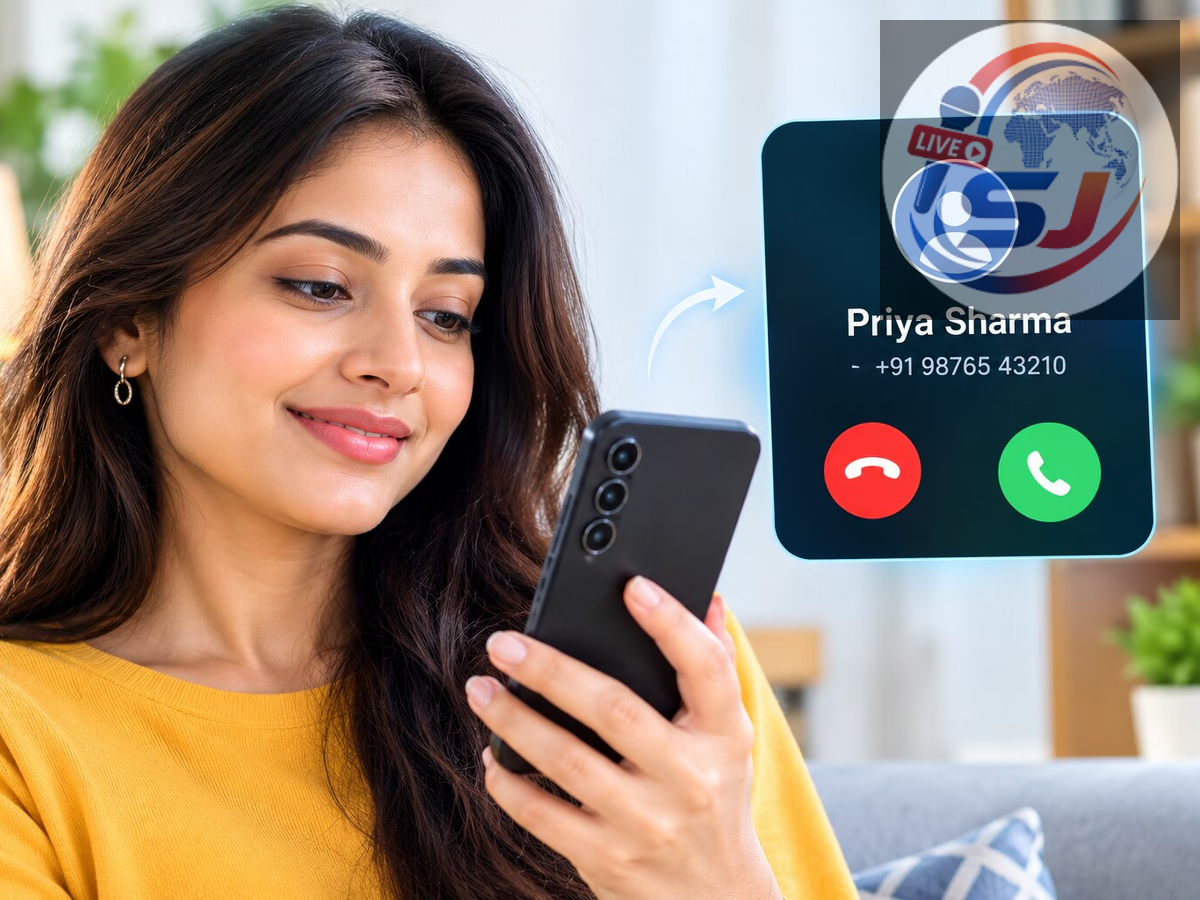
CNAP Service India 2026: Identifying unknown callers could soon become easier for millions of mobile users in India. Telecom operators are preparing to introduce the Calling Name Presentation (CNAP) service from November 1, 2026, allowing users to see the registered name of a caller directly on their mobile screens.
According to a Live Hindustan report published on October 30, 2026, the Department of Telecommunications (DoT) has directed telecom companies to begin implementing the service on supported 4G and newer networks.
The biggest advantage is that users may no longer need a third-party application such as Truecaller simply to identify the registered name associated with an unknown mobile number.
However, CNAP will not automatically verify whether a caller is trustworthy or prevent all fraudulent calls.
What Is CNAP and How Does It Work?
CNAP stands for Calling Name Presentation. It is a telecom network-based service designed to display the registered name associated with an incoming phone number.
Currently, when someone receives a call from an unsaved number, the phone generally displays only the number unless another caller identification service is available.
With CNAP, the telecom network will be able to provide a caller name based on the subscriber information maintained by the operator.
For example, suppose a phone number is registered under the name Rahul Sharma.
When a person receives a call from that number, the screen may display Rahul Sharma instead of showing only the digits.
The name is expected to come from the telecom operator's Know Your Customer (KYC) records.
Because the system operates through supported telecom networks, a separate caller identification application or mobile internet connection should not be necessary for the basic service.
CNAP Launch Date: When Will the Service Start in India?
According to the report, the DoT issued instructions on October 13, 2026, setting November 1, 2026, as the starting date for CNAP implementation.
The rollout is expected to begin on supported 4G and 5G networks.
Major telecom operators covered by the implementation plans include Reliance Jio, Bharti Airtel, Vodafone Idea and BSNL.
However, the November 1 starting date should not be interpreted as a guarantee that every mobile user will receive CNAP immediately.
The actual availability of the service may depend on telecom network readiness, handset compatibility and the phased implementation process.
Decisions concerning older 2G and 3G networks may be taken separately.
CNAP vs Truecaller: What Is the Difference?
Many smartphone users currently rely on Truecaller or similar applications to identify unknown callers.
CNAP aims to provide basic caller name identification directly through telecom networks.
However, the two services work differently.
| Feature |
CNAP |
Truecaller |
|---|---|---|
| Main purpose |
Display registered caller name |
Caller identification and spam protection |
| Name information |
Telecom subscriber records |
App database and other identification sources |
| Separate app required |
Not expected for supported devices |
Generally required for its app-based features |
| Internet required |
Not expected for basic network-based name display |
Some features require connectivity |
| Spam identification |
Not its primary function |
Offers spam detection and reporting |
| Call blocking |
Not the main CNAP feature |
Provides blocking options |
CNAP may reduce the need for third-party applications when users only want to know the registered name behind an unknown number.
However, it does not necessarily replace additional services such as spam reporting, call blocking or community-based fraud warnings.
Will CNAP Work Automatically on Your Phone?
CNAP is planned as a network-supported default service.
This means eligible users should not ordinarily need to register separately or download a dedicated application.
However, the feature will require technical compatibility between the telecom operator's network and the receiving device.
If your smartphone already supports the necessary functionality and your telecom operator has enabled CNAP, the caller name may appear automatically.
Users should not install unofficial applications claiming to activate CNAP before their telecom operator supports it.
Such applications may expose personal information or create security risks.
What Happens if a Number Is Already Saved in Your Contacts?
If a caller's phone number is already saved in your contact list, the name stored on your phone will generally take priority.
For example, if you saved a number as "Office Manager," that name may continue to appear when the person calls.
CNAP is primarily intended to improve identification when an incoming number is not saved in the recipient's contacts.
The exact display behaviour may depend on the smartphone and network implementation.
Which Name Will CNAP Display?
An important point is that CNAP identifies the registered subscriber associated with the phone number.
It does not necessarily identify the individual physically using the phone.
Suppose a SIM card is registered in a father's name but is being used by his son.
In that situation, CNAP may display the father's registered name.
Similarly, if the telecom operator's KYC record contains an outdated name or spelling error, the information shown through CNAP may also be inaccurate.
This makes the accuracy of subscriber records important for the service's effectiveness.
Will Businesses Be Able to Display Their Company Names?
According to the report, separate provisions are expected for business callers.
Eligible businesses may be able to use a verified trade name or registered business identity instead of an individual's name, subject to the applicable verification requirements.
The report refers to names supported by trademark or GST registration records.
For example, a verified business number may display an approved company or trade name when calling customers.
However, business name presentation will depend on the relevant rules and verification procedures.
A name appearing on the screen should not automatically be treated as proof that the call is genuine.
Can CNAP Stop Spam and Fraud Calls?
CNAP may help users identify unknown callers, but it is not a complete solution to spam or cyber fraud.
Fraudsters can still make calls using numbers registered under particular names.
They may also impersonate bank employees, government officials or representatives of well-known companies.
For example, someone claiming to be a bank officer may call from a number registered in an unrelated person's name.
CNAP could help reveal that registered name, but it cannot independently establish whether the caller's claims are true.
Users should continue following basic security precautions.
Never disclose OTPs, UPI PINs, banking passwords or other confidential information during an unexpected phone call.
If someone claims to represent a bank or government department, verify the claim through an official contact number obtained independently.
Suspected financial cyber fraud can be reported through the national cybercrime helpline 1930 or the official National Cyber Crime Reporting Portal.
Can You Hide Your Name From CNAP?
The report states that users who have the authorised Calling Line Identification Restriction (CLIR) service will not have their names displayed through CNAP in the same way as ordinary callers.
CLIR is a telecom facility associated with restricting the presentation of caller identity.
However, this should not be confused with a general CNAP privacy toggle available to all mobile users.
The report does not establish that every subscriber will be able to switch off CNAP name presentation independently.
Users with questions about caller identification privacy should contact their telecom operator and check the applicable service rules.
What Will Happen With International Calls?
International calls are expected to be handled differently.
According to the report, unknown calls originating from outside India may display an International Call indication rather than a name retrieved through the domestic CNAP system.
If an international number is already saved in the recipient's contacts, the phone may continue to display the locally saved contact name.
The exact presentation may depend on network capabilities and the handset.
Users should remain cautious about unfamiliar international numbers, particularly calls requesting financial information or urgent payments.
Why Is CNAP Important for Indian Mobile Users?
The proposed service could offer several practical benefits.
First, it may make unknown calls easier to identify without requiring users to install a separate caller identification application.
Second, it could help users make more informed decisions about whether to answer an incoming call.
Third, it may improve transparency around the registered identity associated with mobile numbers.
The feature could be particularly useful for people who frequently receive calls from unfamiliar numbers, including senior citizens and individuals who are less comfortable using additional mobile applications.
However, its usefulness will depend heavily on accurate KYC records, compatible networks and consistent implementation.
Will CNAP Be Available on Every Smartphone From November 1?
Not necessarily.
Although November 1, 2026, has been reported as the implementation starting date, a nationwide service rollout can take time.
Some users may receive the feature earlier than others.
Older devices or networks may not support the required functionality immediately.
Telecom operators may also need to complete technical testing and integration before providing the service consistently.
Therefore, users should wait for information from their mobile service provider rather than assuming the feature is available across all devices on the launch date.
CNAP India 2026: Final Update
India's proposed Calling Name Presentation service could change how users identify unknown incoming calls.
The service is designed to show the registered caller name using telecom operator records, without requiring a separate third-party caller identification application.
The reported rollout begins on November 1, 2026, with supported 4G and 5G networks expected to be included initially.
The key takeaway: CNAP may make unknown callers easier to identify, but the displayed name reflects subscriber records and is not proof that the caller is trustworthy. Users should continue protecting their banking information and remain alert to impersonation scams.