
Bharat ABIS: UIDAI-Linked Researchers Develop New Tool to Detect and Prevent Duplicate Aadhaar Enrolments
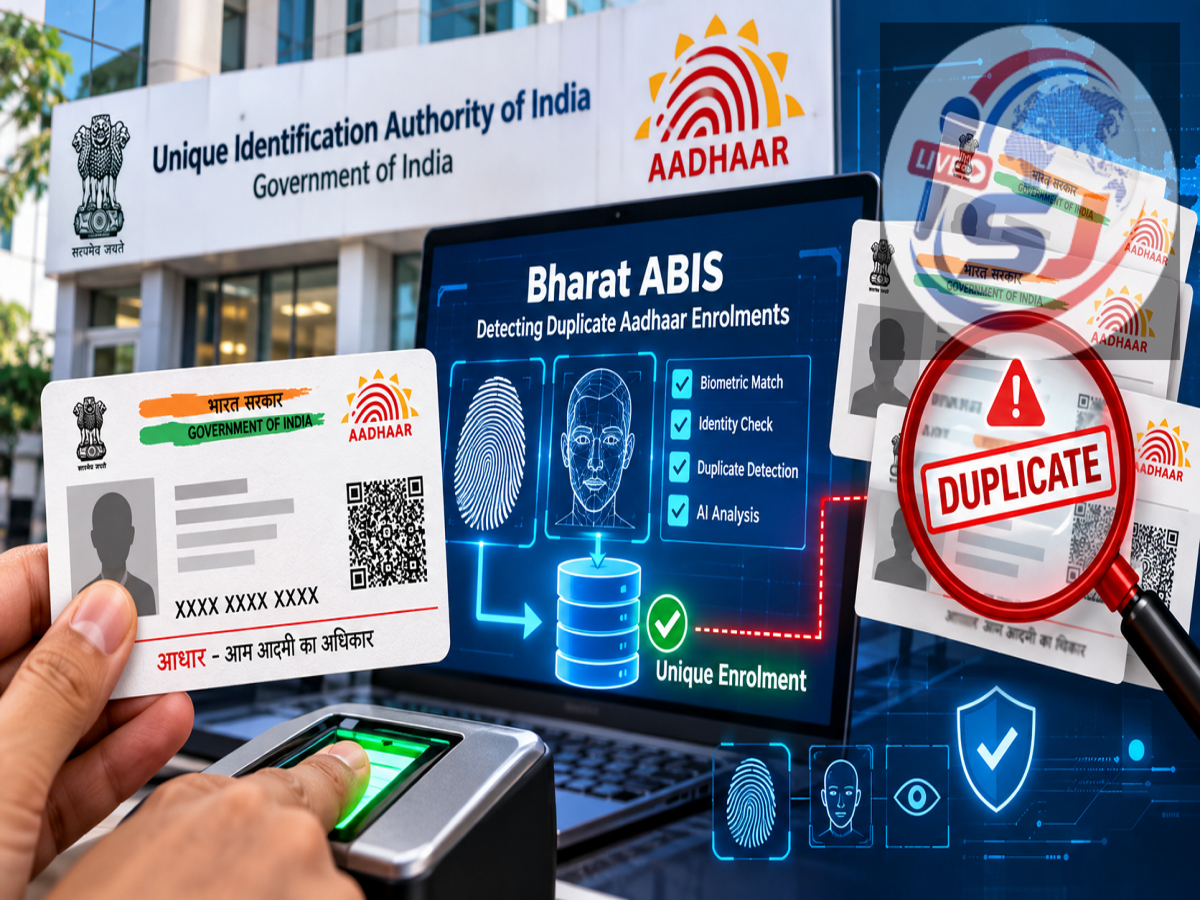
A new technology called Bharat ABIS has been developed to strengthen the process of identifying potential duplicate Aadhaar enrolments. According to the supplied report, researchers associated with the Unique Identification Authority of India (UIDAI) have developed the tool with a particular focus on preventing individuals from obtaining duplicate Aadhaar identities.
Aadhaar plays an important role in identity verification across India, making the accuracy of enrolment records particularly significant. The new tool is intended to strengthen checks for possible duplication by using biometric identification technology.
However, Bharat ABIS should not be interpreted as a tool that automatically cancels an Aadhaar card or guarantees that every duplicate record will immediately disappear. Its role, according to the supplied information, is focused on helping identify and prevent potential duplicate Aadhaar enrolments.
What Is Bharat ABIS?
Bharat ABIS is a technology developed by researchers associated with UIDAI to address the problem of duplicate Aadhaar enrolments.
The term ABIS generally refers to an Automated Biometric Identification System.
Such a system is designed around biometric identification, allowing identity-related information to be compared for possible matches.
In the Aadhaar context described by the supplied report, Bharat ABIS is intended to help determine whether an individual attempting to enrol may already have an Aadhaar-linked biometric record.
The objective is to strengthen the uniqueness of Aadhaar enrolment and reduce the possibility of duplicate identities entering the system.
Why Is Duplicate Aadhaar Enrolment a Concern?
Aadhaar is intended to provide a unique identity number to an individual.
If the same person manages to create multiple identity records, it can undermine the objective of maintaining a unique identification system.
Duplicate or suspicious records can also create problems in identity verification and in systems that depend on accurate beneficiary identification.
According to the supplied information, Bharat ABIS has been designed specifically with this challenge in mind.
Instead of relying only on basic demographic information, biometric identification can provide another mechanism for detecting whether an enrolment may correspond to a person who already exists in the database.
How Could Bharat ABIS Work?
The supplied report describes Bharat ABIS as a tool intended to prevent duplicate Aadhaar enrolments.
Its underlying approach is based on biometric identification.
When an individual goes through Aadhaar enrolment, biometric information can be checked against existing records to determine whether a potentially matching identity is already present.
If the system detects a possible match, the record can be flagged for appropriate handling under the applicable process.
This kind of matching is important because names, addresses and other demographic information can sometimes be entered differently. Biometric characteristics provide an additional way to compare identities.
The supplied excerpt, however, does not provide detailed technical specifications for Bharat ABIS, including its matching algorithms, accuracy rates, biometric modalities, deployment scale or processing architecture. Those details should therefore not be assumed without additional official information.
Will Bharat ABIS Issue Aadhaar Cards?
No such function is established by the supplied information.
Bharat ABIS is described as a technology for helping prevent duplicate Aadhaar enrolments rather than as a separate Aadhaar-issuing service for consumers.
People should therefore not interpret references to Bharat ABIS as meaning that they need to apply for a new Aadhaar card through a separate platform.
The key purpose highlighted in the supplied report is duplicate detection and prevention.
Does This Mean Existing Aadhaar Cards Will Be Cancelled?
The supplied excerpt does not say that existing Aadhaar cards will automatically be cancelled because of the introduction of Bharat ABIS.
That distinction is important.
A technology capable of identifying potential duplicate enrolments is different from an administrative decision to deactivate or cancel an Aadhaar number.
The supplied information does not provide a procedure for cancellation, notification, appeal or re-verification of an existing Aadhaar record.
Therefore, Aadhaar holders should not assume that the launch or development of Bharat ABIS means their existing Aadhaar number needs to be replaced.
Why Biometrics Matter for Aadhaar Uniqueness
Biometric information can play an important role in identifying possible duplication because demographic information alone may not always be sufficient to distinguish individuals.
People can have similar names, and addresses or spellings can change.
A biometric identification system can compare biometric characteristics to search for possible matches with existing records.
For a large identity system, this can provide an important additional check during enrolment.
Bharat ABIS is being presented in the supplied report as a technology intended to strengthen this aspect of Aadhaar.
What Does This Mean for Aadhaar Holders?
For ordinary Aadhaar holders, the development should primarily be understood as a backend identity-verification and duplicate-detection measure, based on the information supplied.
The excerpt does not state that existing users need to install an app, download software, pay a fee or complete a new registration specifically for Bharat ABIS.
Consumers should therefore be cautious if they receive unsolicited messages claiming that Bharat ABIS requires them to share an OTP, banking details or other sensitive information.
Any genuine Aadhaar-related requirement should be verified through authorised UIDAI channels.
Beware of Fraud Using Aadhaar Update Claims
Major Aadhaar-related developments can sometimes be used as a pretext for phishing and other scams.
A fraudster may claim that an Aadhaar number is about to be blocked or that immediate verification is required.
Users should avoid sharing sensitive credentials simply because someone claims to represent an Aadhaar-related service.
In particular, people should be careful with unsolicited links or messages requesting personal or financial information.
The development of a duplicate-detection technology does not, based on the supplied excerpt, create a requirement for every Aadhaar holder to complete a new online verification.
Bharat ABIS Could Strengthen Duplicate Detection
The significance of Bharat ABIS lies in its stated objective: strengthening the ability to detect and prevent possible duplicate Aadhaar enrolments.
A unique identity system depends on maintaining reliable records and ensuring, as far as possible, that one person's identity is not represented by multiple enrolments.
Biometric matching can help support that objective by comparing new enrolment information against existing records.
The effectiveness of the new system in practice, however, would depend on factors such as its deployment, matching performance and the procedures used for reviewing possible matches.
Those details are not provided in the supplied excerpt and therefore cannot be reliably quantified here.
Bharat ABIS: Key Takeaway
Researchers associated with UIDAI have developed Bharat ABIS, a biometric identification tool intended to help address the problem of duplicate Aadhaar enrolments.
According to the supplied report, its primary purpose is to strengthen checks designed to prevent people from obtaining duplicate Aadhaar identities.
For Aadhaar holders, this should not be interpreted as an announcement that all existing cards must be replaced or that a new registration is required.
Similarly, identifying a potential duplicate record and administratively cancelling an Aadhaar number are separate processes, and the supplied excerpt does not provide details about cancellation or appeal procedures.
The development should therefore be understood primarily as an effort to strengthen the technology used for identity matching and duplicate prevention within the Aadhaar ecosystem.
Note: The supplied source excerpt confirms that UIDAI-associated researchers developed Bharat ABIS to help prevent duplicate Aadhaar enrolments. It does not provide detailed technical specifications, accuracy figures, a nationwide implementation timeline or any new action that every Aadhaar holder must complete. Those details have not been added without source support.