
Best Chinese Smartphone Brands: Which One Offers the Right Mix of Camera, Performance and Price?
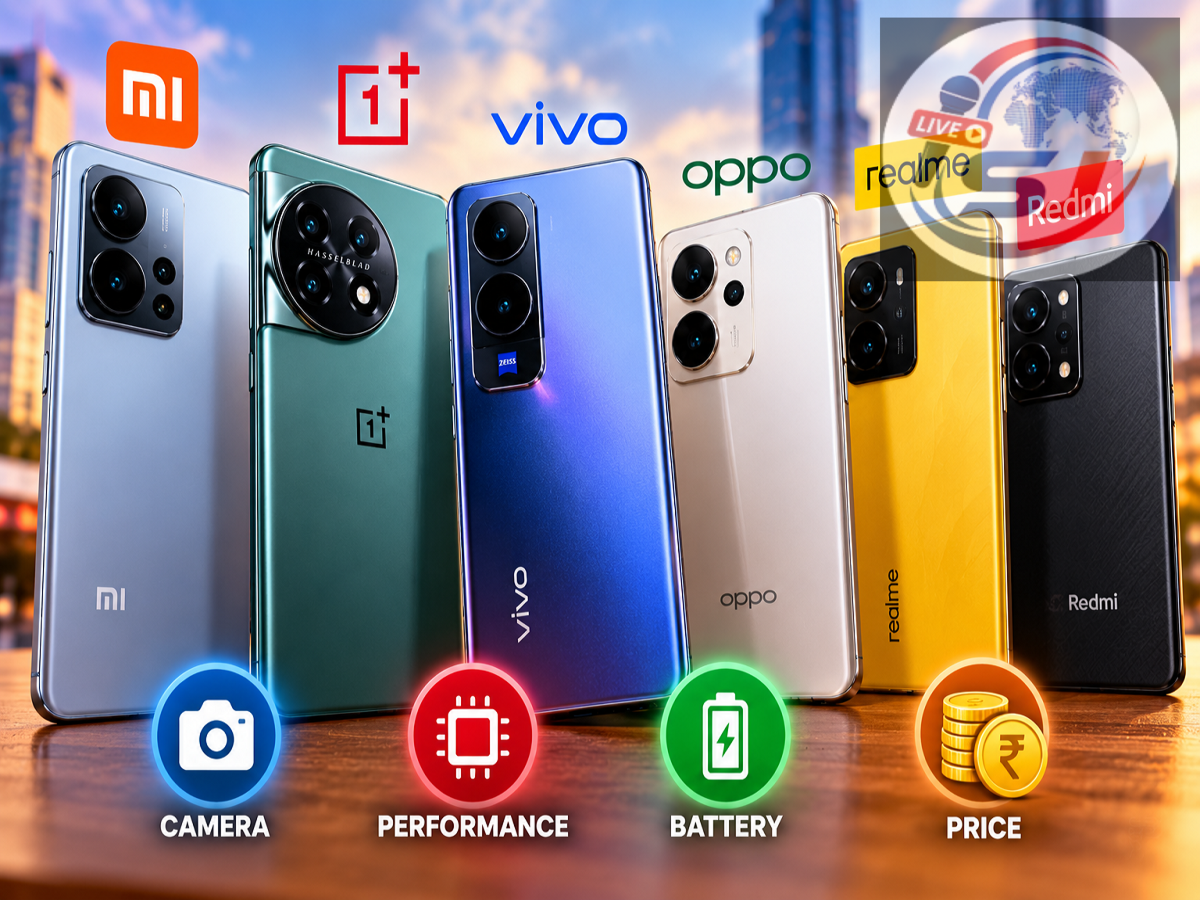
The global smartphone market is no longer dominated only by Apple and Samsung. Chinese smartphone manufacturers have become major competitors across almost every price segment, offering everything from affordable 5G devices to premium camera phones and sophisticated foldables.
Brands such as Xiaomi, OnePlus, Oppo, Vivo, Honor and Realme have developed distinct identities. Some focus heavily on cameras, others prioritise performance, fast charging or aggressive pricing, while premium models increasingly compete through design, displays and artificial-intelligence features.
That also means there is no single Chinese smartphone brand that can objectively be called the best for every buyer.
The right choice depends on what matters most to you—camera quality, gaming performance, software experience, battery life, foldable design or overall value.
Here's how some of the major brands differ.
Honor: From Huawei Sub-Brand to Independent Smartphone Company
Honor has undergone one of the more notable transformations in the Chinese smartphone industry.
It originally operated as a Huawei brand but became a separate company in 2020.
As an independent manufacturer, Honor has developed a portfolio ranging from relatively affordable smartphones to premium flagship devices.
Its smartphones use Android and can feature chipsets from companies such as Qualcomm and MediaTek, depending on the model.
Honor has also focused on display technology, cameras and unusual hardware concepts as it attempts to differentiate its premium devices.
One example highlighted in reports is the Honor Robot Phone, a concept featuring a camera system capable of gimbal-like movement.
Honor has also explored imaging collaboration with ARRI, reflecting its focus on camera and video capabilities.
For consumers, however, experimental concepts should be distinguished from features available in ordinary retail smartphones. The specifications and availability of individual Honor devices should always be checked before buying.
Xiaomi: Wide Choice Across Multiple Price Segments
Xiaomi has built a particularly broad smartphone portfolio.
The company competes across affordable, mid-range and premium categories, making it an option for buyers with very different budgets.
Xiaomi phones have traditionally attracted attention for offering competitive hardware specifications at their respective price points.
Depending on the model, buyers can find high-refresh-rate displays, large batteries, fast charging and powerful processors.
At the premium end, Xiaomi has increasingly placed greater emphasis on camera systems and flagship hardware rather than competing only on price.
The important consideration is that the experience can differ considerably between an entry-level Xiaomi device and one of the company's premium flagships.
Consumers should therefore compare individual models rather than assuming every phone from the brand offers the same strengths.
OnePlus: Performance Remains a Major Focus
OnePlus established its reputation around high-performance smartphones designed to challenge more expensive flagship devices.
Its product range has expanded substantially since then.
The brand now sells devices across multiple price categories, but performance continues to be an important part of its positioning.
Depending on the model, OnePlus devices can offer powerful processors, high-refresh-rate displays, large batteries and fast charging.
These characteristics can make certain OnePlus models attractive to people who spend significant time gaming, multitasking or using demanding applications.
However, buyers should compare camera performance, software support and pricing on a model-by-model basis rather than selecting a phone solely because it carries the OnePlus name.
Vivo: Strong Emphasis on Smartphone Photography
Vivo has invested heavily in smartphone imaging.
Its premium devices often emphasise portrait photography, zoom capabilities, low-light performance and advanced camera processing.
This can make Vivo worth considering for buyers who prioritise photography and video recording.
The company also competes in affordable and mid-range segments, where the combination of camera features, design and battery life can differ significantly from its flagship devices.
Consumers interested primarily in photography should compare actual camera hardware and image results for the specific Vivo model they are considering.
A large megapixel number alone does not determine overall camera quality.
Oppo: Design, Cameras and Fast Charging
Oppo is another major Chinese manufacturer with devices across multiple categories.
Its smartphones often place emphasis on design, camera capabilities and charging technology.
At the premium end, Oppo has also invested in foldable smartphones and other high-end hardware.
Fast charging is another area where the company has competed aggressively.
However, charging speed should be considered alongside battery capacity, heat management and long-term battery-health features.
A phone that charges extremely quickly is useful, but charging specifications alone should not determine which smartphone is best for a particular user.
Realme: Features at Competitive Prices
Realme has focused strongly on younger and price-conscious smartphone buyers.
Its phones often combine competitive processors, high-refresh-rate screens, large batteries and fast charging at relatively accessible price points.
This approach can make Realme devices particularly interesting in the budget and mid-range segments.
For gaming-oriented users, processor performance and display refresh rate may be especially important.
But consumers should also examine camera performance, software-update commitments and build quality when comparing models with similar specifications.
The lowest price or largest specification number does not necessarily translate into the best overall ownership experience.
Which Chinese Brand Has the Best Camera?
There is no permanent answer because smartphone camera performance changes with every new generation.
Vivo, Oppo, Xiaomi and Honor have all invested heavily in premium mobile photography.
Different manufacturers may perform better in different areas, including portraits, zoom, night photography, video stabilisation or colour processing.
More importantly, the brand with an impressive flagship camera may not necessarily offer the strongest camera in the ₹20,000 or ₹30,000 segment.
Buyers should therefore compare phones within the same price category.
Which Brand Is Better for Performance?
For performance-focused buyers, the processor is usually more important than the manufacturer's logo.
A smartphone equipped with a flagship Snapdragon or MediaTek chipset will generally offer a very different experience from an entry-level device from the same brand.
OnePlus and Xiaomi frequently emphasise performance, while Realme also competes aggressively in performance-oriented mid-range categories.
Other manufacturers offer powerful flagship phones as well.
Gaming performance can additionally depend on cooling, software optimisation, display responsiveness and sustained performance under load.
Benchmark scores alone don't tell the entire story.
Battery Capacity Isn't Everything
Chinese smartphone brands have aggressively competed on battery size and charging speeds.
Large batteries can be valuable for heavy users, but battery capacity should not be viewed in isolation.
A phone's processor efficiency, display resolution, refresh rate, network usage and software optimisation can significantly influence real-world battery life.
For example, two phones with the same battery capacity may deliver noticeably different screen-on times.
Charging technology is similarly important, but users should consider heat management and manufacturer-supported charging accessories.
Software Support Should Be Part of the Decision
Hardware specifications are easy to compare, but software support can be just as important if you plan to keep a phone for several years.
Before buying, check the manufacturer's update policy for the specific model.
Look at how many Android operating-system upgrades and security updates are promised.
Policies can differ between premium and budget models from the same manufacturer.
A phone with slightly weaker specifications but longer reliable software support may be more useful over several years than a device that looks stronger only on its launch-day specification sheet.
Don't Choose a Phone Only by Brand Name
Smartphone manufacturers now release so many models that judging an entire brand as good or bad can be misleading.
A company may have an outstanding flagship smartphone but a less competitive budget device. Another brand might offer exceptional value in the ₹20,000 category while its premium model faces stronger competition.
The better approach is to establish your budget first and then compare devices available within that range.
Consider:
-
Processor and sustained performance
-
Camera quality
-
Battery life and charging
-
Display quality
-
Software and update commitment
-
Storage and RAM
-
Build quality
-
Repair and service availability
-
Price and ongoing offers
This produces a more useful comparison than simply asking which company is the biggest or most popular.
So, Which Chinese Smartphone Brand Should You Choose?
There is no universal winner.
Honor is expanding across categories while experimenting with distinctive imaging and premium hardware. Xiaomi provides a wide range of options and often emphasises hardware value. OnePlus remains closely associated with performance-focused devices, while Vivo and Oppo have invested heavily in imaging, design and premium smartphone technology. Realme, meanwhile, frequently targets buyers looking for competitive specifications at accessible prices.
But these are broad brand characteristics, not guarantees about individual phones.
The best choice ultimately depends on the specific models available within your budget and which features matter most to you.
Instead of asking which Chinese smartphone brand is universally best, buyers will usually get a more useful answer by asking: Which phone gives me the best combination of camera, performance, battery, software support and price for my needs?
That comparison should be made model against model—not simply brand against brand.