
1601 Series Calls in India: What These Numbers Mean and How They Differ From 140 and 1600
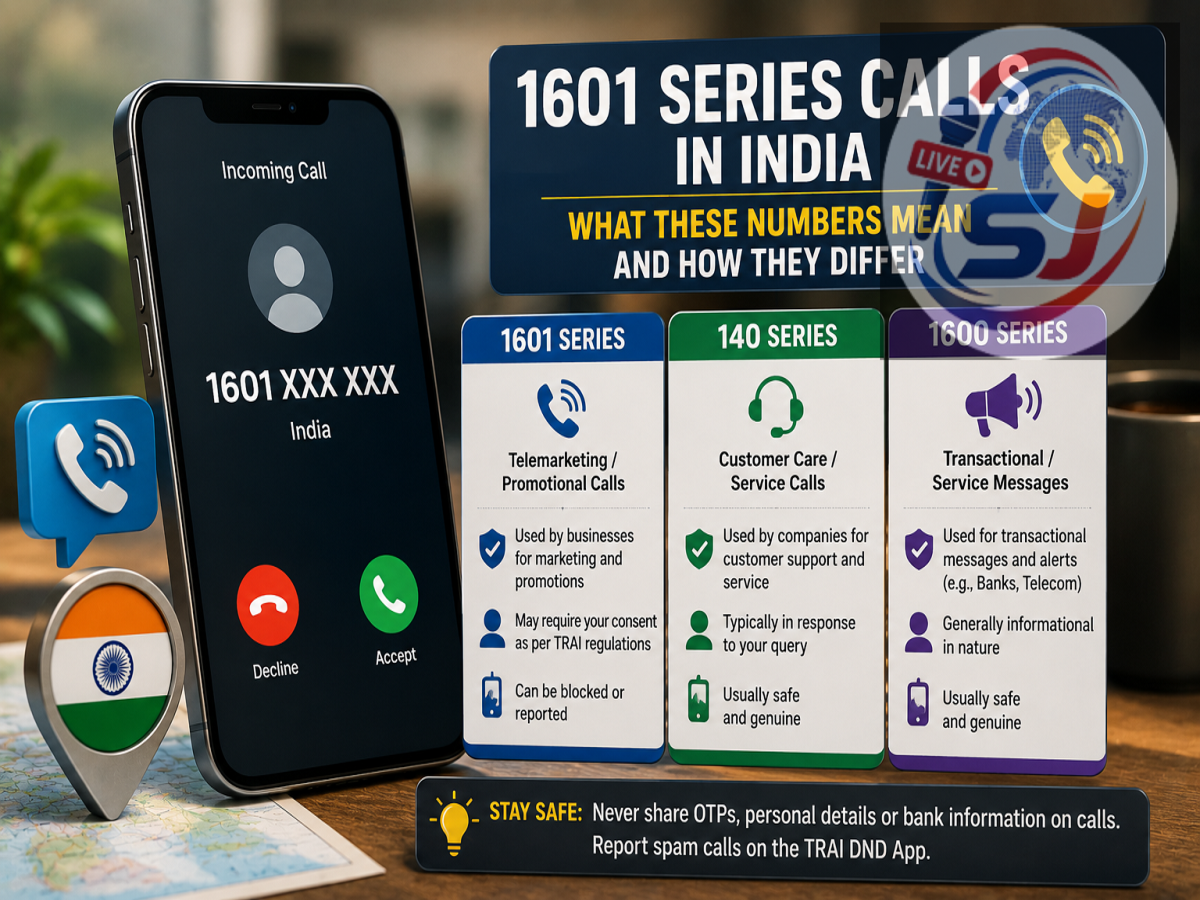
1601 Series Phone Calls in India: If you have recently received a phone call from a number beginning with 1601, you may have wondered whether it is a spam call, a scam attempt or a genuine service message. The Telecom Regulatory Authority of India has started the phased implementation of the 1601 numbering series for service and transactional calls made by certain authorised entities outside the banking, financial services, insurance and government sectors.
The objective is to make it easier for mobile users to distinguish genuine service-related calls from promotional calls and ordinary mobile-number-based communications.
There is, however, an important distinction: 1600 and 1601 are not meant for exactly the same category of organisations. Government entities and the BFSI sector were earlier assigned the 1600 series, while the newer 1601 series is being extended to eligible entities in other sectors. (TRAI)
What Is the 1601 Number Series?
TRAI issued a direction on August 10, 2026 for the allocation and operationalisation of the 1601 series for service and transactional voice calls from entities in sectors other than BFSI and government.
TRAI has said the implementation is being carried out in phases. Its August 10 announcement specifically referred to utilities, courier and logistics sector entities as part of the initial rollout.
This means a call beginning with 1601 may relate to an existing service, delivery, utility connection or another permitted transactional communication from an eligible organisation.
What Is the Difference Between 140, 1600 and 1601 Numbers?
The easiest way to understand the system is to look at the purpose of each numbering range.
| Number Series | Main Purpose |
|---|---|
| 140 | Promotional and telemarketing calls |
| 1600 | Service and transactional calls from government and BFSI entities |
| 1601 | Service and transactional calls from eligible entities outside BFSI and government |
The 140 series is associated primarily with promotional communication. If a company is making a marketing call to sell a product or promote an offer, the call should generally be identifiable as promotional rather than being disguised as an ordinary service call.
The 1600 series, meanwhile, was allocated specifically for service and transactional calls from government entities and the Banking, Financial Services and Insurance sector. TRAI has pushed institutions in these categories to move away from ordinary 10-digit numbers for such calls.
The 1601 series expands this approach to other sectors.
Why Did TRAI Introduce a Separate Series?
One of the biggest problems with unwanted calls is that consumers often cannot tell whether the caller is genuinely associated with a company they use.
Fraudsters may call from ordinary mobile numbers and pretend to represent a bank, courier company, utility provider or another trusted organisation.
By assigning designated number ranges to authorised service and transactional calls, regulators are trying to make caller identification more transparent.
TRAI has said that structured numbering can help reduce promotional calls disguised as service calls and can also make impersonation-based fraud more difficult.
What Kinds of Calls Could Come From 1601?
The exact range of eligible entities can expand as implementation progresses, but TRAI's August 2026 announcement identified utilities, courier and logistics sectors for phased adoption.
That means consumers could potentially receive 1601-series calls relating to matters such as delivery updates, service status, utility-related information or other genuine transactional communications.
These calls are different from advertisements. A service or transactional call generally concerns an existing relationship, transaction or necessary service information rather than an attempt to sell something new.
Does a 1601 Number Mean the Call Is Automatically Safe?
No caller ID should be treated as an excuse to share sensitive information without verification.
The introduction of dedicated numbering makes legitimate calls easier to identify, but consumers should still follow basic security precautions.
A genuine caller should not need your UPI PIN, debit-card PIN, CVV, internet-banking password or OTP merely to provide a routine service update.
If a caller asks for confidential banking credentials, tells you to transfer money urgently, asks you to install an app or sends an unfamiliar payment link, end the call and verify the matter independently through the company's official customer-care channel.
Government and Bank Calls: Look for 1600, Not 1601
One point deserves special attention because the two series can easily be confused.
The dedicated numbering series for government and BFSI service or transactional calls is 1600, not 1601.
The Department of Telecommunications allocated the 1600 range to central and state government entities and BFSI organisations in December 2024, and TRAI subsequently pushed eligible entities to adopt it more widely.
The 1601 series introduced in August 2026 is intended for eligible organisations outside those categories.
Therefore, an article or message claiming that all bank and government calls will come specifically from 1601 would be inaccurate.
Why Ordinary 10-Digit Numbers Are a Problem
When genuine organisations and fraudsters both use normal mobile numbers, it becomes difficult for consumers to tell them apart.
A scammer can claim to be calling from a bank, courier service or electricity company while using an ordinary mobile number.
Dedicated numbering series create a clearer separation between promotional, transactional and service calls.
This does not eliminate cyber fraud completely, but it can give consumers an additional clue when assessing whether a call is legitimate.
What Should You Do When a 1601 Call Arrives?
You do not need to reject a 1601-series call simply because the number looks unfamiliar. It may be a legitimate service or transactional call from an eligible organisation.
Listen to what the caller says, but avoid sharing confidential credentials.
If the call concerns a delivery, bill, account or service request, you can independently verify the information through the organisation's official app, website or published customer-care number.
If the caller creates panic, demands immediate payment or asks for sensitive information, treat the interaction cautiously regardless of the number displayed.
The Bottom Line
The arrival of 1601-series phone calls is part of TRAI's wider effort to make commercial and service communications easier for consumers to identify.
The key distinction is simple: 140 is meant for promotional calls, 1600 is for service and transactional calls from government and BFSI entities, and 1601 is being introduced for eligible service and transactional callers from other sectors such as utilities, courier and logistics.
The new system can improve transparency, but consumers should still remain cautious. A familiar-looking or officially allocated number should never be a reason to reveal OTPs, passwords, PINs or banking credentials over the phone.