
How Heavy Is a Cricket Bat? Here’s What International Players Typically Use
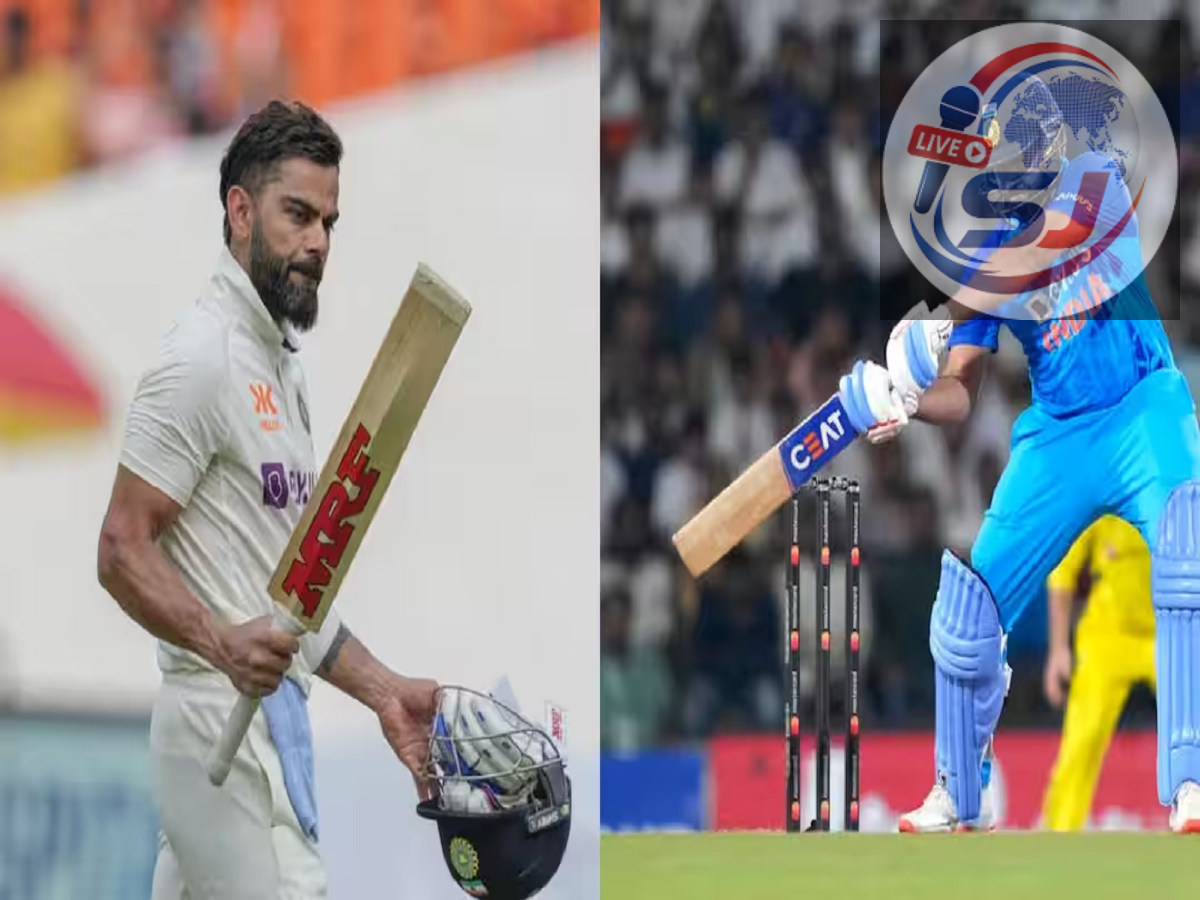
Cricket Bat Weight Explained: Watch two international cricketers batting with similar-looking bats and it may be easy to assume that both pieces of equipment weigh roughly the same. In reality, bat weight can differ considerably depending on a player's strength, technique, shot selection and personal preference.
Some batters prefer a relatively lightweight bat that can be brought down quickly against fast bowling. Others feel more comfortable with a heavier bat that provides greater mass behind the ball when they make clean contact.
So, how heavy are the bats generally used in international cricket? While there is no single mandatory weight, many full-size bats fall roughly within the 1.1 kg to 1.4 kg range.
The number alone, however, does not tell the complete story. Balance, pickup, blade profile and weight distribution can make two bats of similar actual weight feel completely different in a batter's hands.
Is There an Official Weight Limit for Cricket Bats?
One of the biggest misconceptions about cricket equipment is that international rules specify exactly how much a bat should weigh.
There is no single standard weight that every international batter must follow.
The Laws of Cricket set requirements concerning factors such as the bat's maximum dimensions and construction. Players can therefore choose a bat that suits them, provided it complies with the applicable equipment regulations.
This freedom allows professional cricketers to customise their bats according to their batting technique and physical requirements.
As a result, one international player may feel comfortable with a bat weighing close to 1.1 kg, while another could prefer something nearer 1.3 kg or more.
What Is the Typical Weight of an International Cricket Bat?
A full-size cricket bat commonly weighs somewhere around 1.1 kg to 1.4 kg, although individual bats can fall outside this approximate range.
For perspective:
-
Lighter bat: Around 1.1-1.2 kg
-
Medium-weight bat: Around 1.2-1.3 kg
-
Heavier bat: Around 1.3-1.4 kg
Professional players do not select a bat simply by checking the figure on a weighing scale.
They also consider how quickly they can move it, how balanced it feels in the batting stance, how easily they can change the direction of the blade and whether they can maintain control throughout a long innings.
Why Do Some Batters Prefer a Lighter Bat?
A lighter cricket bat can offer an important advantage: bat speed.
When facing a fast bowler, a batter sometimes has only a fraction of a second to judge the delivery, decide on a shot and bring the bat into position.
A bat weighing around 1.1-1.2 kg may be easier for some players to accelerate quickly.
This can particularly benefit batters whose games depend heavily on timing, placement and quick hand movement rather than simply trying to overpower the bowling.
Shots such as cuts, late cuts, drives, glances and improvisational strokes may feel easier when a player has complete control over the blade.
A lighter bat can also help when a batter needs to adjust at the last moment because of unexpected bounce, swing or movement.
Does a Lighter Bat Mean Less Power?
Not necessarily.
It would be incorrect to assume that a lighter cricket bat cannot produce big sixes.
Bat speed and the quality of contact with the ball are extremely important.
A batter who can swing a lighter bat faster and consistently strike the ball cleanly may generate considerable power.
Modern cricket provides countless examples of batters relying on timing and rapid bat speed to clear the boundary rather than simply using the heaviest possible equipment.
Power hitting is therefore a combination of technique, strength, timing, bat speed and efficient transfer of energy—not bat weight alone.
Why Do Some Cricketers Choose Heavier Bats?
A heavier bat can provide more mass behind the shot.
Bats in the region of 1.3-1.4 kg may therefore appeal to players who have enough strength and technique to move them effectively.
When a batter maintains good bat speed and connects with the middle of the blade, the additional mass can contribute to powerful ball striking.
This may be useful for players whose batting style involves strong drives, pulls and other aggressive strokes.
But there is an important trade-off.
A heavier bat requires greater effort to accelerate and control.
If the bat is too heavy for a particular player, the potential advantage of additional mass may be cancelled out by slower bat speed.
A Heavy Bat Does Not Automatically Produce Bigger Sixes
The simple formula of "heavier bat equals bigger shots" does not always work in real cricket.
Imagine a batter switching to a significantly heavier bat. If the extra weight causes their swing to slow down, they could actually lose power rather than gain it.
Their timing could also suffer.
This is why professional players search for a combination of weight and balance that allows them to generate high bat speed while remaining in complete control.
The heaviest bat a player can physically lift is clearly not necessarily the best bat for them.
Bat Weight Can Matter During Long Test Innings
Bat weight can become particularly important in Test cricket, where a player may remain at the crease for several hours.
Repeatedly lifting and swinging a heavy bat can place additional demands on the wrists, forearms, arms and shoulders.
The difference may seem small when comparing two bats on a scale, but hundreds of batting movements over a long innings can make that difference more noticeable.
Fatigue can potentially affect shot execution and reaction speed later in an innings.
For this reason, players need equipment that remains comfortable and controllable even after they have spent a considerable amount of time batting.
Weight Isn't Everything: 'Pickup' Is Equally Important
Two bats can have almost identical measured weights but feel very different when picked up.
This is because the distribution of weight across the bat matters.
A bat with more weight concentrated lower in the blade can feel different from one with a more evenly distributed profile.
The handle, blade shape, spine, edges and overall balance can all influence what cricketers commonly describe as the bat's "pickup."
Professional batters therefore often judge a bat by swinging it and assessing its balance rather than relying solely on its measured weight.
How Do International Cricketers Choose Their Bats?
At elite level, bat selection can be highly personalised.
A player's height, physical strength, batting position, preferred shots and playing conditions can all influence the final choice.
An aggressive limited-overs batter might prioritise a particular blade profile and pickup, while a Test specialist could place greater emphasis on control and comfort over long periods.
Professional bats can also be customised to suit an individual player's preferences.
That is why there is no universal "international cricket bat weight" that works for everyone.
So, What Is the Ideal Cricket Bat Weight?
There is no single answer.
Although bats weighing approximately 1.1 kg to 1.4 kg are commonly seen, the ideal weight depends on the individual using the bat.
A lighter option can provide faster movement and easier control, while a heavier bat can offer additional mass behind the ball when a player has enough strength to maintain bat speed.
Ultimately, the best cricket bat is not necessarily the lightest or the heaviest.
It is the one a batter can control comfortably, accelerate quickly and consistently bring into the correct position at the moment of impact.
At international level, where tiny differences in reaction time and timing can determine the outcome of a delivery, that balance between weight, pickup, control and bat speed can be far more important than the number shown on a weighing scale.