Trump UNGA Speech: Iran Warning, India-Pakistan Claim and ‘Super Intelligence’ Among 10 Key Points
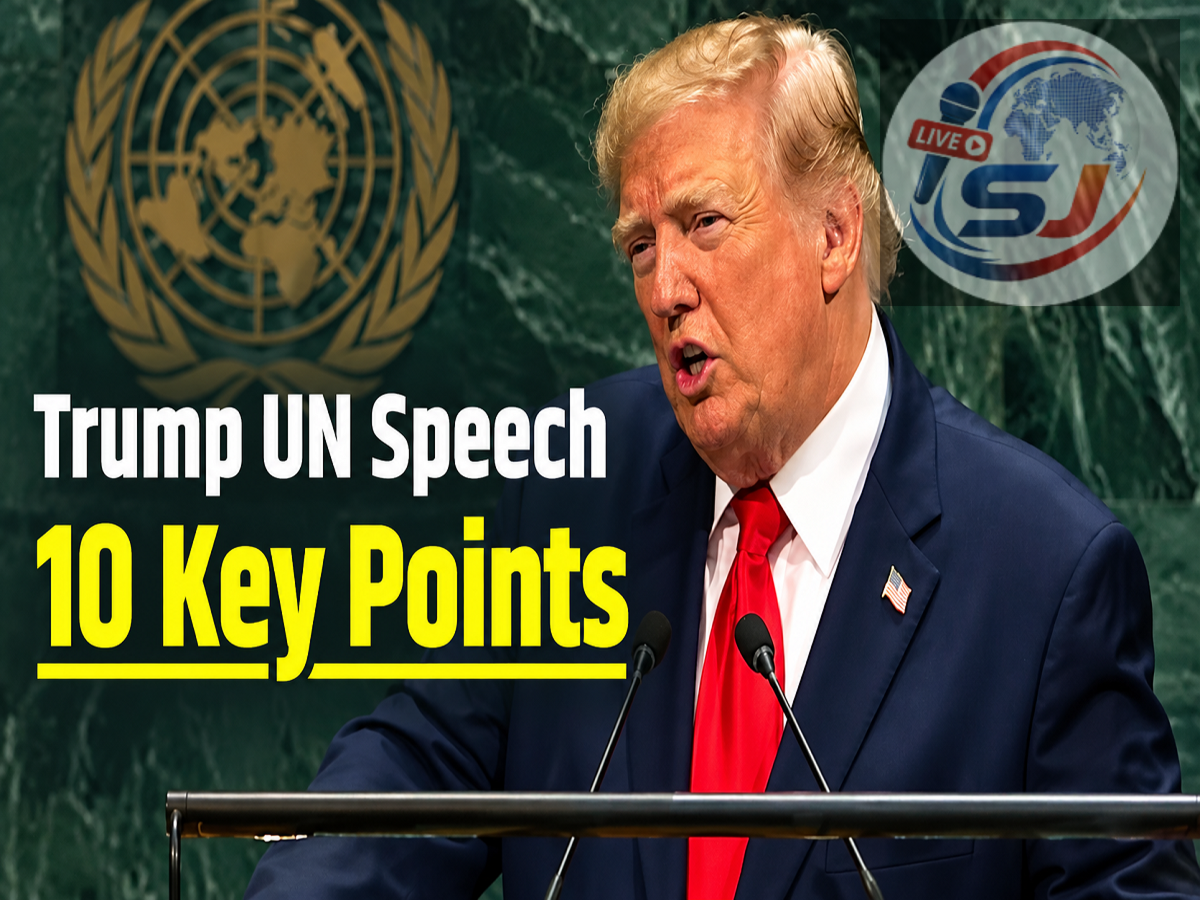
US President Donald Trump used his address to the 81st session of the United Nations General Assembly on Tuesday, September 22, 2026, to lay out his views on some of the world's biggest geopolitical and technological issues.
During the wide-ranging speech in New York, Trump focused heavily on Iran, defended US foreign policy, discussed the new security arrangement involving Greenland, criticized the International Criminal Court and made the case for keeping restrictions on artificial intelligence relatively limited.
He also repeated his claim that his administration had helped settle eight conflicts, while presenting the United States as being in a stronger economic, military and technological position.
Here are 10 major points from Trump's 2026 UN General Assembly address.
1. Trump Again Claimed Credit for Settling Eight Conflicts
One of Trump's major claims was that he had played a role in settling eight conflicts around the world.
He again referred to tensions between India and Pakistan while discussing his record on international disputes.
Trump has repeatedly claimed that US pressure, including trade considerations, contributed to stopping the India-Pakistan military confrontation.
However, this remains a disputed characterization.
India has consistently maintained that the cessation of military action in May 2025 was worked out directly between India and Pakistan through their existing military channels and has rejected claims of third-party mediation.
Trump nevertheless used the UN platform to present his broader diplomatic record as evidence of the effectiveness of his foreign-policy approach.
2. A Strong Warning to Iran
Iran occupied a central place in Trump's address.
The US president defended his administration's military actions against Iran and argued that Washington's actions had prevented Tehran from acquiring a nuclear weapon.
He also issued an exceptionally strong warning about what could happen if negotiations failed.
Trump indicated that he faced a choice between reaching an agreement with Iran and escalating US action dramatically.
At the same time, he suggested that a negotiated settlement remained possible.
The remarks came against the backdrop of months of conflict involving the United States and Iran and continuing uncertainty surrounding energy supplies and the Strait of Hormuz.
3. Trump Called for Greater Economic Pressure on Iran
Trump did not restrict his message on Iran to military action.
He also urged other countries to increase economic pressure on Tehran.
The US president called for what he described as complete economic isolation of Iran, presenting financial pressure as another tool that could push Tehran towards an agreement.
He linked the conflict with the disruption in global energy markets and high oil prices.
The situation around Iran and the Strait of Hormuz has become particularly important for countries that depend heavily on imported energy because disruption to oil shipments can affect fuel costs and inflation far beyond the Middle East.
4. Trump Defended US Actions in Venezuela
Venezuela was another major foreign-policy topic in the address.
Trump defended US actions against the government of former Venezuelan President Nicolás Maduro and portrayed the outcome as evidence of American strength.
His administration has taken an aggressive approach towards Venezuela and drug-trafficking organizations in the region.
During his UN remarks, Trump also linked the broader campaign to his administration's efforts against cartels, which he has compared with terrorist organizations.
His comments reflected the administration's argument that instability, organized crime and hostile governments in the Western Hemisphere can directly affect US national security.
5. Strong Message Against Communism in the Americas
Trump also used the UN platform to discuss communism and left-wing governments in the Western Hemisphere.
He said the United States would not allow communism to gain a foothold in America and warned against neighboring countries becoming bases for forces Washington considers a threat.
Cuba featured prominently in this part of his address.
His comments reflected a wider foreign-policy message that the United States intends to take a more assertive role in its immediate region.
The remarks also highlighted significant political differences between Washington and governments that strongly oppose US policies in Latin America.
6. Greenland Security Agreement Takes Centre Stage
Greenland, which had been a source of considerable tension between Washington and Copenhagen, also featured prominently.
Trump discussed a new security arrangement involving the United States, Denmark and Greenland.
The agreement, signed on the sidelines of the UN General Assembly, expands the framework for US military activity in Greenland while Greenland remains a semiautonomous territory within the Kingdom of Denmark.
The arrangement includes an expanded American security presence and upgrades connected with Arctic defence.
It also provides for new defence areas and restricts military access for countries outside NATO.
The Arctic has become strategically important as the United States and its allies watch growing Russian and Chinese interest in the region.
7. Trump Wants to Call AI ‘Super Intelligence’
One of the more unusual moments in Trump's address came during his discussion of artificial intelligence.
Trump suggested referring to AI as “super intelligence”, arguing that the technology could become enormously important to economic development and global power.
He strongly rejected calls for broad restrictions that could slow AI development.
Trump argued that the United States should continue encouraging technological innovation rather than imposing regulations that, in his view, could prevent American companies from competing effectively.
He also dismissed some warnings about the dangers of uncontrolled AI development.
The position contrasts with calls from some researchers, technology leaders and international organizations for stronger safeguards around increasingly powerful AI systems.
8. Trump Launched Another Attack on the ICC
The International Criminal Court (ICC) was another target of Trump's criticism.
He described the institution in highly negative terms and called on countries to distance themselves from it.
Trump has long opposed ICC actions that affect the United States or its allies.
His latest remarks therefore continued an established dispute between his administration and the Hague-based court.
The ICC is an independent international court established to prosecute individuals accused of genocide, crimes against humanity, war crimes and the crime of aggression where its jurisdictional requirements are met.
Supporters view it as an important institution for international accountability, while the Trump administration has sharply challenged its authority and actions.
9. Strait of Hormuz and Global Oil Supplies
Energy security was closely connected to Trump's discussion of Iran.
He spoke about the Strait of Hormuz, one of the world's most important oil-shipping routes, and highlighted US naval activity connected with commercial shipping.
The waterway has become a major concern during the Iran conflict because disruption can affect the movement of enormous quantities of oil and gas.
Trump also thanked the UN Security Council for action condemning attacks on commercial shipping and urged countries to maintain pressure on Iran.
The economic consequences extend beyond the countries directly involved in the conflict. Higher international crude prices can raise transportation and production costs in energy-importing economies.
10. Trump Presented the US as Economically and Militarily Strong
Trump concluded much of his broader message by presenting the United States as being in a period of renewed strength.
He highlighted the US economy, military capabilities and technological development and argued that the country's position had improved significantly under his administration.
The White House similarly characterized his UN address as a demonstration of America's renewed strength and willingness to act internationally.
These statements represent the administration's assessment of its own performance and foreign-policy record. Economic, military and diplomatic outcomes remain subjects of political and policy debate both inside and outside the United States.
Iran Dominated Trump's 2026 UN Address
Although Trump's speech covered a broad range of issues, Iran emerged as one of its central themes.
The president simultaneously left open the possibility of negotiations while threatening severe consequences if an agreement could not be reached.
He also called for greater international economic pressure on Tehran and connected the conflict to global oil supplies.
Beyond Iran, Trump's address demonstrated several other priorities of his administration: a more assertive US role in the Western Hemisphere, expanded strategic involvement in Greenland and the Arctic, opposition to the ICC and a relatively permissive approach to AI development.
His claim of having helped settle eight conflicts was another major part of the address, but such statements need to be understood alongside the positions of the countries involved. In the case of India and Pakistan, for example, New Delhi has disputed Trump's characterization of Washington's role.
Taken together, the speech offered a clear picture of the administration's stated approach: emphasizing US military and economic power, applying pressure to adversaries, limiting international constraints on Washington and seeking American leadership in emerging technologies such as artificial intelligence.