Train Cancelled? Indian Railways Refund Rules 2026: How to Get Your Full Ticket Money Back
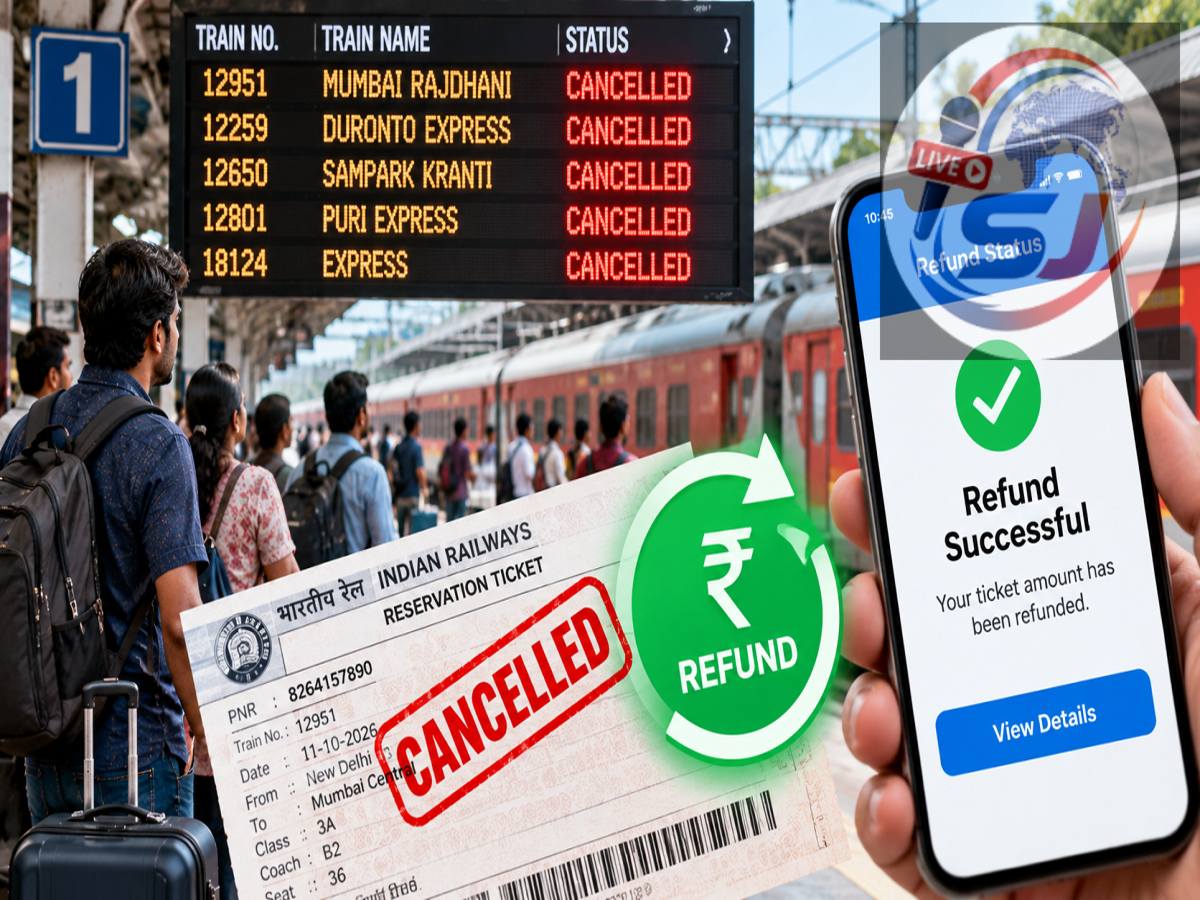
Indian Railways Ticket Refund Rules 2026: Train cancellations can cause major inconvenience to passengers, particularly during festivals, public demonstrations and periods of heavy travel. With several train services reportedly affected by disruptions in Delhi on October 10, 2026, many passengers are concerned about whether they will receive a full refund for their booked tickets.
Indian Railways has specific refund provisions for passengers whose trains are cancelled. The process depends on whether the ticket was booked online through IRCTC or purchased at a railway reservation counter.
The good news is that passengers holding confirmed, RAC or waitlisted tickets on a train officially cancelled by Indian Railways are generally entitled to a full fare refund under the applicable rules.
However, passengers should understand the difference between a train cancelled by the railway authorities and a ticket cancelled voluntarily by the passenger.
Here is a detailed explanation of the railway ticket refund rules, including online refunds, counter-ticket procedures and the circumstances in which a Ticket Deposit Receipt (TDR) may be required.
Train Cancelled by Indian Railways: Will You Get a Full Refund?
When Indian Railways officially cancels a train, passengers who have booked tickets for that service are generally eligible for a full refund of the railway fare.
For online e-tickets booked through IRCTC, the refund is ordinarily processed automatically.
Passengers do not normally need to cancel their e-tickets manually or submit a TDR when the entire train is officially cancelled.
The amount is returned to the original payment source through the applicable refund process.
However, payment gateway charges, convenience fees or other non-refundable service charges may be treated separately from the railway fare.
Passengers should therefore check their refund details carefully.
IRCTC E-Ticket Refund: How Will the Money Be Returned?
Passengers who booked their tickets through the IRCTC website or mobile application generally have a simpler refund process.
When the entire train is cancelled by Indian Railways, the e-ticket is covered by the automatic refund mechanism.
The basic process is:
-
Indian Railways officially cancels the scheduled train.
-
The cancellation is reflected in the railway reservation system.
-
The refund is initiated for eligible e-tickets.
-
The money is returned to the original payment method.
-
Passengers can check the refund status through their IRCTC booking records.
The time taken for the money to appear in the customer's account may vary depending on the payment method and banking processing time.
Passengers should not assume that the refund will necessarily be credited immediately after the cancellation announcement.
Counter Ticket Refund: What Should Passengers Do?
The process is different for passengers who purchased physical tickets from a railway reservation counter.
Unlike eligible IRCTC e-tickets, counter tickets generally require passengers to follow the applicable cancellation and refund procedure.
For a train officially cancelled by Indian Railways, passengers holding eligible counter tickets can claim a refund within the prescribed period.
Under the established railway refund rules, a full refund for a counter ticket on a cancelled train can generally be claimed within three days, excluding the scheduled day of departure, subject to the applicable provisions.
Passengers should retain the original ticket and visit an authorised railway reservation counter to complete the process.
It is advisable to act promptly rather than waiting until the final day.
Railway Ticket Refund Rules: Online vs Counter Tickets
| Ticket Type |
Refund Process |
Important Condition |
|---|---|---|
| IRCTC E-Ticket |
Generally automatic |
Entire train officially cancelled |
| Counter Ticket |
Claim through applicable counter procedure |
Original ticket and prescribed deadline |
| Confirmed Ticket |
Full railway fare generally refundable |
Train officially cancelled |
| RAC Ticket |
Full railway fare generally refundable |
Train officially cancelled |
| Waitlisted Ticket |
Refund according to applicable cancellation rules |
Depends on ticket status and cancellation circumstances |
| Passenger Cancels Voluntarily |
Cancellation charges may apply |
Depends on timing and ticket category |
What Happens if the Train Is Delayed by More Than Three Hours?
Indian Railways also provides refund relief in certain cases involving significant train delays.
If a train is running more than three hours late at the passenger's boarding station and the passenger decides not to travel, a full fare refund may be available subject to the applicable rules.
For IRCTC e-tickets, passengers generally need to file a TDR before the train's actual departure from the boarding station.
If the passenger misses the required filing deadline, the refund claim may be rejected.
This rule is different from the automatic refund process for a fully cancelled train.
Passengers should also remember that a train being delayed does not automatically result in a refund if they complete the journey.
What Is a TDR and When Is It Required?
TDR stands for Ticket Deposit Receipt.
It is a refund-claim mechanism used in certain situations where a ticket cannot be refunded through the ordinary cancellation process.
A TDR may be required in circumstances involving substantial train delays, failure to travel because of specified railway-related problems, or other eligible cases.
For example, an e-ticket passenger who chooses not to travel because the train is more than three hours late may need to submit a TDR within the prescribed deadline.
However, passengers generally do not need to file a TDR when the entire train is officially cancelled and the e-ticket qualifies for automatic refund.
How to Check Your IRCTC Refund Status
Passengers can check the progress of an eligible refund through their IRCTC account.
Steps to Check Refund Status
-
Open the official IRCTC website or mobile application.
-
Log in using your registered credentials.
-
Navigate to the booking history or ticket transaction section.
-
Select the cancelled journey using the relevant PNR or transaction details.
-
Review the cancellation and refund information displayed.
-
If the refund is shown as processed but the money has not arrived, check with the original payment provider or contact IRCTC support.
Passengers should keep their PNR number, transaction ID and payment details available when raising a complaint.
What if Only Part of the Journey Is Affected?
Not every railway disruption results in the cancellation of the entire train.
Sometimes a train may be partially cancelled, diverted or terminated before its scheduled destination.
In these situations, refund eligibility and the procedure can differ from the rules for a fully cancelled train.
Passengers may need to submit a claim under the applicable railway refund provisions.
The amount refunded can depend on the nature of the disruption, the portion of the journey affected and whether the passenger travelled.
Therefore, passengers should verify the exact status of their train rather than assuming that every route change qualifies for an automatic full refund.
Can Tatkal Ticket Passengers Get a Refund?
Tatkal tickets generally have stricter cancellation rules than ordinary reserved tickets.
For example, passengers voluntarily cancelling confirmed Tatkal tickets are normally not entitled to a fare refund.
However, when Indian Railways officially cancels the train, eligible Tatkal passengers can generally receive a refund under the train-cancellation provisions.
The important distinction is whether the cancellation was initiated by the passenger or by the railway authorities.
How to Confirm Whether Your Train Has Been Cancelled
Passengers should verify the train's official status before making alternative travel arrangements.
A train may be cancelled, partially cancelled, rescheduled or diverted, and each situation can have different consequences for refund eligibility.
The National Train Enquiry System (NTES), authorised railway information services and official railway announcements can help passengers check the latest operating status.
Passengers should use their train number and travel date when checking the information.
Important Things Passengers Should Remember
A full refund generally applies when Indian Railways officially cancels the train, but the procedure depends on the ticket type.
Online e-ticket passengers should avoid unnecessary manual cancellation when the entire train has been cancelled, as the automatic refund process normally applies.
Counter-ticket passengers should follow the prescribed refund deadline.
Passengers claiming a refund because of a delay exceeding three hours should pay particular attention to TDR filing requirements.
It is also important to distinguish refundable railway fare from separate booking-related service charges.
Final Takeaway
Passengers affected by train cancellations on October 10, 2026, should first confirm whether their train has been officially cancelled.
For eligible IRCTC e-tickets, Indian Railways generally initiates the fare refund automatically, while counter-ticket holders must follow the applicable claim procedure.
Passengers whose trains are officially cancelled are generally entitled to a full railway fare refund, but delays, diversions and voluntary cancellations follow different rules.
Checking the train's status, retaining booking details and following the relevant refund deadlines can help passengers avoid unnecessary financial losses.
Based on the Aaj Tak report dated October 10, 2026, and established Indian Railways refund principles. Specific October 10 train cancellations and any newly amended refund rules have not been independently verified. Passengers should confirm current requirements through official IRCTC or railway channels.