
Traffic Rules in India: Fines Can Go Up to ₹25,000 for These Violations, Check Penalties Before You Drive
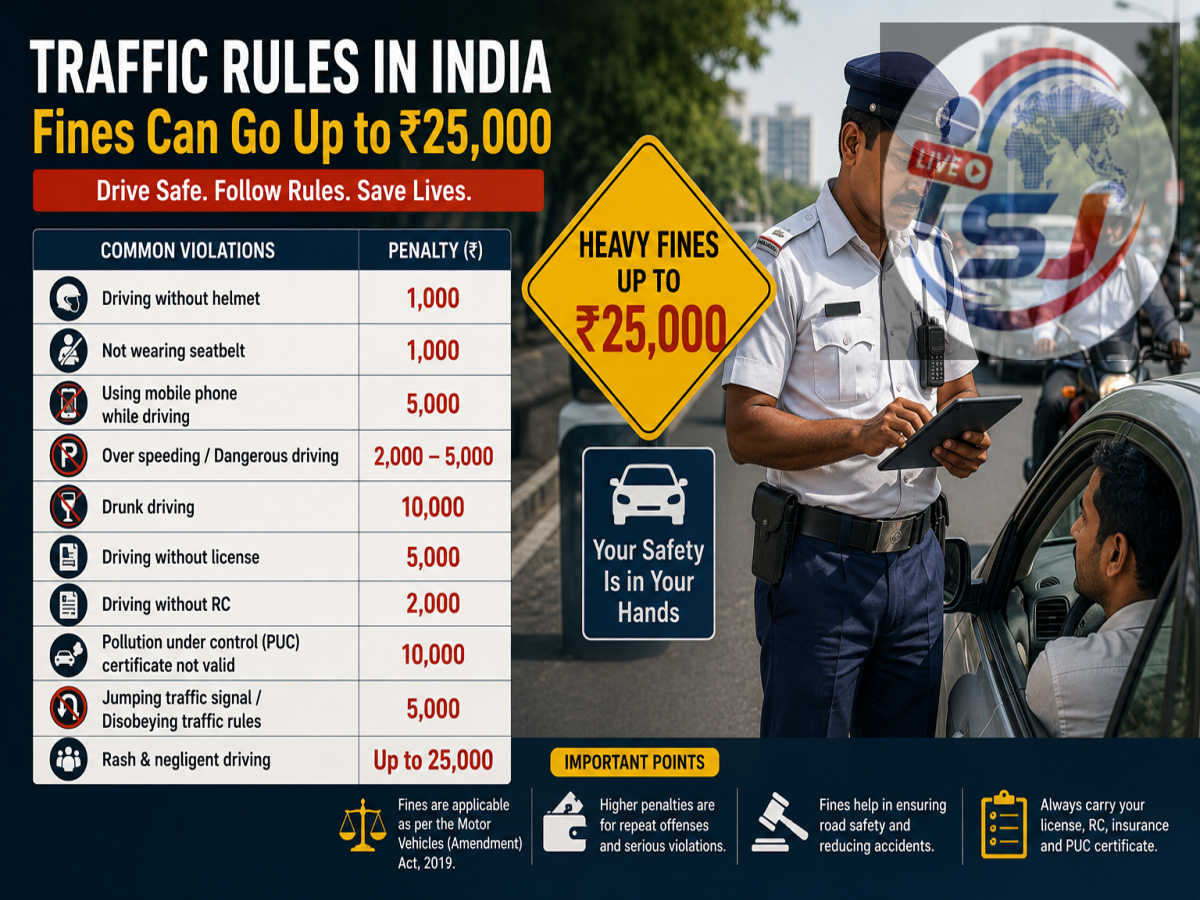
Traffic Challan Rules: Breaking traffic laws can result in hefty fines and, for serious offences, imprisonment. From driving without a valid licence and blocking emergency vehicles to drunk driving and allowing a minor to use your vehicle, here are some important penalties motorists should know.
Driving a car or riding a two-wheeler comes with legal responsibilities. Ignoring traffic rules can not only put the driver at risk but can also endanger passengers, pedestrians and other road users.
Under India's motor vehicle laws, several serious traffic violations attract penalties running into thousands of rupees. Certain offences may also result in imprisonment or action against the vehicle's registration.
Knowing the rules before getting behind the wheel can help motorists avoid penalties and, more importantly, make roads safer.
Driving Without a Valid Licence Can Cost ₹5,000
Driving a motor vehicle without a valid driving licence is a serious violation.
A person caught driving without the required licence can face a fine of ₹5,000 under the applicable provisions.
Drivers should therefore check that their licence is valid for the category of vehicle they are operating. If the licence has expired, it is advisable to complete the renewal process rather than continue driving with invalid documents.
It is also useful to keep an accepted digital or physical version of the licence readily available when travelling.
Blocking an Ambulance Can Lead to ₹10,000 Fine
Motorists are expected to give way to emergency vehicles such as ambulances and fire-service vehicles.
Deliberately obstructing or failing to provide free passage to an emergency vehicle can attract a fine of ₹10,000 under the applicable provision.
Depending on the offence and legal proceedings, imprisonment of up to six months may also apply.
Giving an ambulance a clear route is not merely about avoiding a challan. A delay of even a few minutes can have serious consequences for a patient requiring emergency medical care.
Drunk Driving: Fine Can Reach ₹10,000 for First Offence
Driving under the influence of alcohol is one of the most dangerous traffic violations.
For a first offence, drunk driving can attract a fine of up to ₹10,000 and/or imprisonment of up to six months, depending on the applicable legal provision and case.
Repeat violations can lead to tougher consequences. A subsequent offence within the prescribed period can attract a fine of up to ₹15,000 and/or imprisonment of up to two years.
Motorists should therefore never drive after consuming alcohol. Using a cab, public transport or arranging for a sober driver is a much safer option.
Overloading Can Attract ₹20,000 Plus Additional Penalty
Overloading is particularly important for commercial and goods vehicles because carrying weight beyond the permitted limit can affect braking, handling and road safety.
Driving an overloaded goods vehicle can attract a penalty of ₹20,000, along with an additional amount calculated for excess weight under the applicable provisions.
The vehicle may also be prevented from continuing its journey until the excess load is removed, depending on enforcement action.
Commercial vehicle operators should therefore check the permitted weight specified for their vehicle before beginning a trip.
Minor Driving a Vehicle? Owner or Guardian Can Face ₹25,000 Penalty
Allowing an underage person to drive a motor vehicle can lead to some of the toughest consequences.
Where an offence is committed by a juvenile, the guardian or vehicle owner may face a ₹25,000 fine and imprisonment of up to three years, subject to the conditions and defences provided under the law.
Action can also be taken against the vehicle's registration, while the juvenile may face restrictions on obtaining a driving licence under the applicable rules.
Parents should therefore never allow children to drive a car or motorcycle simply for practice or convenience on public roads.
Quick Look at Major Traffic Penalties
| Traffic violation | Possible consequence |
|---|---|
| Driving without a valid licence | ₹5,000 fine |
| Not giving way to an emergency vehicle | ₹10,000 fine and/or up to 6 months' imprisonment |
| Drunk driving – first offence | Up to ₹10,000 and/or up to 6 months' imprisonment |
| Repeat drunk-driving offence | Up to ₹15,000 and/or up to 2 years' imprisonment |
| Overloading a goods vehicle | ₹20,000 plus applicable excess-weight penalty |
| Offence involving driving by a juvenile | ₹25,000 fine and up to 3 years' imprisonment for guardian/owner, subject to law |
Why Traffic Rules Should Not Be Ignored
Many drivers view a traffic challan primarily as a financial penalty. However, traffic laws are designed to reduce accidents and protect everyone using the road.
Drunk driving can impair judgement and reaction time, overloading can reduce vehicle stability, and blocking an ambulance can delay life-saving treatment. Similarly, allowing an unlicensed or underage person to drive can put both the driver and others at serious risk.
Following traffic rules is therefore about much more than avoiding a ₹5,000 or ₹25,000 challan.
Important Precautions for Drivers
Before starting a journey, ensure that your driving licence and other mandatory vehicle documents are valid. Follow speed limits and road signs, and never drive after consuming alcohol.
Always provide immediate passage to ambulances, fire engines and other authorised emergency vehicles. Commercial vehicle operators should also stay within permitted loading limits.
Most importantly, never hand over your vehicle to a minor or someone who does not hold the required driving licence.
Traffic penalties can vary depending on the exact offence, repeat violations, applicable provisions and enforcement rules. Motorists should therefore follow current traffic regulations rather than relying only on the amount of the fine.
Disclaimer: The penalties mentioned are based on generally applicable provisions of India's motor vehicle laws. The exact challan, imprisonment or other legal action can depend on the circumstances, amendments and applicable state enforcement rules.