
Supreme Court Seeks Centre’s Response on Plea to Shift Protest Venue From Jantar Mantar
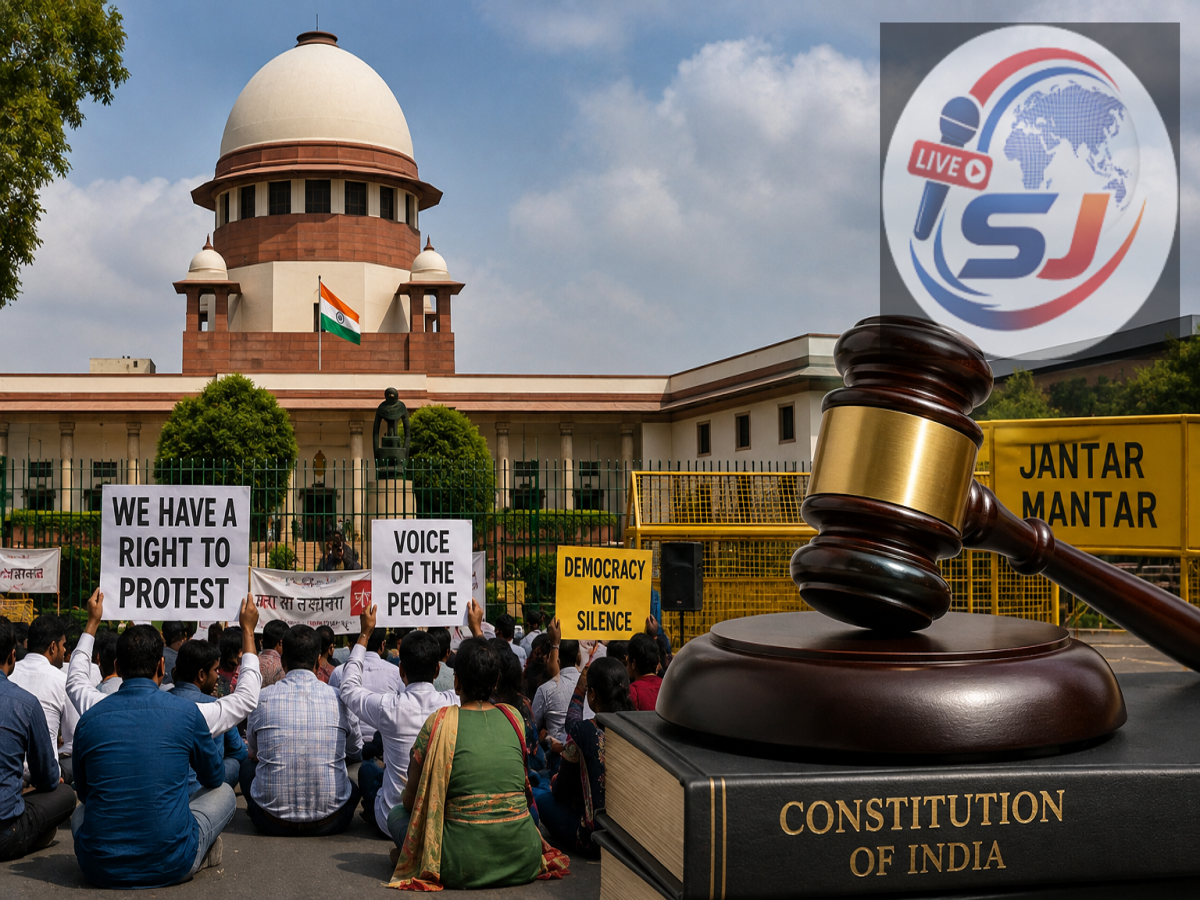
Delhi Protest News: The Supreme Court has sought a response from the Central Government on a Public Interest Litigation (PIL) requesting that Jantar Mantar no longer be used as Delhi’s primary protest site. The petitioner argued that the existing venue is no longer suitable for large demonstrations due to infrastructure limitations, inconvenience to residents, and disruption to essential public services.
During the hearing, the apex court asked the Solicitor General to obtain instructions from the Centre and file its reply. The matter will now be taken up again after the government's response is submitted.
Petition Calls for an Alternative Protest Venue
The PIL urges authorities to identify a new location for public demonstrations in the national capital, claiming that Jantar Mantar is no longer equipped to accommodate large gatherings.
According to the petitioner, frequent protests at the site create difficulties for commuters, residents, and local businesses. The plea also states that medical assistance and other essential public facilities are inadequate during large-scale demonstrations, making it necessary to establish a better-equipped venue.
The petitioner contends that a dedicated protest site with improved infrastructure could help balance the right to peaceful protest with the convenience of the general public.
Supreme Court Asks Centre to Respond
While hearing the matter, the Supreme Court directed Solicitor General Tushar Mehta to seek instructions from the Central Government and submit its official stand on the petition.
The Bench did not express any opinion on the merits of the plea but indicated that the government's response would be necessary before any further consideration of the issue.
The case will be heard again after the Centre files its reply before the court.
Concerns Raised Over Future Demonstrations
During the proceedings, counsel appearing for the petitioner referred to a proposed protest march involving former Delhi Chief Minister Arvind Kejriwal. The lawyer argued that if another large-scale demonstration takes place, a situation similar to previous disruptions could arise once again.
The submission was made to highlight the need for better planning and an alternative venue capable of handling large crowds without affecting normal public life.
Court Emphasises Administration’s Responsibility
Responding to these concerns, the Supreme Court observed that maintaining law and order during protests is primarily the responsibility of the concerned administrative authorities.
The court indicated that issues related to crowd management, security arrangements, and public safety fall within the domain of the administration. It suggested that the authorities are expected to ensure proper arrangements whenever demonstrations are organised.
PIL Highlights Problems Faced by Local Residents
The petition also claims that repeated protests at Jantar Mantar cause inconvenience to people living and working in the surrounding areas.
According to the plea, regular demonstrations can disrupt traffic movement, affect access to nearby establishments, and create obstacles in the supply of essential goods and services. The petitioner has therefore requested that authorities identify a more suitable location capable of accommodating public gatherings while minimising inconvenience to residents.
What Happens Next?
The Supreme Court has not passed any final order on shifting the protest venue. At this stage, it has only directed the Central Government to file its response.
Once the Centre submits its position, the court will examine the arguments from all parties before deciding whether any further directions are required regarding protest sites in the national capital.
The outcome of the case could have an important impact on how public demonstrations are organised in Delhi in the future, particularly concerning the balance between citizens' right to protest and the need to maintain public order and civic convenience.