
Railway Tightens Drinking Water Checks After Quality Concerns at Stations; Passengers Can Report Problems
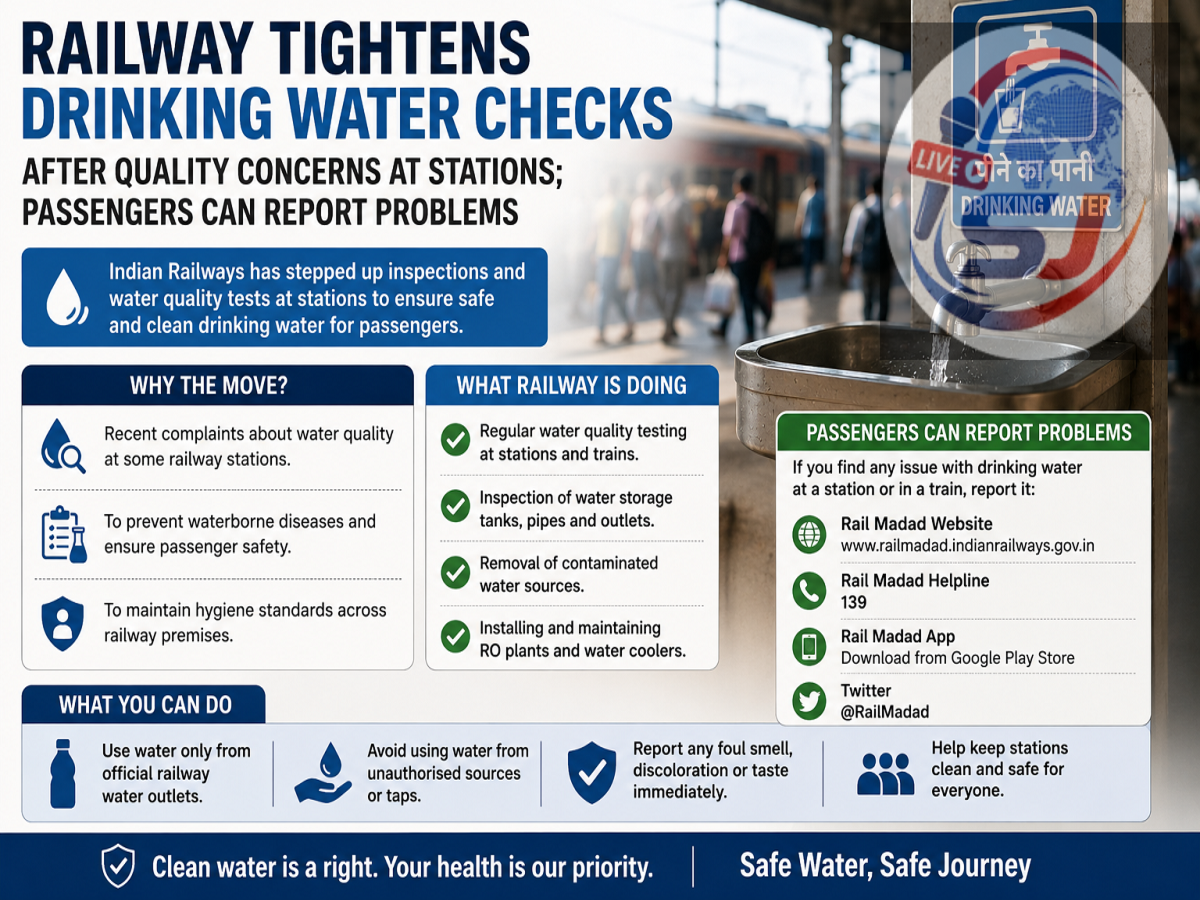
Indian Railways is stepping up measures to improve the quality of drinking water available at railway stations after an audit highlighted shortcomings in water testing, supply systems and passenger amenities. The findings are particularly important for millions of passengers who regularly drink water from station taps, water coolers or refill their bottles before boarding trains.
The audit by the Comptroller and Auditor General (CAG) examined facilities at hundreds of non-suburban railway stations across the country. Concerns were reported not only over drinking water quality but also over toilets, urinals and the availability and maintenance of water points.
Following the findings, the Railways has been advised to strengthen monitoring, conduct regular water-quality tests and ensure better maintenance of storage tanks and distribution systems.
CAG Audit Covers 512 Railway Stations
According to the report, the CAG inspected conditions at 512 non-suburban railway stations.
The exercise assessed whether passengers were being provided adequate basic facilities and whether drinking water supplied at stations met the required quality standards. Cleanliness and maintenance of essential passenger amenities were also part of the review.
The findings indicated shortcomings at several locations, raising concerns over the effectiveness of existing monitoring and maintenance systems.
For passengers, water quality is especially important because station taps and water coolers are frequently used during long-distance journeys.
Water Samples Raise Quality Concerns
As part of the inspection, drinking water samples were collected from water coolers and other supply points at selected railway stations.
The stations mentioned in connection with water-cooler sampling included:
-
Lonavala
-
Coimbatore
-
Bhiwandi Road
-
Hyderabad
-
Kalyan
-
Palakkad Junction
-
Madhupur
-
Chhatrapati Shivaji Maharaj Terminus
According to the findings cited in the report, E. coli bacteria were detected in samples from these locations. Coliform bacteria were also reportedly found in some samples taken from platform water taps.
The presence of such bacteria in drinking water can indicate contamination and highlights the need for proper treatment, storage, testing and maintenance of the water-distribution infrastructure.
Railways Asked to Strengthen Water Testing
Following the audit observations, the CAG recommended stricter compliance with prescribed rules governing drinking water supply and testing at railway stations.
Regular testing is one of the key measures suggested. Instead of relying only on occasional inspections, water quality needs to be monitored periodically so that contamination or other problems can be identified quickly.
Maintenance of water-storage tanks has also been highlighted. Tanks need to be cleaned at prescribed intervals because poor maintenance can potentially affect the quality of water reaching taps and water coolers.
Monitoring the entire supply chain—from the source and storage tank to the final passenger drinking point—can help reduce the possibility of contamination.
Water Supply Network to Be Strengthened at Thousands of Points
Following the concerns raised in the audit, the Railways has initiated steps to improve its water-supply arrangements.
Railway Minister Ashwini Vaishnaw has reportedly directed officials to strengthen the water-distribution system from storage tanks to taps at around 20,000 locations.
This is important because maintaining water quality involves more than ensuring that clean water enters a storage tank. Pipes, tanks, taps, coolers and other components of the distribution network also need proper maintenance.
A problem at any point between storage and the passenger's tap could potentially affect the final quality of drinking water.
Audit Flags Other Passenger Amenity Gaps
Drinking water was not the only area where shortcomings were highlighted.
The inspection also pointed to deficiencies in other essential passenger facilities at railway stations. According to the figures cited, shortcomings related to urinals were identified at 403 stations, while deficiencies concerning washroom facilities were reported at 201 stations.
The report also flagged problems associated with drinking-water taps at 2,035 locations.
These findings underline the broader challenge of maintaining basic infrastructure across India's vast railway network, which serves a very large number of passengers every day.
Why Safe Drinking Water at Stations Matters
Passengers travelling long distances often depend heavily on station facilities.
Many people refill bottles from taps or water coolers instead of purchasing packaged drinking water every time. This makes the cleanliness and reliability of station water infrastructure particularly important.
Children, elderly passengers and people travelling for extended periods may be especially dependent on easily accessible drinking water.
Regular testing, timely tank cleaning and maintenance of pipes and dispensing points can therefore play an important role in ensuring safer passenger facilities.
What Should Passengers Do If Station Water Appears Unsafe?
Passengers who notice dirty, foul-smelling or otherwise suspicious drinking water at a railway station can report the problem instead of ignoring it.
One option is to contact the Indian Railways helpline at 139 and provide details of the issue.
Passengers can also lodge complaints through RailMadad, the official grievance platform of Indian Railways. When submitting a complaint, providing the station name, platform number and exact location of the tap, cooler or water point can help authorities identify the problem.
A complaint can also be brought to the attention of the Station Master or other responsible railway officials at the station.
Passengers Should Take Basic Precautions
While railway authorities work to improve monitoring, travellers can take a few precautions of their own.
Avoid drinking water that looks cloudy, has an unusual smell or comes from a visibly unhygienic dispensing point. If a tap or water cooler appears poorly maintained, consider using another verified source and report the facility.
Passengers purchasing packaged drinking water should also check that the bottle is properly sealed before consuming it.
Focus Now on Better Monitoring and Maintenance
The CAG findings have drawn attention to the need for stronger oversight of drinking water and other basic facilities at railway stations.
With directions to strengthen water supply from tanks to taps at thousands of points, along with recommendations for regular testing and tank cleaning, the focus is now on improving both infrastructure and monitoring.
For passengers, the key message is equally important: if drinking water at a railway station appears contaminated or poorly maintained, the issue can be reported through 139, RailMadad or station authorities. Prompt complaints can help railway officials identify affected facilities and take corrective action.