
Railway Safety Alert 2026: Never Accept Food or Drinks From Strangers During Train Travel
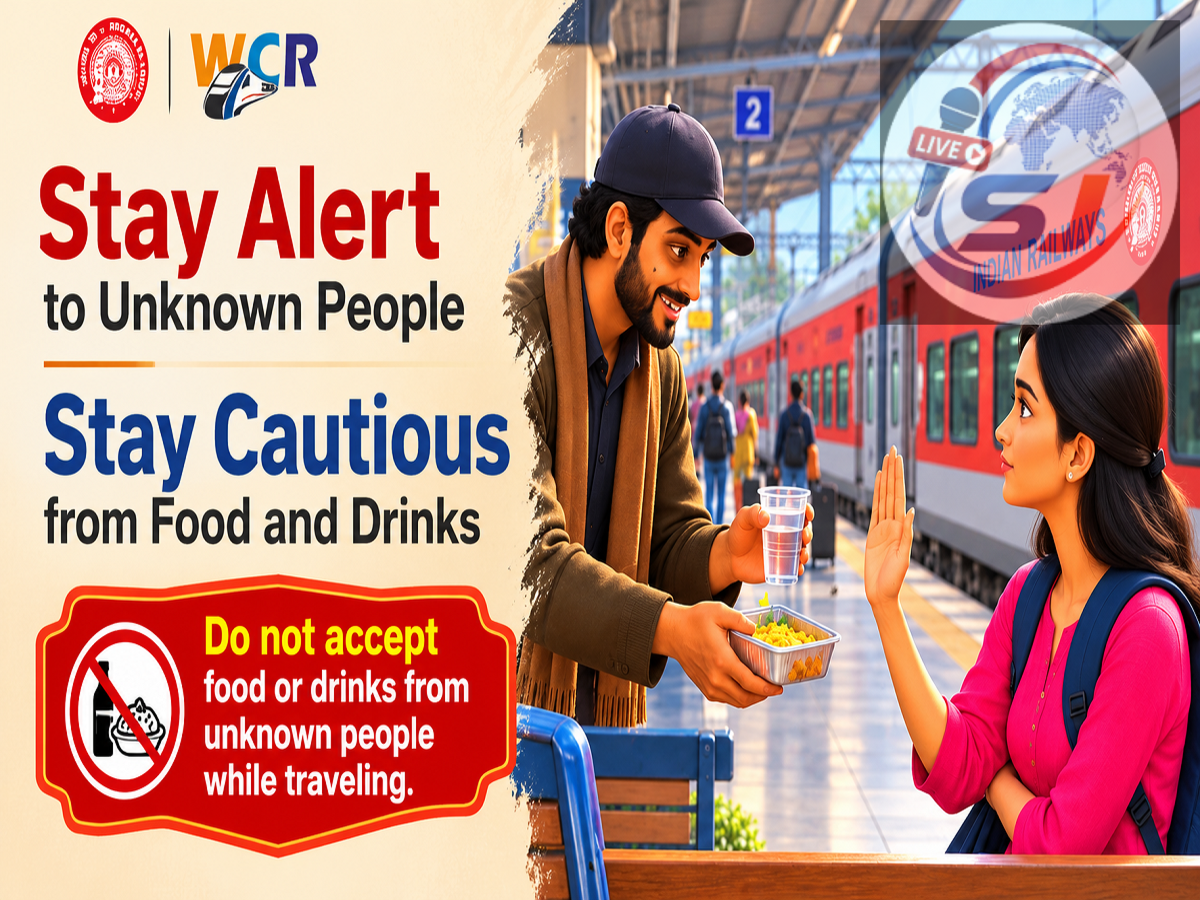
Indian Railways Safety Alert 2026: Passengers travelling by train are being reminded to remain cautious and avoid accepting food, beverages or other consumable items from unfamiliar people. The safety advisory highlights the risk of food or drink being deliberately contaminated with intoxicating or harmful substances, which could leave travellers vulnerable to theft or other crimes.
Train journeys often involve spending several hours alongside unfamiliar passengers. While friendly conversations are common, travellers should maintain basic safety precautions, especially when someone offers food, water, tea, snacks or other refreshments.
The message is particularly relevant during busy travel periods, when railway stations and trains experience increased passenger movement.
Why Should Train Passengers Avoid Food Offered by Strangers?
Accepting food or drinks from an unknown person can sometimes create serious safety risks.
In incidents commonly described as drugging or poisoning-related theft, offenders may attempt to make passengers unconscious or disoriented by offering consumable items containing harmful substances.
Once a victim becomes unable to respond properly, criminals may try to steal mobile phones, wallets, jewellery, cash or luggage.
However, not every unfamiliar passenger poses a threat. The purpose of the advisory is to encourage sensible precautions rather than create unnecessary fear.
The safest approach is to avoid consuming food or beverages received from people whose identity and intentions are unknown.
Be Careful With Tea, Water, Snacks and Packaged Food
Passengers should exercise caution even when someone offers an item that appears harmless.
Tea, coffee, juice, biscuits, sweets and other refreshments should not be accepted from unknown individuals.
A packaged product should not automatically be considered safe simply because its wrapper looks intact.
Travellers should preferably carry their own refreshments or purchase food and drinks from authorised railway vendors and reputable outlets.
When purchasing packaged products, passengers should check whether the packaging is properly sealed and whether the product is within its expiry date.
It is also advisable not to leave food or beverages unattended, particularly during long journeys.
What Are the Warning Signs of Possible Drugging?
Some harmful substances can cause symptoms such as sudden dizziness, unusual sleepiness, confusion, nausea, weakness or difficulty remaining alert.
Symptoms may vary depending on the substance involved, the quantity consumed and the person's health condition.
Passengers should not assume that sudden illness is necessarily caused by deliberate poisoning. Similar symptoms can arise from dehydration, low blood sugar or other medical conditions.
However, if someone becomes unexpectedly unwell after consuming food or a drink, the situation should be treated seriously.
Immediate medical assistance may be necessary.
What Should You Do if a Passenger Is Suspected of Being Drugged?
If a fellow traveller suddenly loses consciousness, becomes unusually confused or develops concerning symptoms, nearby passengers should seek help immediately.
The train's ticket-checking staff, railway personnel or Railway Protection Force (RPF) can be informed.
Passengers can contact the railway assistance helpline 139 or use 112 for emergency assistance.
If poisoning is suspected, avoid giving the affected person additional food, drinks or medication unless advised by a qualified medical professional.
Do not attempt to make the person vomit.
If the individual is unconscious but breathing normally, place them in the recovery position if it is safe to do so, and monitor their breathing while waiting for medical help.
Any remaining food, beverage or packaging that may be relevant should be preserved safely for examination by the appropriate authorities.
Important Railway Safety Tips for Passengers
Travellers can reduce avoidable risks by following a few basic precautions:
-
Avoid food from strangers: Do not consume snacks, sweets or beverages offered by unfamiliar people.
-
Purchase from trusted sources: Prefer authorised railway catering services or reputable vendors.
-
Protect personal belongings: Keep mobile phones, wallets and valuables secure throughout the journey.
-
Stay attentive: Be aware of your surroundings, especially during overnight travel.
-
Avoid leaving drinks unattended: Keep personal food and beverages under your control.
-
Report suspicious behaviour: Inform railway staff if someone repeatedly pressures passengers to accept food or drinks.
-
Keep emergency contacts accessible: Save railway assistance and emergency helpline numbers before travelling.
These precautions can be useful for passengers travelling alone as well as families undertaking long-distance journeys.
Extra Precautions During Overnight Train Journeys
Overnight journeys may require additional attention because passengers often sleep for several hours.
Travellers should secure their luggage using suitable locks and avoid leaving valuable items openly accessible.
Important documents, money and mobile phones should be kept in a safe location.
Passengers travelling with children or elderly family members should ensure that they understand the importance of not accepting food or beverages from unknown people.
If someone behaves suspiciously or creates discomfort, passengers should contact railway personnel rather than confronting the individual unnecessarily.
How to Report Safety Concerns During Train Travel
Indian Railways provides passenger assistance through established support channels.
The railway helpline 139 can be used for assistance and railway-related complaints.
Passengers can also use the official RailMadad portal to report relevant concerns.
For immediate emergencies, the national emergency response number 112 is available.
When reporting an incident, passengers should provide useful details such as the train number, coach number, seat or berth location and a clear description of the situation.
Accurate information can help railway personnel respond more effectively.
Railway Safety Becomes More Important During Festive Travel
During festivals and holiday periods, trains often carry large numbers of passengers travelling to their hometowns.
Crowded railway stations, busy platforms and long-distance journeys can create situations in which travellers need to be particularly attentive.
Passengers may also be carrying additional luggage, gifts or cash, making the protection of personal belongings important.
Families should discuss basic travel safety precautions before departure, especially with children and elderly members.
Awareness and timely reporting can help reduce the risk of preventable incidents.
Final Update
The railway safety message encourages passengers to remain vigilant and avoid accepting food or drinks from unknown individuals during train journeys.
Although sharing refreshments may appear friendly, passengers should prioritise their personal safety and choose trusted sources for food and beverages.
If a passenger experiences sudden illness or notices suspicious behaviour, railway personnel should be informed immediately.
A safe journey begins with simple precautions: protect your belongings, remain aware of your surroundings and never feel pressured to consume anything offered by a stranger.
The advisory is a general passenger-safety reminder and does not identify a specific train, location or newly reported poisoning incident.