
Pulling a Train’s Alarm Chain Without Cause Can Lead to Fine or Jail: Know the Railway Rule
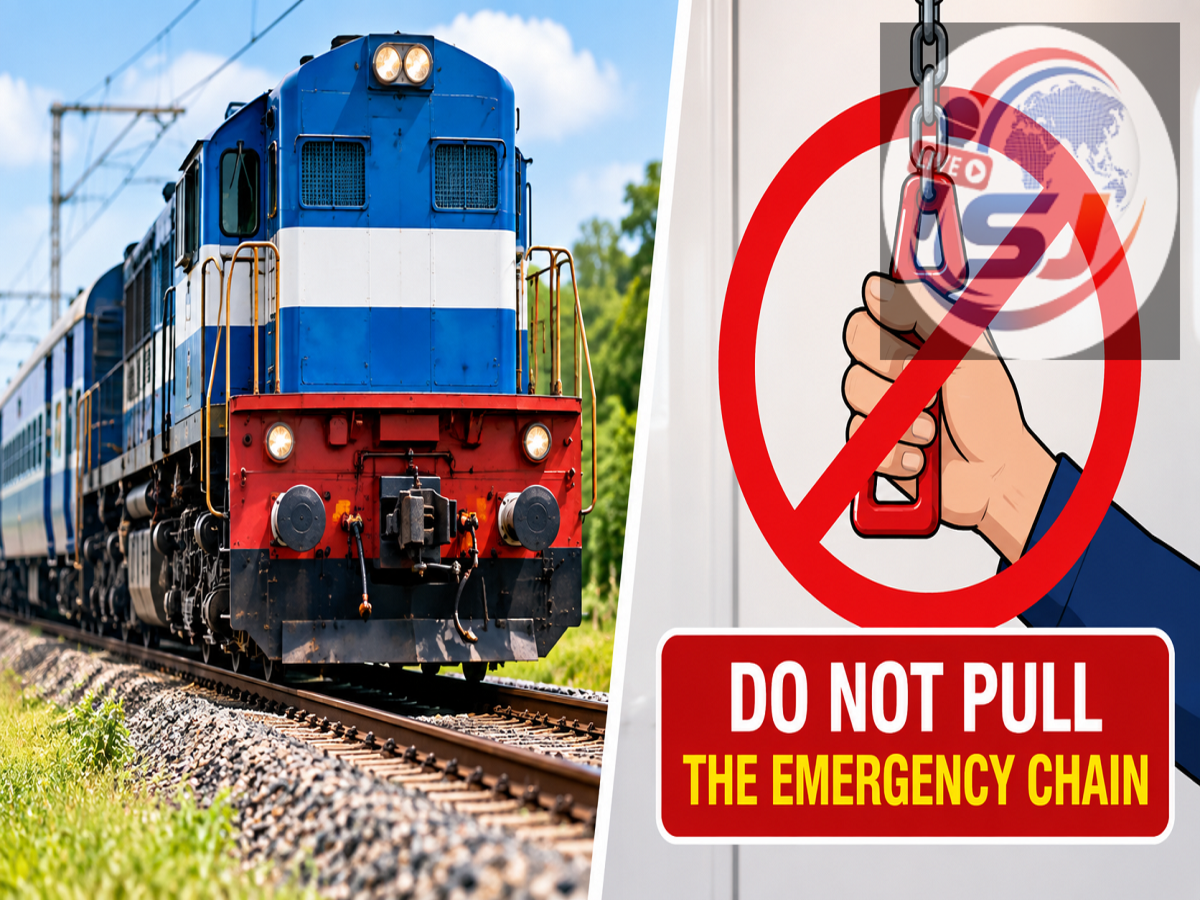
Train journeys are convenient and affordable, but passengers must follow a number of safety rules while travelling. One of the most important relates to the alarm chain installed inside coaches. This chain is designed to stop a train during a genuine emergency—not to help passengers who arrive late, miss their station or want to recover an item that has fallen outside.
Pulling the alarm chain without a reasonable and sufficient cause can result in prosecution, a financial penalty and even imprisonment. Passengers should therefore understand when the emergency mechanism may be used and what could happen if it is misused.
Why do trains have an alarm chain?
The alarm chain is a safety and communication mechanism that allows passengers to alert the train’s operating staff when an urgent situation requires immediate attention.
When the chain is pulled, the train’s braking or alarm system is activated. The locomotive pilot, guard and other railway personnel are alerted, after which the train may be stopped and the affected coach identified. Railway staff must then inspect the situation and reset the system before the train can continue.
This procedure takes time and can delay not only the affected train but also other services operating on the same route. A single unnecessary stoppage may disrupt signals, occupy a busy railway section and inconvenience hundreds of passengers.
What is the punishment for unnecessary chain pulling?
Misuse of the alarm chain is covered under Section 141 of the Railways Act, 1989. The provision applies when a passenger or another person uses or interferes with a communication facility provided on a train without a reasonable and sufficient cause.
A person convicted under this provision may face:
- Imprisonment for up to one year
- A fine of up to ₹1,000
- Both imprisonment and a fine
For a first conviction involving the alarm chain, the law ordinarily prescribes a minimum fine of ₹500 unless the court records special and adequate reasons for imposing a different punishment.
For a second or subsequent conviction, the prescribed minimum punishment is three months of imprisonment, subject to the legal exception allowing the court to record special and adequate reasons. The final punishment depends on the circumstances and the court’s decision.
When may the alarm chain be used?
The chain should be pulled only when an immediate and serious situation makes stopping the train reasonably necessary. Examples could include:
- A passenger falling from a moving train
- A serious medical emergency requiring urgent help
- A fire, smoke or another immediate safety threat inside a coach
- A child, elderly passenger or person with a disability being separated in circumstances creating a serious danger
- A violent crime, assault or other major security incident
- A situation in which a passenger’s life or physical safety is at immediate risk
These examples do not create an automatic legal exemption in every case. Authorities may examine the facts to determine whether there was a genuinely reasonable and sufficient cause for stopping the train.
Reasons that normally do not justify chain pulling
Passengers should not use the emergency chain simply to correct a personal travel mistake or avoid inconvenience. Common examples of improper use include:
- Arriving late and trying to help a relative board the train
- Missing the intended station
- Boarding the wrong train
- Wanting to get off at a place where the train is not scheduled to stop
- Retrieving a mobile phone, bag or another item that fell outside
- Helping a passenger who failed to board before departure
- Stopping the train near a passenger’s home or preferred location
Such actions may lead to questioning by the Railway Protection Force and prosecution under the Railways Act.
Why is chain-pulling misuse treated seriously?
An unscheduled halt can create operational and safety problems across the railway network. Railway employees must locate the coach, investigate the reason for the alarm and restore the system before departure.
On a busy route, this delay can affect trains running behind the stopped service. It can also cause passengers to miss connecting trains and disturb station schedules. Central Railway recorded hundreds of alarm-chain incidents within just 20 days in June 2025, demonstrating how repeated misuse can affect railway operations on a large scale.
What should passengers do in a non-emergency?
For a lost mobile phone, luggage problem, missed station or another issue that does not require an immediate train stoppage, passengers should contact onboard railway staff, the ticket examiner or Railway Protection Force personnel.
They can also call the railway helpline at 139 or submit a complaint through the RailMadad platform. Providing the train number, coach number, seat details and a clear description of the problem can help railway personnel respond appropriately.
The alarm chain exists to protect lives during genuine emergencies. Using it for convenience can disrupt an entire railway route and expose the passenger responsible to a fine, arrest and possible imprisonment.