PoK Protests Escalate as Action Committee Calls for Boycott of Utility Bills and Income Tax
PoK Protest Update: Protests in Pakistan-administered Kashmir have entered a new phase, with the Awami Action Committee calling for a civil disobedience campaign that includes withholding payments for electricity, water and gas services as well as income tax. The announcement comes amid continuing demonstrations and allegations by protest leaders of excessive force and restrictions by Pakistani authorities.
According to the original report, the civil disobedience call was issued on Thursday as the protest movement reached its 66th day. Organisers have urged residents and traders across the region to participate.
The claims made by protest leaders, including allegations about security forces and restrictions on essential supplies, require independent verification.
Action Committee Announces Civil Disobedience Campaign
Awami Action Committee member Imtiaz Aslam announced that residents should stop paying electricity, water and gas bills as part of the latest phase of the protest.
The organisation also called on businesses to withhold income tax payments.
According to the committee, the decision was taken in response to what protesters describe as the use of force by Pakistani security personnel against demonstrators.
The move marks a significant escalation from street demonstrations to economic non-cooperation. Civil disobedience campaigns typically seek to increase pressure on authorities by encouraging large numbers of people to refuse compliance with specific government requirements.
The potential impact of the campaign will depend on the level of public participation and the response of the authorities.
Protesters Appeal to United Nations
The Awami Action Committee has also appealed for international attention to the situation.
According to the report, protest leaders have referred to United Nations resolutions adopted in 1948 concerning Jammu and Kashmir, arguing that the international body should take note of developments in Pakistan-administered Kashmir.
The committee claims that Pakistani authorities have failed to meet their responsibilities toward residents and has accused security forces of firing on protesters and restricting access to essential supplies.
These allegations represent the protesters' account of events and should not be treated as independently established facts without corroborating evidence.
The status of Jammu and Kashmir has remained disputed for decades and is the subject of competing claims by India and Pakistan, as well as a complex history of UN resolutions and bilateral agreements.
Women Join Demonstration in Mandhol
The protest movement has reportedly spread across multiple locations.
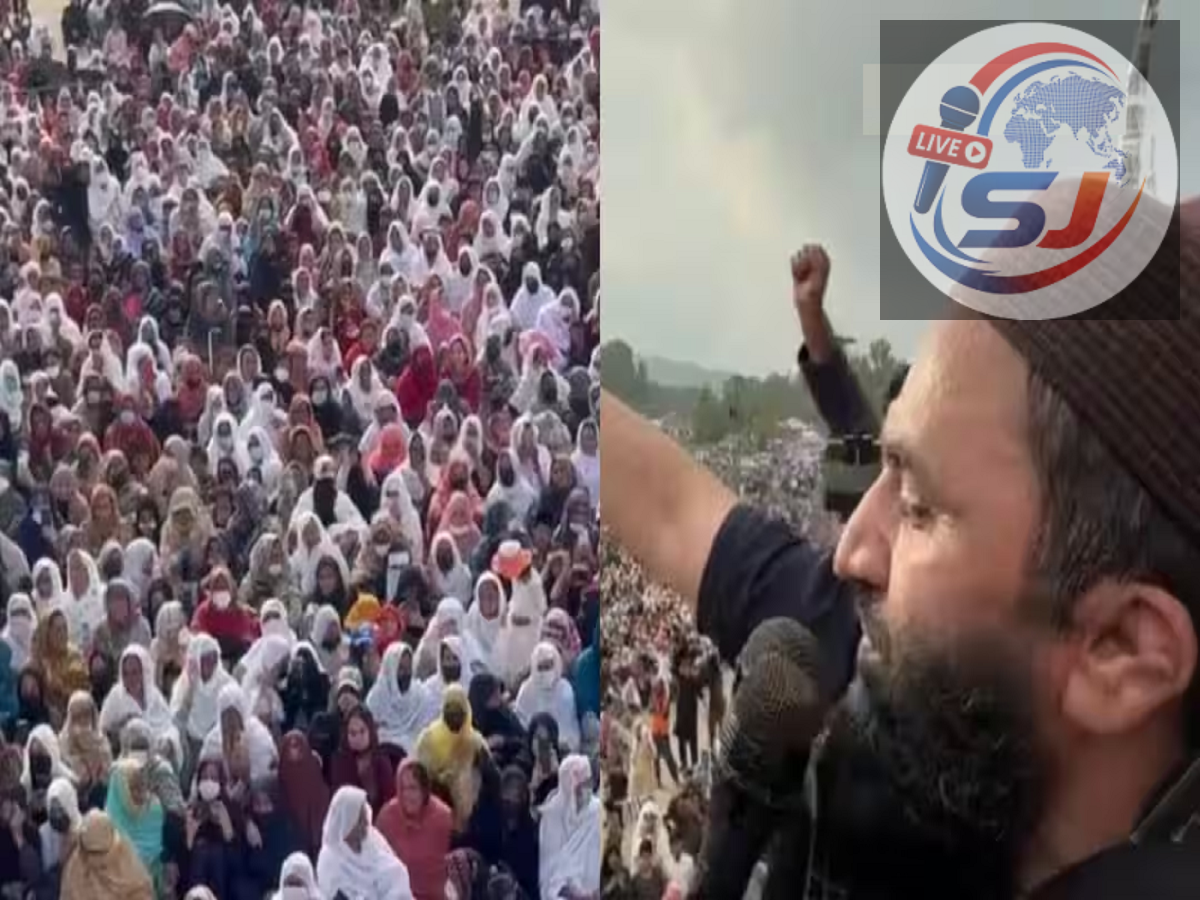
According to the report, women participated in a demonstration in Mandhol on Thursday, voicing opposition to the actions of Pakistani authorities.
Rawalakot, meanwhile, has emerged as one of the main centres of the ongoing agitation.
Organisers claimed that approximately 90,000 people gathered in Rawalakot for a major demonstration. Crowd-size estimates from political demonstrations can vary considerably, and the figure cited by organisers could not be independently verified from the information provided.
Protesters have reportedly maintained sit-ins at Chinar Chowk and D Chowk in Rawalakot since July 27.
With the existing protest sites unable to accommodate the larger gathering, organisers shifted Thursday's demonstration to Rawalakot's Eidgah ground, according to the report.
Protest Leaders Criticise Pakistan Over Regional Conditions
Speakers at the Rawalakot demonstration also criticised Pakistan's policies toward the region.
Among them was Sardar Umar Nazir, who reportedly accused Pakistani security forces of adopting tactics similar to those he alleged were being used in Khyber Pakhtunkhwa and Balochistan.
Nazir also raised questions about healthcare infrastructure in Pakistan-administered Kashmir.
According to remarks attributed to him, the region lacks adequate major medical facilities, forcing residents to face difficulties in obtaining advanced treatment.
He contrasted the healthcare infrastructure available in the region with facilities across the Line of Control in Indian-administered Jammu and Kashmir.
Such comparisons involve political claims and differing assessments of healthcare capacity and should be evaluated against official infrastructure and public-health data.
Why the Call to Stop Paying Bills Matters
A widespread refusal to pay utility bills and taxes could significantly change the nature of the protest movement.
Instead of relying exclusively on rallies, marches and sit-ins, organisers are attempting to use financial non-cooperation as a means of exerting pressure.
However, participation in such campaigns can also expose residents and businesses to possible legal, financial or administrative consequences depending on applicable laws and the response from authorities.
The extent to which residents and traders follow the Awami Action Committee's call will therefore be important in determining whether the civil disobedience campaign becomes a major new phase of the protests or remains largely symbolic.
Kashmir Dispute Adds Wider Political Context
The latest demonstrations are unfolding against the backdrop of the decades-old dispute over Jammu and Kashmir.
India and Pakistan both administer parts of the former princely state while claiming territory controlled by the other. The dispute has resulted in wars, military confrontations and prolonged diplomatic tensions between the two nuclear-armed neighbours.
The Awami Action Committee's decision to invoke UN resolutions adds an international dimension to its demands, although the interpretation and implementation of those resolutions have long been contested between India and Pakistan.
For now, attention is likely to remain focused on Rawalakot and other protest centres as organisers attempt to expand the civil disobedience campaign.
Whether residents broadly stop paying taxes and utility bills—and how Pakistani authorities respond—could determine the next stage of the ongoing unrest.