
PAN Card Misuse Alert 2026: Check If Someone Is Using Your PAN for Fake Loans, GST Registration or Tax Fraud
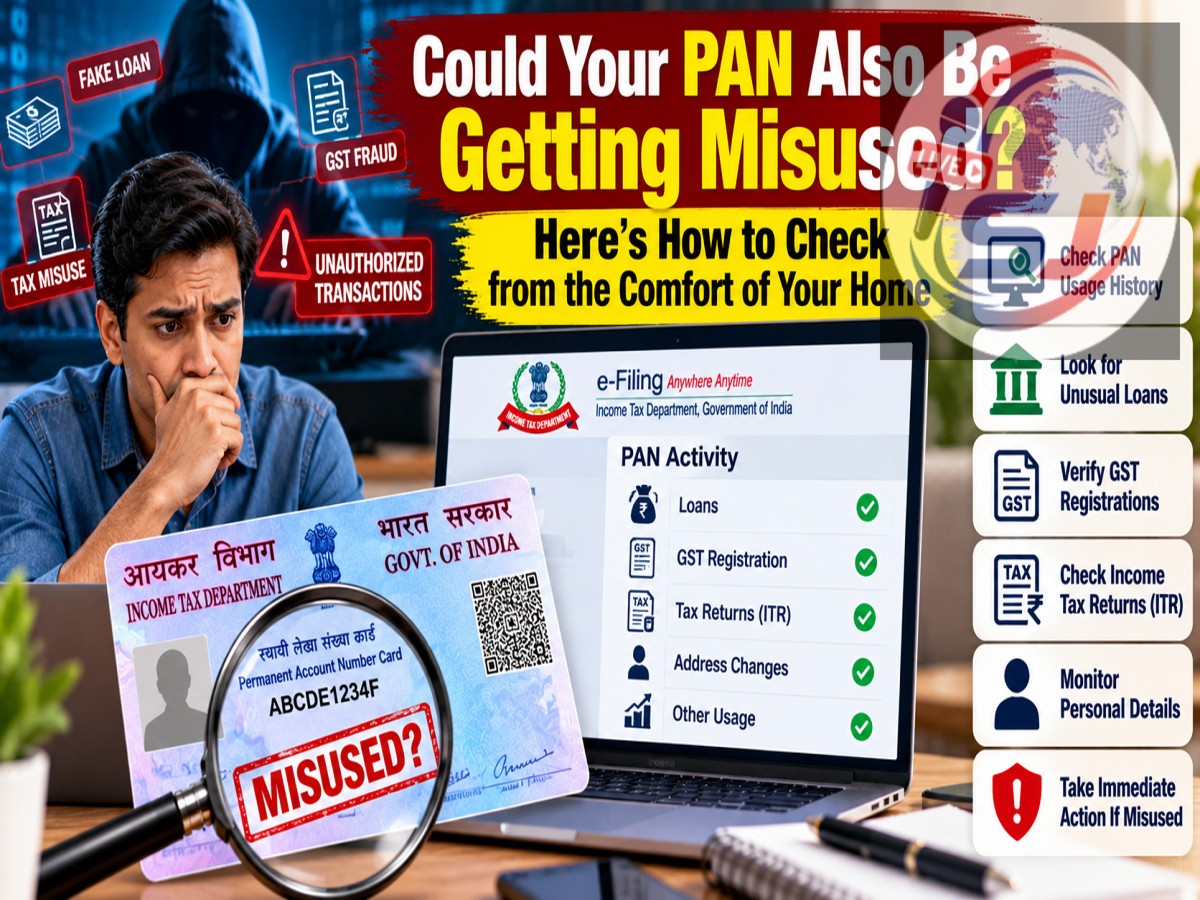
PAN Card Fraud 2026: Your annual income may be below the taxable limit, but that does not necessarily protect you from problems caused by the misuse of your Permanent Account Number (PAN). If someone uses your PAN details without permission, you could face unexpected tax notices, suspicious financial records or unauthorised credit applications.
A recent case in Delhi has highlighted the potentially serious consequences of PAN-related identity misuse.
According to an Aaj Tak report dated October 21, 2026, a contract cook received an income tax demand of approximately ₹4 crore after alleged cash sales worth ₹24.62 crore were recorded against his PAN.
The Delhi High Court reportedly set aside the tax demand, providing relief to the individual.
The incident raises an important concern for millions of PAN holders: How can you find out whether someone has used your PAN without your knowledge?
Several official online services can help taxpayers identify suspicious transactions and records. These include the Income Tax Department's Annual Information Statement (AIS), Form 26AS, the GST portal and credit reports from recognised credit bureaus.
Here is a detailed guide to checking possible PAN misuse, identifying warning signs and taking corrective action.
PAN Card Fraud: What Happened in the Delhi Case?
According to the report, a contract cook in Delhi found himself facing a substantial income tax demand connected to business transactions he allegedly had not conducted.
The case involved reported cash sales amounting to ₹24.62 crore.
Based on the disputed financial information, an income tax demand of approximately ₹4 crore was reportedly raised.
The Delhi High Court subsequently set aside the demand.
The report illustrates how incorrect or unauthorised financial information linked to a PAN can create serious legal and financial difficulties.
However, the brief account does not establish precisely how the PAN became associated with the transactions or whether the incident involved deliberate identity theft, a reporting error or another cause.
The complete legal reasoning would need to be examined through the court's judgment.
Why Can PAN Misuse Be Dangerous?
PAN is a unique identification number issued by the Income Tax Department.
It is used for several financial and tax-related activities, including income tax filings, bank accounts, investments, loan applications and business registrations.
If PAN details are misused, an individual's financial records may become associated with transactions they did not authorise.
Possible consequences include unfamiliar tax entries, fraudulent loan applications, unauthorised GST registrations and identity verification problems.
A PAN number alone does not automatically allow someone to access a bank account or obtain a loan.
However, when PAN information is combined with other personal details or forged documents, it may be used in attempts to commit financial fraud.
How to Check Whether Your PAN Is Being Misused
PAN holders can review several official records to identify potentially suspicious activity.
| Online Platform |
What You Can Check |
|---|---|
| Income Tax AIS |
Reported financial transactions linked to your PAN |
| Form 26AS |
Tax deductions, collections and other available tax-credit information |
| GST Portal |
GST registrations associated with your PAN |
| Credit Bureau Reports |
Loans, credit cards and credit enquiries |
| Income Tax e-Filing Portal |
Notices, outstanding demands and tax-related communications |
Each platform provides different information, so checking more than one can help identify potential problems.
1. Check Your Annual Information Statement (AIS)
The Annual Information Statement is one of the most useful tools for monitoring financial information reported against your PAN.
AIS may contain details relating to bank interest, dividends, securities transactions, tax payments and other reportable financial activities.
If an unfamiliar transaction appears, it may indicate incorrect reporting or possible misuse.
Steps to Check AIS Online
-
Visit the official Income Tax e-Filing website: incometax.gov.in.
-
Log in using your PAN or permitted user ID and password.
-
Open the Services menu.
-
Select Annual Information Statement (AIS).
-
Choose the relevant financial year.
-
Review the reported financial information.
-
Identify any transactions you do not recognise.
If an entry appears incorrect, use the available AIS feedback facility to report the issue.
Depending on the information category, taxpayers may be able to indicate that a transaction does not relate to them.
Submitting feedback does not automatically cancel a tax demand or guarantee that the reporting entity will immediately correct its records.
2. Review Form 26AS for Suspicious Tax Entries
Form 26AS is another important document that taxpayers can access online.
It provides information about tax deducted at source (TDS), tax collected at source (TCS) and other relevant tax-credit records.
Unexpected entries may indicate that a reporting entity has used an incorrect PAN or that further investigation is required.
How to Download Form 26AS
-
Log in to the Income Tax e-Filing portal.
-
Navigate to e-File.
-
Select Income Tax Returns.
-
Choose View Form 26AS.
-
Follow the instructions to access the statement.
-
Select the assessment year.
-
Review the entries carefully.
For example, if Form 26AS shows tax deducted by a company with which you have never had a financial relationship, contact the relevant organisation or seek clarification through the appropriate tax channels.
However, Form 26AS is not a complete record of every transaction associated with a PAN.
It should be reviewed alongside AIS and other available information.
3. Check for Unauthorised GST Registration Using Your PAN
PAN details are also used in GST registration.
If someone has fraudulently obtained a GST registration using another person's PAN, the legitimate PAN holder may face unnecessary tax compliance problems.
The GST portal provides facilities to search for registrations associated with a PAN and report suspected misuse.
Steps to Check GST Registration
-
Visit the official GST portal.
-
Open the taxpayer search section.
-
Select the option to search using PAN, where available.
-
Enter your PAN and complete the required verification.
-
Review the GST registrations displayed.
-
Check whether each registration belongs to you or a business you legitimately represent.
If an unfamiliar registration appears, use the GST portal's available PAN misuse reporting mechanism or contact the appropriate GST authorities.
Preserve the registration details and any supporting evidence.
4. Check Whether Someone Has Taken a Loan Using Your PAN
PAN is commonly used during loan and credit card applications.
If criminals obtain additional identity information, they may attempt to apply for credit using someone else's personal details.
A credit report can help identify suspicious borrowing activity.
Consumers can obtain reports from recognised credit information companies, including TransUnion CIBIL, Experian, Equifax and CRIF High Mark.
Warning Signs in a Credit Report
| Credit Report Entry |
What It May Indicate |
|---|---|
| Unknown personal loan |
Possible unauthorised borrowing |
| Unfamiliar credit card |
Possible identity misuse |
| Unknown lender enquiry |
Credit application or reporting issue requiring investigation |
| Incorrect address |
Possible identity or reporting problem |
| Unrecognised overdue amount |
Potential fraudulent or incorrectly reported debt |
| Unexpected credit score decline |
May warrant review of recent account activity |
If an unfamiliar loan or credit card appears, contact the lender and raise a formal dispute with the relevant credit bureau.
An unfamiliar credit enquiry alone does not prove that a fraudulent loan was approved.
5. Check for Unexpected Income Tax Notices
PAN holders should also periodically check their income tax e-Filing account for notices and outstanding demands.
This is particularly important if they receive an email, SMS or letter claiming that tax is due.
Do not make a payment through an unfamiliar link simply because a message mentions your PAN.
Instead, visit the official Income Tax Department website directly and verify the notice.
If a genuine notice refers to transactions you did not undertake, respond through the prescribed process within the applicable deadline.
What Should You Do If Your PAN Has Been Misused?
If you discover suspicious information, take prompt and organised action.
First, download or preserve the relevant records.
These may include AIS entries, Form 26AS, credit reports, GST registration details or tax notices.
Next, contact the authority or institution responsible for the information.
For example, an incorrect AIS entry may require feedback through the Income Tax Department's portal.
An unauthorised GST registration should be reported through the GST system.
An unfamiliar loan should be disputed with the lender and credit bureau.
If deliberate identity theft or cybercrime is suspected, a complaint can be submitted through the National Cyber Crime Reporting Portal.
Official reporting channels:
-
Cyber financial fraud helpline: 1930
For significant tax demands or legal disputes, consulting a qualified tax professional or lawyer may be necessary.
Can PAN Misuse Lead to a Tax Notice Even If You Have No Taxable Income?
Yes, incorrect or unauthorised information linked to a PAN can potentially trigger tax-related scrutiny even when the legitimate PAN holder earns relatively little.
Tax authorities may receive information from banks, businesses and other reporting entities.
If substantial transactions are reported against a PAN, questions may arise about the source and nature of those transactions.
However, the appearance of a transaction against someone's PAN does not conclusively establish that the person actually conducted it.
Tax liability depends on the applicable law, evidence and findings of the relevant authorities.
This is why it is important to respond to notices and challenge inaccurate records through the proper process.
How to Protect Your PAN Card From Fraud
Although PAN is necessary for many legitimate financial activities, a few precautions can reduce the risk of misuse.
Avoid sharing PAN card photographs with unknown individuals or through suspicious websites.
Provide PAN details only to trusted organisations when there is a legitimate requirement.
Do not share OTPs, banking passwords or account credentials with anyone claiming to verify your identity.
Be cautious about messages asking you to complete urgent PAN or KYC updates through unfamiliar links.
Where appropriate and accepted by the recipient, consider marking copies of identity documents with the specific purpose for which they are being submitted.
Periodically check your financial records and remain alert for unexpected loan enquiries, GST registrations or tax notices.
PAN Card Fraud 2026: Final Update
The reported Delhi case involving alleged cash sales worth ₹24.62 crore and a tax demand of nearly ₹4 crore demonstrates the importance of monitoring financial information associated with your PAN.
According to the October 21, 2026 report, the Delhi High Court set aside the disputed tax demand.
For PAN holders, the most practical preventive measure is to review AIS, Form 26AS, GST registrations, credit reports and income tax notices regularly.
If unfamiliar information appears, report it promptly and preserve the supporting evidence.
Checking these records can help identify possible misuse before it develops into a more serious financial or legal problem.
Disclaimer: This article is based on the supplied October 21, 2026 news summary. The reported court case has not been independently verified against the full judicial order. The information is intended for general financial and cybersecurity awareness and does not constitute legal or tax advice.