
Old Number Plate on Your Vehicle? HSRP Rules and Possible Fine of Up to ₹10,000 Explained
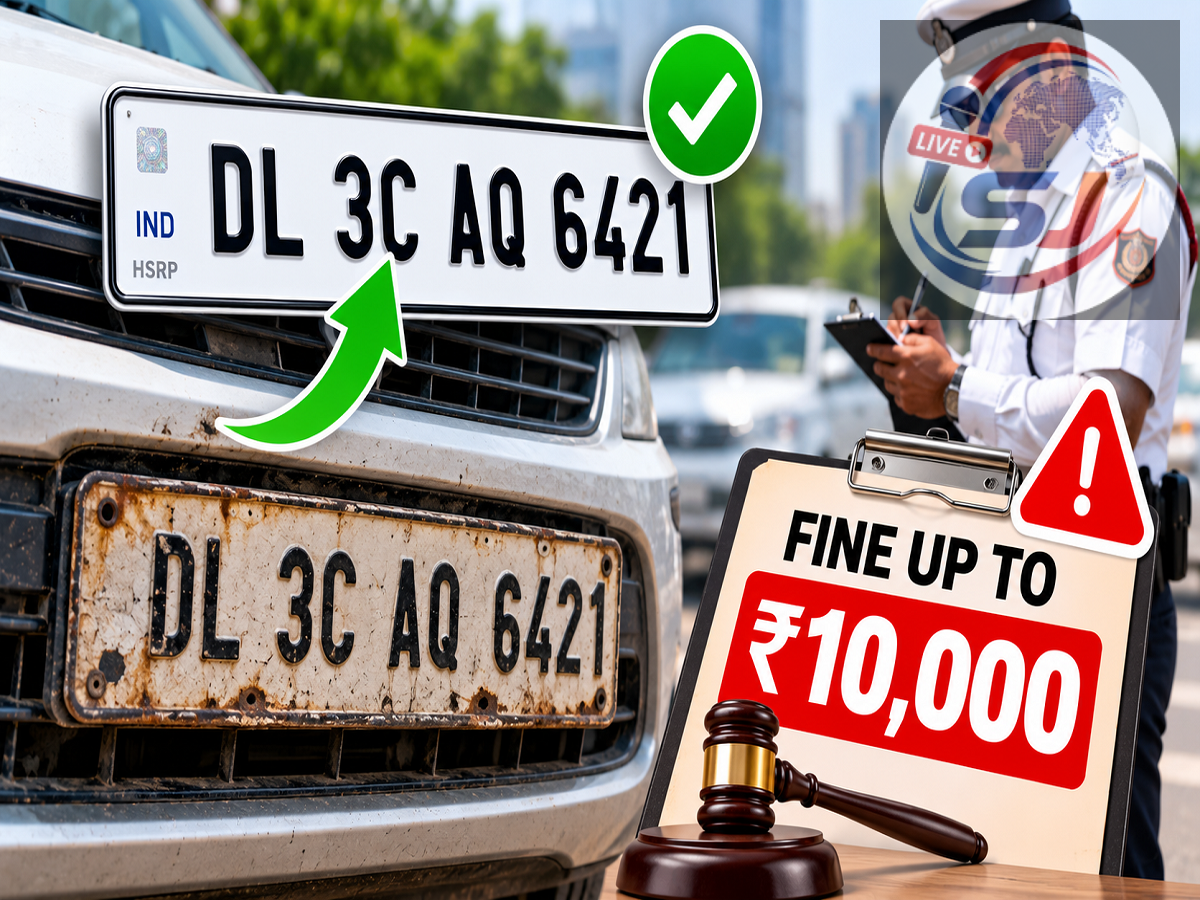
Vehicle owners who are still driving with an old, damaged or non-compliant registration plate should check the rules applicable to their vehicle. A number plate is not merely a way to display a vehicle's registration number; it must also comply with the prescribed registration-plate standards.
Particular attention is required for High Security Registration Plates (HSRP). Vehicles that are required to have an HSRP but continue to use an older or non-compliant plate may face enforcement action, depending on the rules and notifications applicable in their state or Union Territory.
Reports suggest that penalties in some cases may range from ₹5,000 to ₹10,000. However, vehicle owners should not assume that an identical ₹10,000 fine automatically applies across India in every case. The actual penalty can depend on the nature of the violation, local enforcement provisions and applicable government notifications.
What Is the HSRP Rule?
A High Security Registration Plate is a standardised vehicle registration plate designed with security features that make duplication, tampering and unauthorised replacement more difficult.
Registration plates are governed by provisions of the Central Motor Vehicles Rules (CMVR), including requirements concerning the manner in which registration marks must be displayed.
HSRP requirements have particular relevance for older vehicles. Vehicles registered before April 1, 2019 may require their older plates to be replaced with HSRPs in accordance with the rules and implementation requirements applicable in their state.
Owners of older vehicles should therefore check whether their car, motorcycle or other vehicle has the prescribed registration plate rather than assuming that the plate originally supplied with the vehicle remains compliant indefinitely.
Can You Be Fined for an Old Number Plate?
Simply having an old vehicle does not automatically result in a fine. The important issue is whether its registration plate complies with the applicable requirements.
If a vehicle is required to have an HSRP but is being driven without one, or if its registration plate is damaged, illegible or otherwise fails to meet the prescribed standards, the owner may face enforcement action.
The source report states that a fine of around ₹5,000 may be imposed in certain cases, with the amount potentially reaching ₹10,000 for subsequent violations.
Vehicle owners should, however, verify the exact penalty applicable where their vehicle is registered or being used because enforcement arrangements can differ between jurisdictions.
Why Is HSRP Different From an Ordinary Number Plate?
HSRPs are designed to provide better security and standardisation than conventional registration plates.
The plates are generally made from aluminium and incorporate multiple security features. These features are intended to make unauthorised removal, alteration or duplication more difficult.
An HSRP is attached to the vehicle using prescribed locking arrangements that are designed to discourage tampering. It also carries identification and security markings that help authorities authenticate the plate.
Another important component is the unique identification associated with the plate. These security features help connect the registration plate with the vehicle's official records.
Why Were High Security Plates Introduced?
One of the main objectives behind HSRP is to reduce misuse of vehicle registration numbers.
Conventional plates can potentially be altered or duplicated more easily, which creates problems for law-enforcement agencies when vehicles are stolen or registration identities are misused.
A standardised security plate can make it harder to simply remove a genuine plate and replace it with an unauthorised duplicate.
The system can therefore assist authorities in vehicle identification and help address offences involving stolen vehicles or fraudulent registration plates.
Vehicles Registered Before April 2019 Need Attention
Owners of vehicles registered before April 1, 2019 should pay particular attention to HSRP requirements.
Newer vehicles are generally supplied with compliant high-security plates through the authorised registration and dealer system. Many older vehicles, however, were originally registered with conventional number plates.
Depending on the applicable state requirements, owners of such vehicles may need to replace their existing registration plates with HSRPs.
This does not mean that every pre-April 2019 vehicle without an HSRP will automatically attract the same penalty everywhere. Vehicle owners should check the latest instructions issued by their respective state transport department or Regional Transport Office (RTO).
A Damaged Number Plate Can Also Create Problems
HSRP compliance is not the only reason to inspect your vehicle's registration plate.
A plate that has become damaged, broken, faded or difficult to read can also create problems because the registration mark needs to remain clearly displayed in the prescribed manner.
Vehicle owners should avoid altering the plate themselves or using decorative fonts, stickers or other modifications that interfere with the registration number or required security features.
If an HSRP is damaged, the safer approach is to obtain a replacement through an authorised channel rather than purchasing an unofficial plate from a roadside vendor.
How Should Vehicle Owners Get an HSRP?
If your vehicle requires an HSRP, use only the booking or replacement mechanism authorised for your state and vehicle manufacturer.
Depending on the location, HSRP installation may be facilitated through authorised dealers or approved registration-plate vendors. Owners may be asked to provide details such as the vehicle registration number, chassis information and engine details during the booking process.
Avoid websites or agents whose authorisation cannot be verified, particularly if they ask for unnecessary personal information or payments through suspicious channels.
What Vehicle Owners Should Check Now
If you own an older vehicle, particularly one registered before April 1, 2019, check whether the existing registration plate meets the HSRP requirements applicable in your state.
Do not wait until the plate becomes completely unreadable or enforcement action is taken. If the existing plate is damaged or a compliant HSRP is required, arrange for an authorised replacement.
Most importantly, claims about a ₹5,000 or ₹10,000 challan should not be interpreted as a universal automatic fine for every old number plate across India. The applicable penalty and enforcement process depend on the specific violation and local implementation of the rules.
Checking the latest instructions from the relevant transport authority can help vehicle owners remain compliant and avoid unnecessary penalties.