
No Confirmed Train Ticket for Diwali or Chhath? Try Split-Route Booking and Special Trains
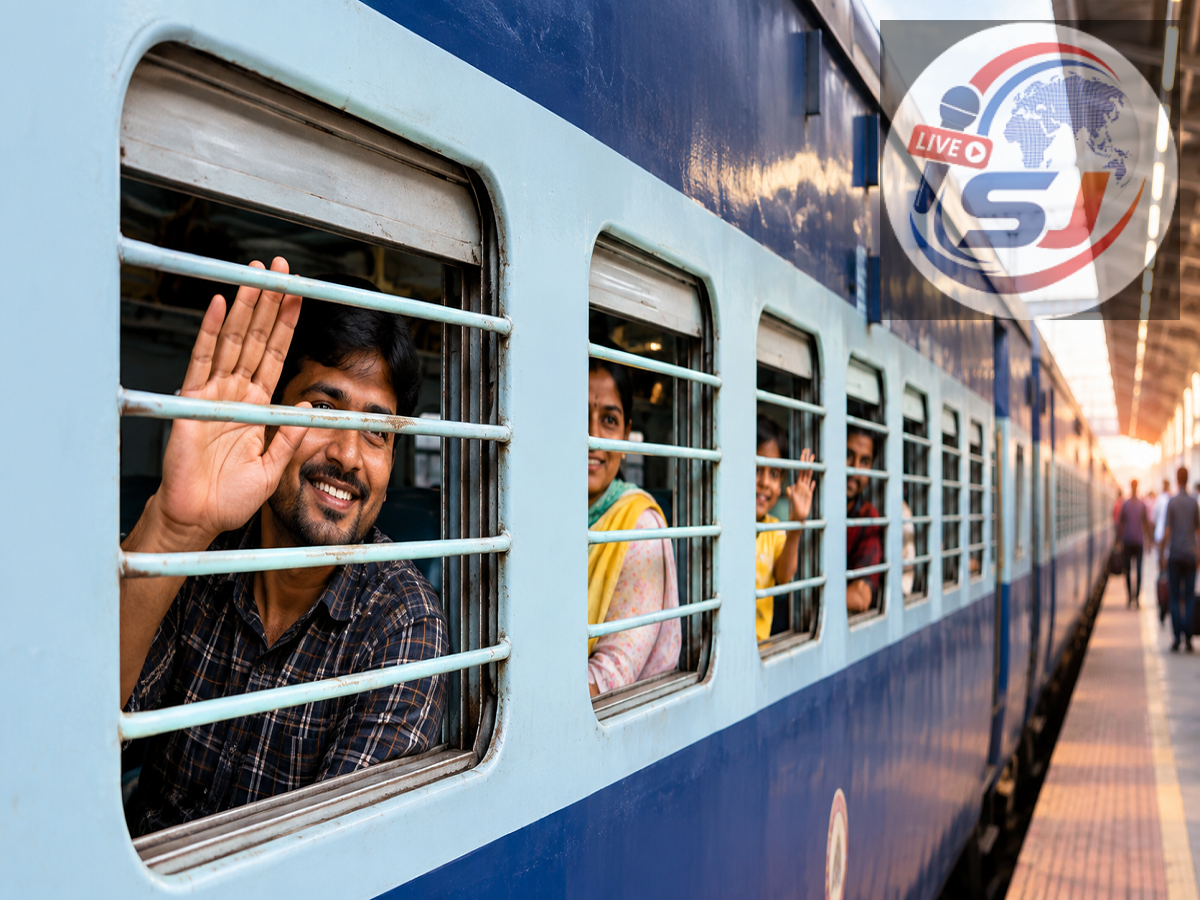
The rush for train tickets is intensifying ahead of Dussehra, Diwali and Chhath Puja as passengers prepare to travel home for the festive season. Seats on popular routes are filling quickly, while several trains are already showing long waiting lists.
Passengers who cannot find a confirmed ticket for the complete journey can consider splitting the route into two sections. They can also search for alternative trains, festival-special services and Tatkal availability.
These methods do not guarantee confirmation, but they can increase the number of booking options available when a direct ticket is sold out.
Festival Rush Makes Confirmed Tickets Difficult to Find
Train travel remains one of the most affordable options for people covering long distances during festivals. As a result, demand rises sharply on routes connecting major employment centres with Uttar Pradesh, Bihar, Jharkhand, West Bengal and other states.
Passengers can generally book reserved train tickets up to 60 days before the date of travel, excluding the journey date, under the applicable advance-reservation framework. However, even booking soon after the window opens may not always secure a confirmed berth on high-demand routes.
People who wait until the days immediately before a festival are more likely to find RAC or waiting-list status. Instead of depending entirely on one direct train, passengers can widen their search.
Split the Route at a Major Junction
A traveller who cannot find a confirmed ticket from the starting station to the final destination can divide the trip at a major railway junction.
Suppose a passenger wants to travel from Delhi to Patna but all direct options have long waiting lists. The traveller can separately check availability on routes such as:
- Delhi to Kanpur and Kanpur to Patna
- Delhi to Lucknow and Lucknow to Patna
- Delhi to Prayagraj and Prayagraj to Patna
- Delhi to Varanasi and Varanasi to Patna
One section may have confirmed availability even when the full Delhi–Patna journey does not.
The passenger may use different trains for the two sections. In some cases, availability may also differ by boarding station, quota, class or route segment on the same service. Every portion must be booked correctly, and a confirmed seat on one section does not automatically confirm the other.
How to Search for a Split Journey
Passengers can follow a simple process:
- Search for a direct train between the starting point and destination.
- If confirmed seats are unavailable, identify major junctions along the route.
- Check trains from the starting station to each possible junction.
- Search separately from that junction to the final destination.
- Compare arrival and departure times carefully.
- Confirm availability in both sections before paying.
- Review the total fare and journey duration.
Travellers should book both parts promptly if suitable seats are available. Availability can change quickly during the festive period.
Keep a Safe Gap Between Connecting Trains
Separate bookings usually mean separate PNRs. If the first train is delayed and the passenger misses the second service, Indian Railways may not automatically shift the traveller to another train or protect the onward reservation.
A short connection can therefore be risky. Passengers should leave a generous time gap between the scheduled arrival of the first train and the departure of the next one.
The buffer should be even longer if:
- The first train has a history of delays
- The connection falls during peak festival traffic
- The passenger is travelling with children or senior citizens
- Platforms are far apart
- The journey requires changing stations within a city
- The connection occurs late at night
Passengers should also check the waiting facilities and local transport available at the connecting point.
Search Other Trains on the Same Route
Many passengers focus only on the fastest or most familiar train. Another service operating on the same or a nearby route may still have available seats.
Search results can be expanded by checking:
- Trains departing from nearby stations
- Services arriving at a station close to the destination
- Different travel classes
- Trains operating one day earlier or later
- Slower services with additional stops
- Routes involving one practical interchange
Someone travelling from the Delhi region, for example, can compare services from New Delhi, Delhi Junction, Anand Vihar Terminal and Hazrat Nizamuddin, provided the station is practical for them.
Passengers must ensure that the selected boarding point is correctly recorded on the ticket.
Check Festival-Special Trains Regularly
Indian Railways often operates additional trains during major festivals to handle increased passenger traffic. Announcements may be made in phases, so a special service might become available even after regular trains have filled up.
Passengers should continue checking authorised railway platforms for newly announced services. Special trains may have different:
- Operating dates
- Train numbers
- Stoppages
- Departure timings
- Fares
- Cancellation conditions
Before booking, confirm that the train operates on the required date and stops at the intended boarding and destination stations.
Tatkal Can Be Used for Last-Minute Travel
Tatkal is another option for passengers unable to secure a regular confirmed ticket. A limited quota is released shortly before the journey, and demand can be extremely high during the festival season.
Passengers planning to use Tatkal should prepare their traveller details, identity document and payment method beforehand. They should check the current opening time and booking rules on an official railway platform because procedures may be updated.
Tatkal tickets carry an additional charge, and their cancellation rules are generally more restrictive than regular tickets. Confirmation is not guaranteed merely because the passenger attempts to book when the window opens.
Do Not Rely Completely on a Waiting-List Ticket
A waiting-list ticket may move towards RAC or confirmation when other passengers cancel, but this is uncertain. The chance depends on the train, route, class, quota and waiting-list category.
Passengers should monitor their PNR status and check the final position after chart preparation. An entirely waitlisted e-ticket is treated differently from a confirmed or RAC booking, and passengers should not board unless permitted under the applicable railway rules.
Use Only Authorised Booking Channels
High demand during Diwali and Chhath also leads to ticket scams. Fraudsters may promise a guaranteed berth, send a fake ticket screenshot or demand advance payment through an unofficial account.
Passengers should never share an OTP, UPI PIN, card PIN or banking password. Tickets should be booked through an official railway platform or a verified authorised agent.
Split-route booking, alternative stations, festival-special trains and Tatkal can improve the possibility of reaching home during the holiday rush. Travellers should still compare the total cost, connection time and risk before completing separate reservations.