
Nepal Flash Flood Disaster: Over 150 Dead, Hundreds Missing as Rescue Teams Race Against Time
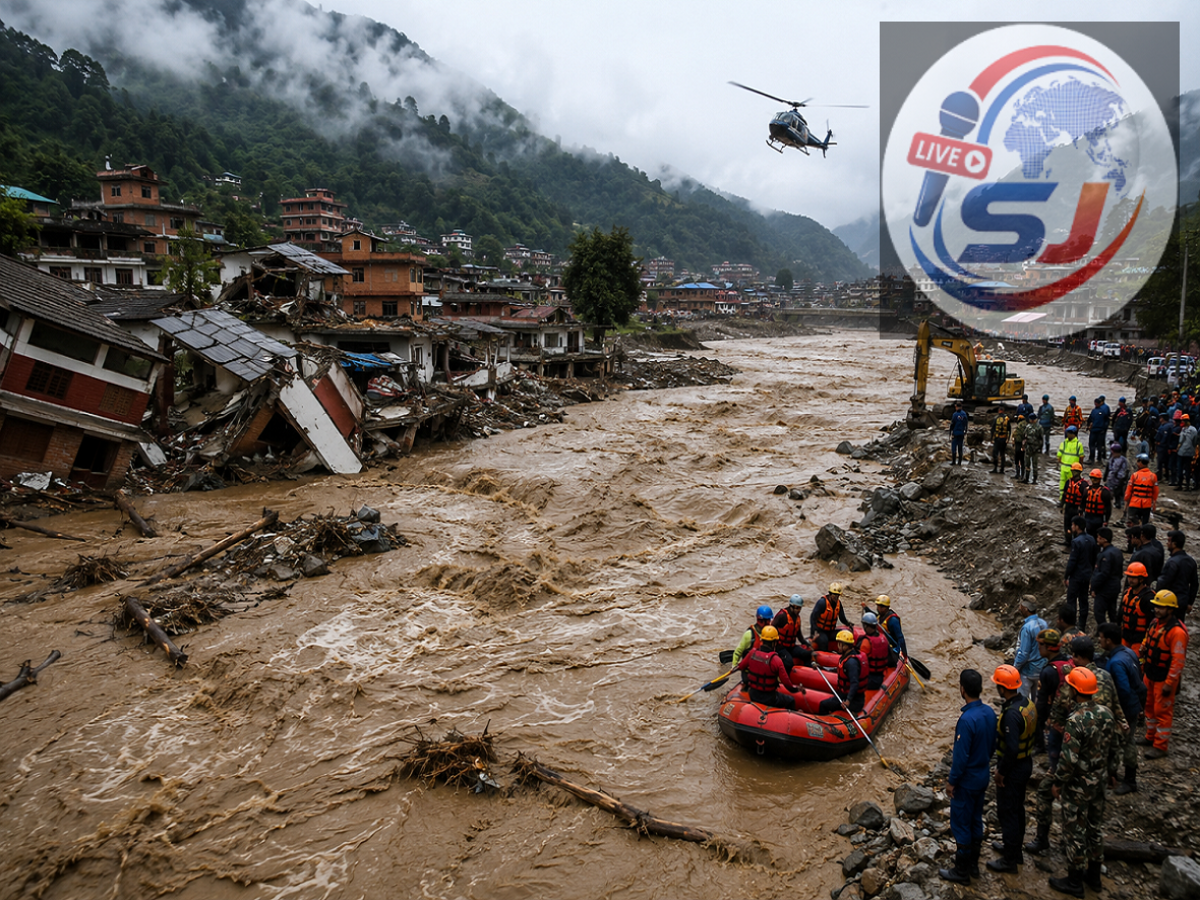
A catastrophic flash flood has devastated parts of northern and central Nepal near the Tibet border, killing more than 150 people and leaving hundreds unaccounted for. The disaster, which struck on Wednesday morning, has destroyed roads, bridges, homes and hydropower infrastructure across several districts, while rescue teams continue searching for survivors.
The scale of the tragedy is still unfolding. Nepalese authorities have confirmed at least 157 deaths, while reports from the Chinese side of the border have put the combined toll at around 160. Hundreds of people remain missing, including foreign tourists, security personnel, hydropower workers and local residents.
The disaster has particularly affected areas along the Bhotekoshi and Trishuli river systems, with Rasuwa, Nuwakot and Dhading among the worst-hit districts.
What Triggered the Deadly Flood?
Early reports initially raised questions about whether an earthquake in the Tibet region may have played a role in the disaster. However, subsequent assessments indicate that a glacial collapse and a massive movement of ice, rock and debris were likely responsible for the sudden surge of water.
According to Reuters, the lower portion of a glacier collapsed near the Nepal-Tibet border, sending a huge mass of ice and rock into the Lhende Khola river. This triggered an extremely powerful flood and mudslide that rushed downstream at high speed.
#WATCH | Valmikinagar, West Champaran (Bihar): The administration is on high alert due to the apprehension of a rise in the Gandak River's water level following flash floods in Tibet and Nepal.
— ANI (@ANI) August 26, 2026
West Champaran District Magistrate (DM) Taranjot Singh said, "Administrative… pic.twitter.com/yDG2oGcxyF
#WATCH | Valmikinagar, West Champaran (Bihar): The administration is on high alert due to the apprehension of a rise in the Gandak River's water level following flash floods in Tibet and Nepal.
— ANI (@ANI) August 26, 2026
West Champaran District Magistrate (DM) Taranjot Singh said, "Administrative… pic.twitter.com/yDG2oGcxyF
The Associated Press reported that analysis by the U.S. Geological Survey pointed to a glacial collapse as the primary cause rather than an earthquake itself.
The sudden nature of the event gave communities downstream very little time to react.
Roads, Bridges and Villages Swept Away
The flood caused extensive destruction along its path. Entire settlements were inundated as fast-moving water mixed with mud, rocks and other debris swept through river valleys.
At least 19 bridges and nearly 40 kilometres of road were reportedly destroyed, severely disrupting access to some of the worst-affected areas. Several hydropower facilities were also damaged, while communications and electricity supplies were interrupted in multiple locations.
Images and videos emerging from the region showed buildings surrounded by thick mud and debris, damaged roads and areas where the river appeared to have carved new channels through populated settlements.
The destruction of key roads and bridges has made rescue operations considerably more difficult, particularly in remote mountainous areas.
Hundreds of People Still Missing
The number of people listed as missing remains fluid as authorities gather information from isolated communities and tourist groups.
Reuters reported that more than 400 people, including hundreds of foreign visitors, remained unaccounted for in Nepal as search operations continued.
Earlier Nepal government figures cited by local media showed that hundreds of foreign and domestic tourists had lost contact with authorities. Personnel from the Nepal Army, Nepal Police and Armed Police Force were also among those reported missing.
The affected region is an important route for tourists and pilgrims travelling toward Himalayan destinations, including Mount Kailash.
Indians Among Foreign Nationals Reported Missing
A significant number of Indian nationals are feared to be among those affected by the disaster.
Initial reports said more than 100 Indians could be unaccounted for, including travellers and pilgrims in areas close to the Nepal-Tibet border. However, the exact nationality-wise figures have continued to change as rescue agencies locate survivors and reconcile lists of missing people.
Foreign nationals from several other countries are also believed to be missing. Reuters reported that tourists and workers from nations including the United States, Australia, Britain, Canada, South Korea and Malaysia were among those affected.
Authorities have therefore urged families to rely on official updates because preliminary missing-person figures can change rapidly during a large-scale disaster.
Rescue Teams Deployed Across Flood-Hit Areas
Nepal has mobilised its army, police and armed police personnel to carry out search-and-rescue operations.
Rescuers are attempting to reach communities cut off by damaged roads, landslides and flooding. Helicopters have also been deployed where weather and terrain permit, although high water levels and poor access have complicated air rescue operations in some areas.
More than 100 survivors have reportedly been rescued or moved for treatment since the disaster began.
The Nepal government has also ordered free medical treatment for injured victims and directed agencies to provide emergency assistance to affected families. Authorities have been instructed to restore roads, electricity and telecommunications as quickly as possible.
India Offers Assistance to Nepal
India has offered humanitarian and rescue assistance to Nepal following the disaster.
With the flood affecting a major Himalayan river system and raising concerns downstream, authorities in adjoining Indian states have also been monitoring water levels closely.
Reports indicate that evacuations were carried out in vulnerable parts of Bihar, while disaster-response teams remained alert in areas that could be affected by rising river levels.
International assistance is also being coordinated as the full extent of the devastation becomes clearer.
Glacial Disasters Becoming a Growing Himalayan Risk
The latest tragedy has once again highlighted the vulnerability of the Himalayan region to glacial collapse, flash floods and extreme weather.
Scientists have repeatedly warned that rising temperatures are accelerating changes in Himalayan glaciers. Melting ice can destabilise glaciers and create or expand glacial lakes, increasing the possibility of sudden floods.
The Associated Press cited experts who warned that warming conditions are increasing the risks associated with glacial melt and extreme weather across the Himalayas.
Nepal and neighbouring Himalayan regions have experienced several major flood and landslide disasters in recent years, making early-warning systems and climate-resilient infrastructure increasingly important.
Death Toll Could Rise as Search Continues
The situation remains extremely serious because many people are still missing and several affected locations have yet to be fully searched.
Rescue agencies are working through mud, debris and damaged infrastructure while trying to restore access to isolated communities. Officials fear the number of confirmed deaths could increase as teams reach areas that have remained cut off since the flood.
For now, authorities are focusing on locating survivors, providing medical treatment and shelter to displaced families, and establishing contact with tourists and residents who remain missing.
Note: Casualty and missing-person figures in major disasters can change quickly as rescue teams receive new information. The numbers above reflect reports available on August 27, 2026.