
Inflation October 2026: Onion, Garlic and Ginger Prices Push Food Inflation to 7.74%, Household Budgets Under Pressure
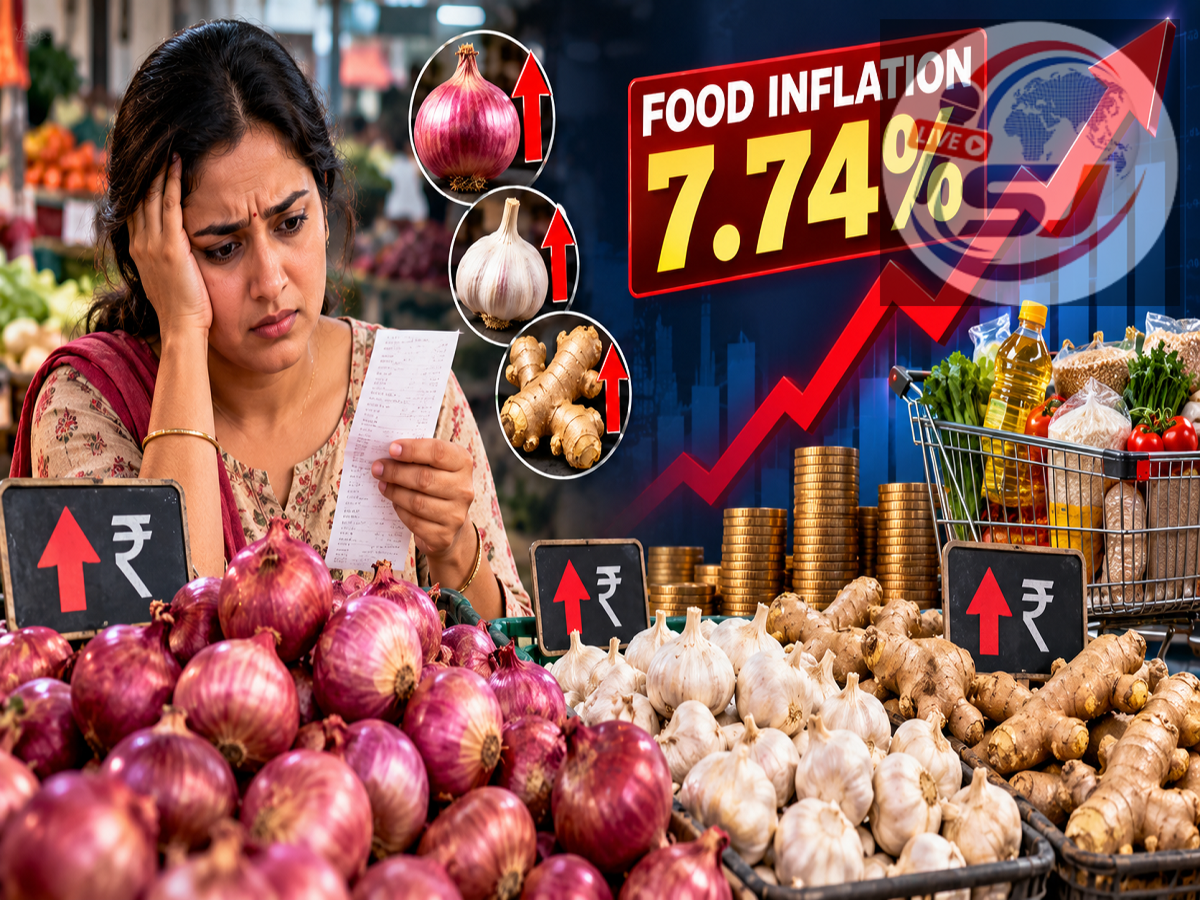
India Inflation News 2026: Rising prices of everyday kitchen essentials are putting fresh pressure on household budgets across India. Onions, garlic, ginger and lemons have become more expensive, increasing the cost of preparing meals at home. Eating outside has also become costlier as restaurants face higher food, energy and operating expenses.
According to inflation figures reported on October 13, 2026, India's retail inflation climbed to 5.54% in September, crossing the 5% mark and moving closer to the upper end of the Reserve Bank of India's inflation tolerance range.
Food inflation rose to 7.74% year-on-year in September, compared with 5.97% in August and 5.52% in July. The September figure was reported to be the highest in 21 months.
The increase has raised concerns about the cost of living, particularly for middle-income and lower-income families who spend a significant portion of their monthly earnings on essential goods and services.
Economists have warned that unfavourable weather conditions, higher crude oil prices and supply-related challenges could keep inflation elevated in the coming months.
Onion Prices Increase Pressure on Household Budgets
Onions are among the most commonly used vegetables in Indian kitchens. From everyday curries and vegetables to snacks and restaurant meals, they form an important part of food preparation.
When onion prices rise, the impact is felt across households, hotels, restaurants and food businesses.
The latest inflation report indicates that higher onion prices contributed to increased household food expenses during September 2026.
Garlic, ginger and lemons have also become more expensive, adding to the financial burden on consumers.
These ingredients are frequently purchased in smaller quantities, but repeated price increases can significantly affect a family's monthly grocery spending.
For households already managing expenses such as rent, electricity, transport and education, higher food prices can make budgeting more difficult.
Food Inflation Reaches 21-Month High
Food inflation has increased steadily over the past three months, according to the reported data.
In July 2026, the annual food inflation rate stood at 5.52%.
It increased to 5.97% in August before jumping to 7.74% in September.
| Month | Reported Food Inflation Rate |
|---|---|
| July 2026 | 5.52% |
| August 2026 | 5.97% |
| September 2026 | 7.74% |
The September reading represents an increase of 1.77 percentage points compared with August.
It was also 2.22 percentage points higher than the July figure.
The report describes September's food inflation as the highest level in 21 months.
These figures reflect year-on-year changes in the relevant price index, not an increase of 7.74% in every food item's price during September alone.
India's Retail Inflation Rises to 5.54%
The rise in food prices has also contributed to higher overall retail inflation.
According to the supplied report, India's retail inflation reached 5.54% in September 2026.
This places inflation near the upper boundary of the RBI's 2% to 6% tolerance band.
Higher retail inflation means that the general price level of goods and services is rising more quickly than before.
For consumers, this can reduce purchasing power unless household incomes increase at a comparable rate.
For example, families may need to spend more money to purchase the same basket of groceries and essential services.
However, the effect of inflation differs across households depending on their spending patterns.
Eating at Restaurants Also Becomes More Expensive
The impact of inflation is not limited to home cooking.
Restaurants and other food service businesses are also facing higher operating costs.
According to the report, inflation in food and beverage serving services reached 9.39% in September 2026.
Inflation in restaurant and accommodation-related services was reported at 9.36%.
These figures suggest that dining outside has become more expensive compared with the same period a year earlier.
Restaurants face costs associated with vegetables, cooking ingredients, electricity, fuel, employee wages and transportation.
When these expenses rise, businesses may increase menu prices to protect their operating margins.
As a result, consumers may face higher bills for both home-cooked meals and restaurant food.
Inflation in Different Services: September 2026 Data
Several service categories recorded price increases during September.
| Category | Reported Inflation Rate |
|---|---|
| Personal care and miscellaneous goods and services | 13.75% |
| Food and beverage serving services | 9.39% |
| Restaurant and accommodation-related services | 9.36% |
| Food inflation | 7.74% |
| Education services | 3.94% |
| Household goods and equipment | 3.11% |
| Housing-related utility services | 2.74% |
| Telecom and communication services | 2.44% |
| Recreation, sports and cultural services | 2.16% |
| Health services | 1.40% |
The reported data indicates that price pressures extend beyond food products.
Personal care and miscellaneous goods and services recorded particularly high inflation of 13.75%.
Meanwhile, education, communication and household utility services also became more expensive.
Education and Healthcare Costs Continue to Rise
Education services inflation increased from 3.73% in August to 3.94% in September.
Although this change appears relatively small, education is a recurring expense for families with school-going or college-going children.
Healthcare services inflation also increased, rising from 1.34% to 1.40%.
Telecommunication and communication services recorded inflation of 2.44%, compared with 2.01% in the previous month.
Inflation in housing-related utility services increased from 2.61% to 2.74%.
These developments suggest that families are experiencing price increases across multiple areas of regular spending.
Why Are Food Prices Rising?
Economists cited in the report identified several factors behind the increase in inflation.
Seasonal price movements, unfavourable weather conditions and the statistical base effect have contributed to the higher readings.
The base effect refers to the influence of prices in the comparison period a year earlier.
If prices were relatively low during the previous year, the annual inflation rate can appear higher even when the latest monthly increase is moderate.
Weather conditions can also affect agricultural production, transportation and the supply of vegetables.
When supply becomes insufficient to meet demand, market prices may rise.
El Niño Could Keep Food Inflation Elevated
The report also highlights concerns about El Niño-related weather conditions.
El Niño can influence rainfall patterns and temperatures, potentially affecting agricultural production in some regions.
Economists have warned that its effects could continue into 2027.
However, the actual impact on crop output and food prices will depend on regional weather patterns, planting decisions, irrigation availability and other agricultural conditions.
The report also identifies changes in crop production cycles and increased use of agricultural commodities for biofuel production as possible supply-side risks.
These factors could contribute to continued uncertainty in food markets.
Economists Expect Inflation to Remain High
Madhavi Arora, Chief Economist at Emkay Global Financial Services, was quoted in the report as forecasting average inflation of approximately 6.1% during the third quarter of FY2026-27.
The projection reflects concerns about higher crude oil-related costs and unfavourable weather conditions.
However, an economic forecast is not a confirmed future inflation reading.
Actual inflation may differ depending on food supply, international energy prices, currency movements and government policy measures.
Consumers should therefore view the 6.1% figure as an estimate rather than a guaranteed outcome.
Crude Oil Prices Add Another Inflation Risk
Higher crude oil prices can affect the cost of transporting goods and operating businesses.
The report cites Dipti Deshpande, Senior Director and Principal Economist at Crisil, as forecasting average Brent crude prices of $88 to $93 per barrel during FY2026-27.
This would represent a reported annual increase of approximately 25% to 32%.
Crude oil is an important input for the economy because it influences fuel costs, logistics and several industrial products.
When transportation and production costs rise, businesses may attempt to pass some of the additional expenses on to consumers.
However, changes in international crude oil prices do not always translate immediately or proportionately into domestic petrol and diesel prices.
RBI Faces a Challenge as Inflation Approaches 6%
The rise in inflation presents a challenge for the Reserve Bank of India.
The RBI's inflation framework aims to keep consumer price inflation around a 4% target, with a tolerance range of 2% to 6%.
With the reported September inflation rate at 5.54%, inflation is approaching the upper limit of that range.
The supplied report states that the RBI recently increased its policy repo rate by 25 basis points, taking it to 5.50%.
It also reports that the central bank revised its retail inflation forecast for the financial year from 5% to 5.2%.
Higher interest rates can help moderate demand-driven inflationary pressures, but they may also increase borrowing costs for some households and businesses.
Future monetary policy decisions will depend on incoming economic data and the RBI's assessment of inflation and growth.
How Can Rising Inflation Affect Household Finances?
Higher food and service prices can influence everyday financial decisions.
Families may need to allocate a larger share of their income toward groceries, transport, education and utility bills.
This can leave less money available for savings, discretionary purchases and other financial goals.
For households with fixed incomes, inflation can be particularly challenging because earnings may not rise as quickly as expenses.
Consumers may respond by comparing prices, reducing food waste, planning grocery purchases and reviewing non-essential spending.
However, these measures cannot completely offset broad-based inflation.
Will Onion and Other Vegetable Prices Fall Soon?
The direction of vegetable prices will depend on agricultural supply, seasonal arrivals, weather conditions and market demand.
An improvement in supplies could help ease pressure on some vegetable prices.
However, the supplied report does not provide a confirmed date for any reduction in onion, garlic, ginger or lemon prices.
It would therefore be premature to predict an immediate decline.
Consumers should follow local wholesale and retail price trends for a more accurate picture of changing market conditions.
India Inflation October 2026: Key Takeaways
India's reported retail inflation rose to 5.54% in September 2026, while food inflation reached 7.74%, its highest level in 21 months.
Rising prices of onions, garlic, ginger and lemons contributed to higher household food expenses.
Restaurant and food-serving services also recorded significant inflation, making meals outside the home more expensive.
Economists have warned that weather-related supply disruptions and elevated crude oil prices could keep inflation under pressure.
With inflation moving closer to the RBI's 6% tolerance ceiling, the coming months will be important for household budgets, food prices and monetary policy decisions.
Disclaimer: This article is based on the inflation figures and economist comments supplied in the October 13, 2026 report. The statistical figures have not been independently checked against the latest official government release. Forecasts concerning future inflation, crude oil prices and weather conditions are estimates and may change.