
Indian Railways Compensation: Reserved Seat Occupied Despite Complaint? Consumer Commission Orders ₹75,000 Payout
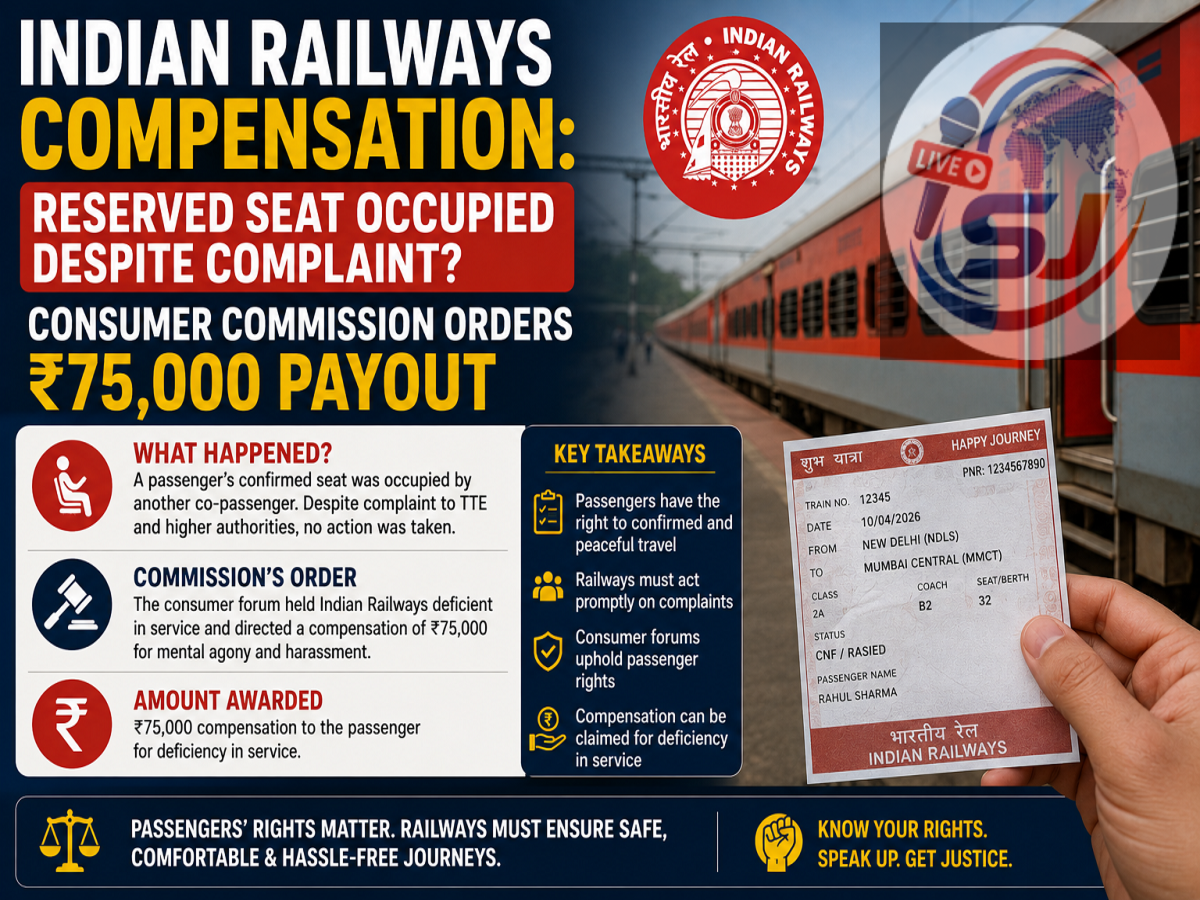
Train Reserved Seat Rules: A passenger travelling with family in Kerala allegedly could not use confirmed reserved seats after unauthorised passengers occupied them. Despite a RailMadad complaint, the issue was reportedly not resolved, prompting the consumer commission to order compensation.
Getting a confirmed railway ticket can sometimes require booking weeks or even months ahead, particularly on busy routes. But what happens when a passenger with a confirmed reservation boards the train only to find someone else occupying the allotted seat?
A recent case from Kerala highlights what passengers can do when railway staff fail to resolve such a problem. The Palakkad District Consumer Commission reportedly found a deficiency in railway service and directed the Railways to compensate the affected family.
What Happened During the Train Journey?
According to the case details, a passenger was travelling with family members on confirmed tickets. During the journey, several allegedly unauthorised passengers entered the coach and occupied seats reserved for the family.
The family reportedly asked for assistance and also registered a complaint through RailMadad, but claimed that the problem was not effectively resolved during the journey.
The passengers subsequently approached the consumer commission over the inconvenience they had faced.
Railway Ordered to Pay ₹75,000 Compensation
During the proceedings, the family submitted photographs as supporting evidence.
The Railways reportedly maintained that its personnel had taken action after receiving the complaint. However, the passengers argued that despite the intervention, their actual problem remained unresolved.
After considering the case, the consumer commission reportedly treated the incident as a deficiency in service and ordered the Railways to pay a total compensation of ₹75,000 to the family.
The case underlines the importance of railway authorities responding effectively when confirmed passengers are prevented from using their allotted accommodation.
What to Do If Someone Occupies Your Reserved Train Seat
If another passenger is sitting on a berth or seat allotted to you on a confirmed ticket, avoid getting into a physical or heated confrontation.
First, politely inform the passenger that the seat is reserved for you and show your ticket or reservation details. The person may simply have occupied the wrong berth by mistake.
If they refuse to vacate the seat, contact the Travelling Ticket Examiner (TTE) or other authorised railway staff.
Passengers can also contact the railway helpline 139 or lodge a complaint through RailMadad. When reporting the problem, provide accurate details such as your PNR, train number, coach and berth number.
Keep Evidence If the Complaint Is Not Resolved
If railway staff fail to address the issue and you later decide to pursue a formal complaint, documentation can become important.
Passengers should preserve their confirmed ticket or PNR details, along with the train number, date of travel, coach number and berth number.
Keep the complaint or reference number generated when reporting the issue through RailMadad or another railway channel. Photographs or videos documenting the situation may also be useful where appropriate and lawful.
Can Passengers Approach a Consumer Commission?
If a passenger believes there has been a deficiency in the service paid for and the grievance remains unresolved, they may consider using the applicable grievance-redressal or consumer-dispute mechanism.
However, compensation is not automatic simply because another person occupied a reserved seat. The outcome depends on the facts of each case, the evidence available and the findings of the competent authority or consumer commission.
The Kerala case therefore should not be interpreted as guaranteeing ₹75,000 compensation in every reserved-seat dispute.
Why This Case Matters for Railway Passengers
The case serves as a reminder that buying a confirmed reserved ticket is not merely about having a booking record. Passengers reasonably expect access to the accommodation allotted to them.
It also highlights why complaints should be documented rather than made only verbally. Keeping the PNR, complaint reference number and other supporting evidence can make it easier to establish what happened if the dispute has to be pursued later.
For passengers, the practical approach is straightforward: avoid confrontation, contact the TTE, register an official complaint if necessary and preserve the complaint details and evidence until the matter is resolved.