
Indian Railways Clean Station Campaign: Passengers Urged to Use Bottle Crushers and Dustbins
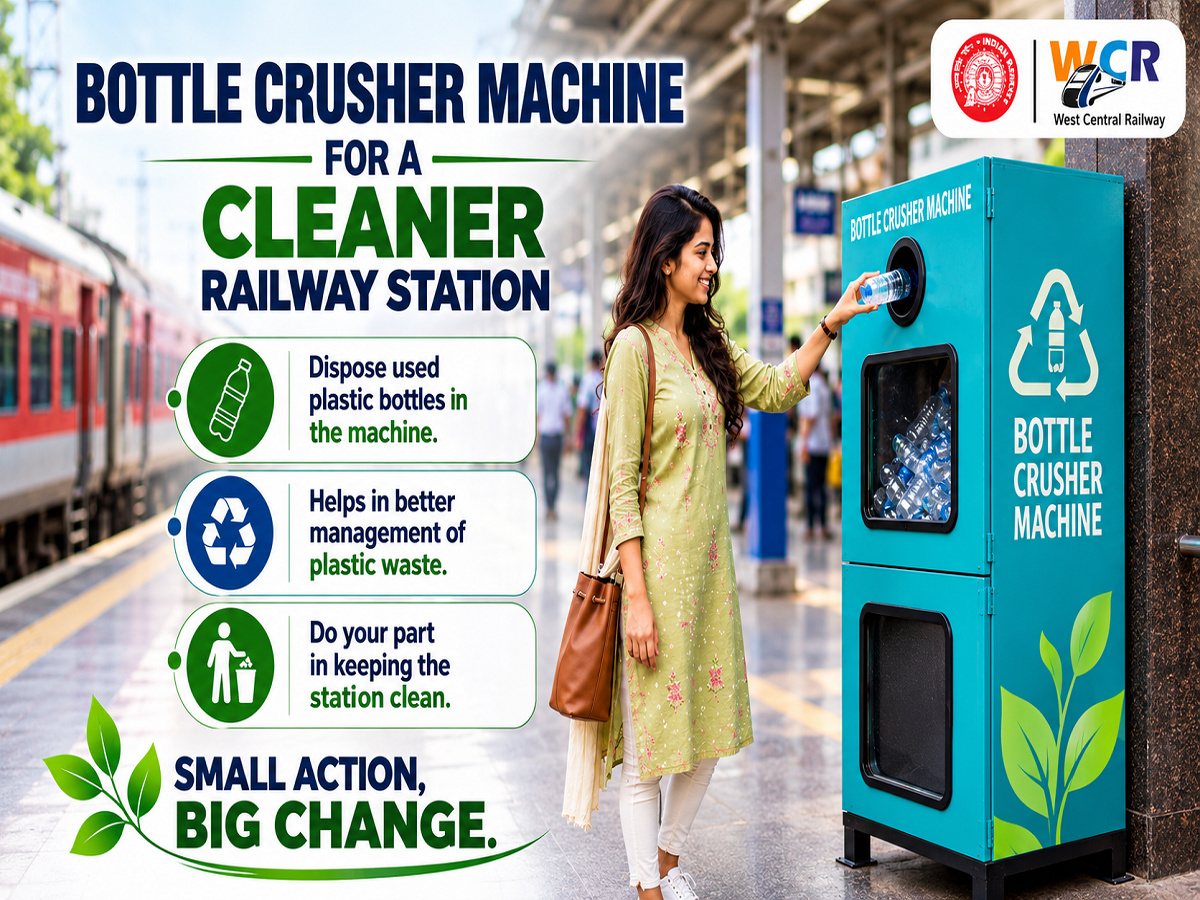
Indian Railways is encouraging passengers to take greater responsibility for maintaining cleanliness at railway stations by disposing of used plastic water bottles properly. Travellers are being advised to place empty bottles in designated dustbins or use bottle-crushing machines wherever these facilities are available.
The cleanliness message highlights the importance of public participation in keeping railway premises clean and reducing plastic waste.
Millions of passengers use India's railway network for daily commuting, business trips and long-distance journeys. With such extensive passenger movement, waste management remains an important part of maintaining clean and comfortable railway stations.
Indian Railways is reminding travellers that even a small action, such as disposing of an empty water bottle correctly, can contribute to cleaner stations and a healthier environment.
Indian Railways Encourages Responsible Plastic Waste Disposal
Plastic water bottles are commonly used by passengers during railway journeys. However, when empty bottles are left on platforms, railway tracks, waiting areas or station premises, they contribute to littering and environmental pollution.
The latest cleanliness message encourages passengers to use designated waste collection facilities rather than discard bottles in public areas.
Travellers are also being advised to use bottle-crushing machines installed at railway stations where available.
These machines help reduce the volume of used plastic bottles, making them easier to collect, store and transport for further waste processing.
Proper waste disposal can support station cleanliness and reduce the burden on sanitation workers.
What Is a Plastic Bottle-Crushing Machine?
A plastic bottle-crushing machine is equipment designed to compress or crush used plastic bottles.
These machines can reduce the space occupied by discarded bottles, helping improve the handling and storage of plastic waste.
At railway stations, bottle-crushing facilities may be installed in selected passenger areas to encourage responsible disposal.
Passengers can use the machines according to the instructions displayed at the installation.
However, bottle-crushing machines are not necessarily available at every railway station.
Where such equipment is unavailable, travellers should dispose of empty bottles in the appropriate designated waste bins.
Crushing a bottle is also not the same as recycling it. The collected plastic must still undergo appropriate sorting and processing before it can be recycled.
Why Is Plastic Waste Management Important at Railway Stations?
Railway stations generate different types of waste because of passenger movement, food services, packaged beverages and commercial activities.
Plastic bottles form one part of this waste.
When plastic waste is not collected properly, it can create sanitation problems and affect the appearance of public spaces.
Discarded bottles may also obstruct drainage systems or become scattered across railway premises.
Effective waste collection and segregation help reduce these problems.
Properly managed plastic waste can also be directed towards recycling facilities, subject to local waste-processing arrangements.
Keeping railway stations clean therefore requires both organised sanitation services and responsible behaviour from passengers.
How Can Passengers Help Keep Railway Stations Clean?
Passengers can contribute to station cleanliness by adopting simple habits during their journeys.
1. Use designated dustbins
Empty water bottles, food wrappers and other waste should be placed in appropriate bins rather than left on platforms or benches.
2. Use bottle-crushing machines
Where bottle-crushing facilities are available, passengers can use them according to the displayed instructions.
3. Avoid throwing waste onto railway tracks
Railway tracks should never be used for garbage disposal. Passengers must also avoid entering track areas to retrieve or dispose of waste.
4. Follow waste segregation instructions
Where separate bins are provided for different categories of waste, travellers should follow the displayed guidance.
5. Encourage responsible behaviour
Passengers can remind fellow travellers and family members to dispose of waste correctly and help maintain clean public spaces.
These simple actions can support the work of railway sanitation teams.
How Do Bottle-Crushing Machines Support Recycling?
Plastic bottles occupy considerable space when collected without compression.
Bottle-crushing machines reduce their volume, making storage and transportation more manageable.
This can improve the efficiency of waste collection operations, particularly at locations where large numbers of plastic bottles are discarded.
After collection, recyclable plastic must be sorted and sent to appropriate processing facilities.
Depending on the material and recycling system, recovered plastic may be processed into raw materials for manufacturing other products.
However, the environmental benefits depend on whether the collected waste actually enters an effective recycling process.
Simply crushing bottles does not guarantee that they will be recycled.
Clean Railway Stations Improve the Passenger Experience
Cleanliness plays an important role in the overall experience of railway passengers.
Well-maintained platforms, waiting halls, seating areas and station surroundings can make journeys more comfortable.
Proper waste disposal also helps sanitation workers maintain public areas more efficiently.
When passengers use available waste collection facilities, cleaning teams can focus more effectively on maintaining station infrastructure and addressing sanitation requirements.
A cleaner railway environment can also create a more welcoming atmosphere for visitors and regular commuters.
Maintaining these standards requires cooperation between railway authorities, cleaning personnel, commercial establishments and passengers.
Why Public Participation Matters in Railway Cleanliness
Railway cleanliness cannot depend entirely on sanitation workers.
Every passenger has a role in preventing litter and supporting proper waste management.
Public awareness campaigns help remind travellers that shared spaces require shared responsibility.
A passenger who places an empty bottle in a designated dustbin helps prevent littering.
Similarly, using a bottle-crushing machine where available can support organised plastic waste collection.
When these habits become part of everyday travel behaviour, they can contribute to long-term improvements in station cleanliness.
What Should Passengers Do if Dustbins Are Not Available?
Passengers who cannot immediately find a suitable dustbin should avoid leaving waste on platforms or other public surfaces.
They can temporarily retain empty bottles until an appropriate disposal facility is available.
Travellers may also seek guidance from authorised station personnel regarding waste collection points.
If a bottle-crushing machine is not functioning, passengers should use the designated plastic waste bin instead of attempting to repair or operate the equipment improperly.
Any damaged waste-management equipment can be reported to the appropriate railway staff.
Indian Railways Promotes Cleaner and Greener Travel
Waste management is an important part of maintaining railway infrastructure and encouraging environmentally responsible travel.
Initiatives involving designated dustbins, plastic waste collection and bottle-crushing equipment can help support cleanliness efforts.
However, the effectiveness of these facilities depends on proper maintenance, regular waste collection and public participation.
Passengers can contribute by following station instructions and avoiding unnecessary littering.
The message is simple: maintaining a clean railway station is a shared responsibility.
Final Update
Indian Railways is encouraging passengers to dispose of empty plastic water bottles in designated dustbins and use bottle-crushing machines wherever available.
The advisory emphasises that responsible waste disposal can contribute to cleaner railway stations and improved environmental protection.
Passengers should follow the instructions displayed at railway premises and support sanitation efforts through responsible behaviour.
A small habit, such as disposing of a used water bottle correctly, can make a meaningful contribution to cleaner stations and more sustainable railway travel.