India Criticizes New York Times Headline on PoK Unrest, Says ‘There Is No Pakistani Kashmir’
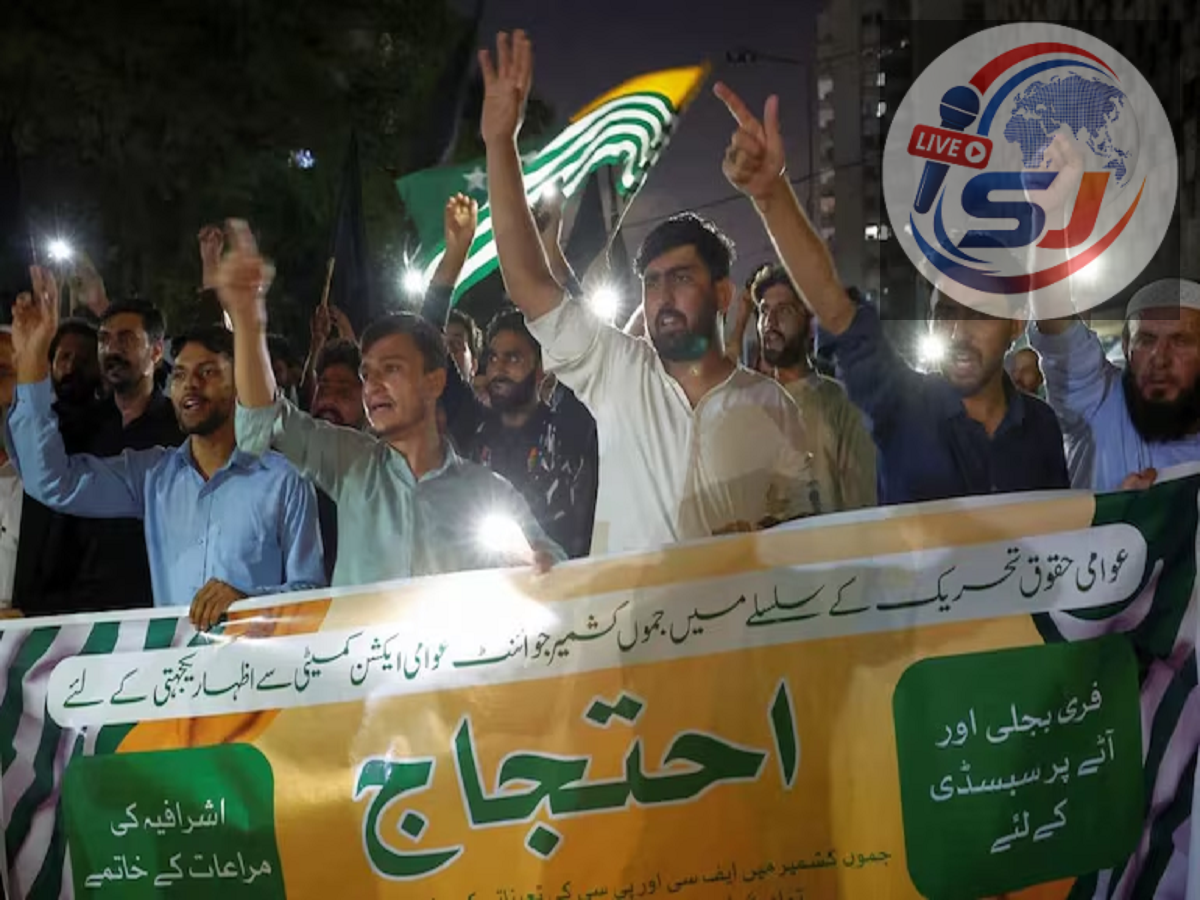
PoK Unrest: India has strongly objected to a headline published by The New York Times on unrest in Pakistan-occupied Kashmir (PoK), calling it "misleading" and "factually incorrect." The criticism came from the Embassy of India in Washington, D.C., which said the term "Pakistani Kashmir" is inaccurate and reiterated India's long-standing position that the region is an integral part of the country under illegal occupation by Pakistan.
The remarks follow reports of violence during local body elections in Pakistan-administered areas of Kashmir, where protests and clashes have reportedly intensified in recent weeks.
India Objects to the Terminology Used
In a statement, the Indian Embassy said there is "no Pakistani Kashmir", asserting that the correct description is Pakistan-occupied Kashmir (PoK).
The embassy further stated that the Union Territories of Jammu & Kashmir and Ladakh are, and will remain, integral parts of India. According to India's official position, Pakistan is in illegal occupation of portions of these territories.
Misleading and incorrect headline by @nytimes. There is no Pakistani Kashmir, only Pakistan occupied Kashmir.
— India in USA (@IndianEmbassyUS) July 29, 2026
The Union Territories of Jammu & Kashmir and Ladakh, have been, are and will always remain an integral and inalienable part of India. Pakistan has illegally occupied…
The embassy described the newspaper's headline as misleading because it did not reflect India's position on the status of the region.
Report Focused on Violence During Local Elections
The report in question discussed unrest and violent clashes linked to local elections in Pakistan-administered Kashmir.
According to the report, citing local officials and independent sources, at least 30 people have reportedly died since violence escalated in June. The unrest has been associated with demonstrations led by the Joint Awami Action Committee (JAAC), a coalition of political and social organizations.
The group has been protesting issues related to the region's electoral system, including reserved legislative seats and broader political representation.
India Links Unrest to Governance and Human Rights Concerns
India has argued that the ongoing protests reflect public dissatisfaction over governance in Pakistan-administered Kashmir.
According to the Indian government's position, the demonstrations stem from factors such as:
-
Economic hardship.
-
Alleged administrative neglect.
-
Political discrimination.
-
Restrictions on fundamental rights.
India has also maintained that the local body elections conducted by Pakistan in the region cannot alter its legal claim over the territory.
Reports of Casualties During Protests
According to information cited in the report and other accounts referenced by Indian officials, security forces reportedly used force against protesters during demonstrations.
Reports indicate:
-
More than 30 civilians were reportedly killed.
-
Over 30 others were injured.
-
The protests were led by the Joint Awami Action Committee (JAAC) during a march between Rawalakot and Muzaffarabad.
Some reports also stated that one of those killed was related to a senior member of the protest organization.
These casualty figures have not been independently verified by this publication.
India Reiterates Its Position on PoK
India has consistently maintained that the entire region of the former princely state of Jammu and Kashmir, including areas currently under Pakistan's administration, legally belongs to India.
The government has repeatedly described elections conducted by Pakistan in the territory as an attempt to reinforce its control over the region, a position Pakistan rejects.
The territorial status of Kashmir remains one of the central disputes between India and Pakistan, with both countries maintaining differing legal and political claims.
The Bottom Line
India has criticized The New York Times over its description of unrest in Pakistan-administered Kashmir, saying the headline was misleading because it referred to the region as "Pakistani Kashmir." Reiterating its official position, India stated that the area is Pakistan-occupied Kashmir (PoK) and forms an integral part of India.
The criticism comes amid reports of violent clashes during local elections in the region, where dozens of deaths have been reported. The developments highlight both the continuing unrest in the territory and the longstanding diplomatic differences between India and Pakistan over Kashmir.