
Delhi Vehicle Entry Rules From November 1: High Court Refuses Urgent Hearing on BS-VI Restrictions
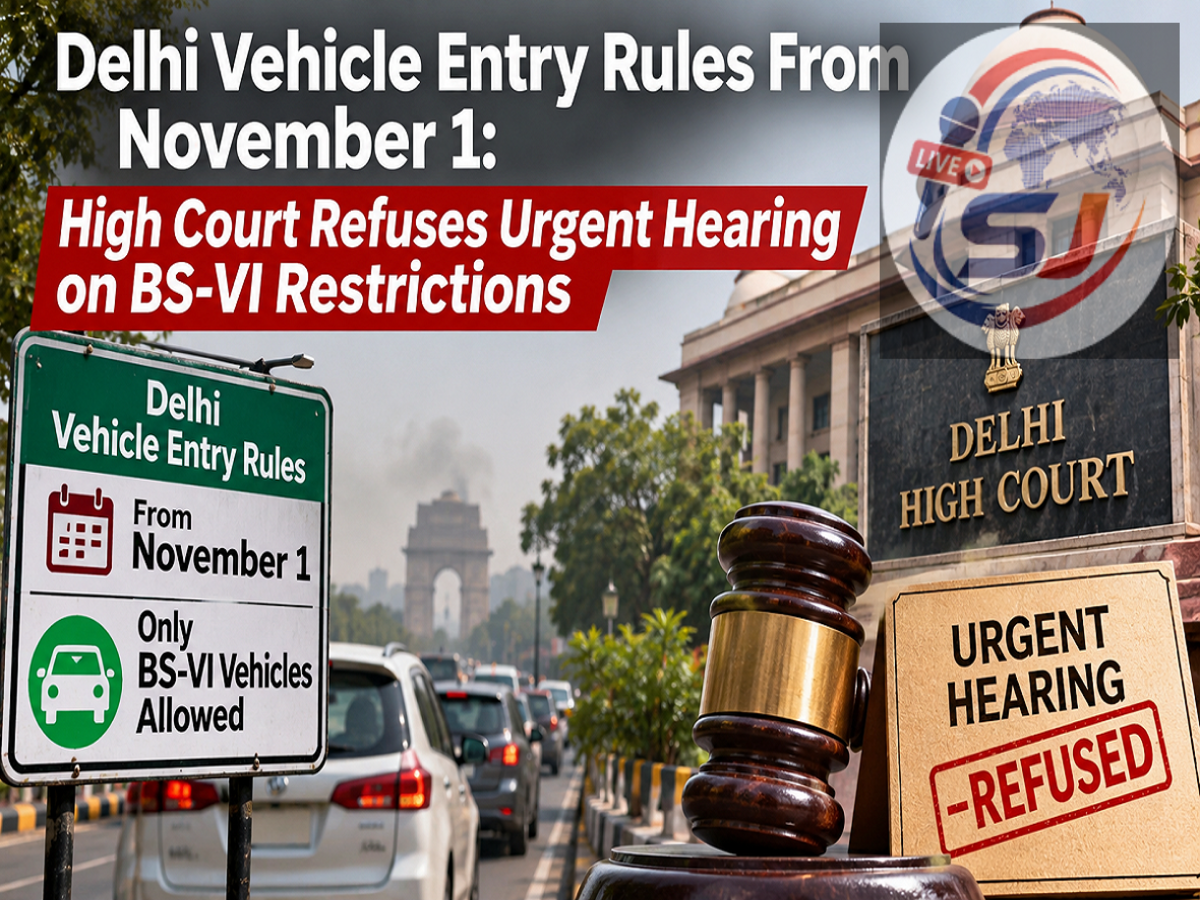
Delhi Vehicle Ban 2026: Vehicle owners travelling to the national capital from neighbouring NCR cities may face new restrictions starting November 1, 2026. The Delhi government's decision to restrict the entry of vehicles that do not meet Bharat Stage VI (BS-VI) emission standards has become a major concern for commuters. Meanwhile, the Delhi High Court has declined to grant an urgent hearing to a petition challenging the government's move.
The restrictions are part of Delhi's winter pollution control measures, aimed at reducing vehicular emissions and improving air quality during the colder months.
According to reports, the new entry rules could affect more than 10 lakh vehicles registered across different parts of the National Capital Region (NCR).
Delhi High Court Declines Immediate Hearing on Vehicle Restrictions
The Delhi High Court has refused to urgently hear a petition questioning the government's decision to restrict the entry of non-BS-VI vehicles into the capital.
The matter was presented before a bench comprising Acting Chief Justice Nitin Wasudeo Sambre and Justice Sanjay Sharma on Friday, October 30.
According to reports cited by Live Hindustan and The Economic Times, the bench found no reason to treat the petition as an urgent matter.
The judges indicated that the government's decision did not warrant immediate judicial intervention.
However, the court's refusal to grant an urgent hearing does not mean that the legal challenge has been finally dismissed.
The petition is expected to be considered through the regular judicial listing process.
Why Was the Delhi Government's Decision Challenged?
The petitioner raised concerns about the difficulties that the new vehicle restrictions could create for people travelling regularly between Delhi and neighbouring NCR cities.
The lawyer representing the petitioner argued that many commuters own cars and other vehicles that do not comply with BS-VI emission standards.
Such vehicle owners could face difficulties entering Delhi from November 1, even if they depend on their vehicles for work, business or other daily activities.
The argument focused particularly on residents who travel between Delhi and nearby cities for employment and essential personal requirements.
After considering the submission, the High Court observed that alternative transportation options were available.
The bench subsequently directed that the matter proceed through the normal hearing process rather than being taken up immediately.
Which Vehicles Face Entry Restrictions in Delhi?
Under the reported winter pollution control measures, vehicles that do not comply with BS-VI emission standards may face restrictions when entering Delhi from outside the capital.
The categories potentially affected include:
-
Petrol and diesel cars that do not meet BS-VI emission norms.
-
Older two-wheelers covered by the notified restrictions.
-
Taxis and other passenger vehicles with emission standards below BS-VI.
-
Other applicable non-BS-VI vehicles travelling into Delhi from NCR locations.
The restrictions are reported to apply from November 1, 2026, until January 31, 2027.
However, vehicle owners should check the official government notification for the exact vehicle categories, registration conditions and enforcement provisions before travelling.
More Than 10 Lakh Vehicles Could Be Affected
The restrictions could have a significant impact on daily transportation across the NCR.
According to The Economic Times, more than 10 lakh vehicles from neighbouring cities may potentially come under the new rules.
Commuters travelling from locations such as Noida, Ghaziabad, Gurugram and Faridabad could experience difficulties if their vehicles do not meet the required emission standards.
People who regularly travel to Delhi for office work, business meetings, education or other purposes may need to consider alternative transportation arrangements.
Public transport services, including the Delhi Metro, buses and other permitted transport options, could become important alternatives for affected commuters.
Which Vehicles Are Exempt From the Delhi Entry Ban?
The reported restrictions provide exemptions for certain categories of vehicles.
These include CNG-powered vehicles, electric vehicles and vehicles used for emergency services.
Ambulances, fire engines and police vehicles are among the emergency service vehicles covered by the reported exemptions.
These exceptions are intended to maintain essential services and reduce inconvenience while the pollution control measures remain in force.
Drivers should nevertheless verify the applicable exemption conditions through official transport department instructions.
Why Is Delhi Introducing Stricter Vehicle Rules?
Delhi frequently experiences deteriorating air quality during winter because of a combination of weather conditions and pollution sources.
Vehicular emissions, road dust, industrial activities, construction work and other sources contribute to the city's air pollution problem.
During colder months, low wind speeds and unfavourable atmospheric conditions can allow pollutants to accumulate near ground level.
The Delhi government has therefore introduced additional measures to control emissions and limit activities that could worsen pollution levels.
Restricting certain older vehicles is one part of this broader strategy.
BS-VI emission standards, introduced nationwide in April 2020 for new vehicles, impose stricter limits on several pollutants compared with earlier Bharat Stage standards.
Construction and Demolition Restrictions Also Announced
Apart from vehicle-related measures, additional restrictions on construction and demolition activities have been reported for Delhi-NCR.
According to the source report, construction and demolition work will face restrictions between November 5 and November 20, 2026.
The objective is to reduce dust pollution, which can contribute to worsening air quality.
The precise scope of these restrictions, including any exemptions for essential projects, will depend on the applicable official directions.
Construction companies, contractors and property owners should review the relevant notifications before starting or continuing work during the restricted period.
Work From Home Rules for Delhi-NCR Offices
The Commission for Air Quality Management (CAQM) has also reportedly announced temporary workplace measures for several NCR districts.
According to the report, government and private offices in Delhi, Ghaziabad, Gautam Buddha Nagar, Gurugram, Faridabad and Sonipat have been directed to operate with a maximum of 50% of their workforce physically present between November 5 and November 20.
The remaining employees would work from home under the reported arrangement.
These measures are intended to reduce daily commuting, lower traffic congestion and limit vehicle-related emissions.
Employees and employers should confirm the applicable requirements through official CAQM directions and workplace communications.
What Should Vehicle Owners Do Before Entering Delhi?
People planning to drive into Delhi should check their vehicle's emission compliance status before beginning their journey.
Vehicle registration documents generally contain information about the applicable Bharat Stage emission standard.
Drivers should also ensure that their Pollution Under Control Certificate (PUCC) is valid wherever required.
However, having a valid PUCC does not automatically exempt a vehicle from restrictions based on its emission standard.
Commuters should consult official Delhi Transport Department and CAQM updates to understand the latest entry rules, exemptions and enforcement arrangements.
What Happens Next?
The Delhi High Court's decision not to grant an urgent hearing means that the petition challenging the restrictions will continue through the regular legal process.
For now, the reported winter pollution control measures remain an important consideration for commuters travelling into the national capital.
Vehicle owners, commercial transport operators and daily office commuters should follow official announcements carefully, as enforcement arrangements may be clarified or modified through subsequent government directions.