
Delhi Family Card Explained: Will the New System Replace Ration Cards and How Could Families Benefit?
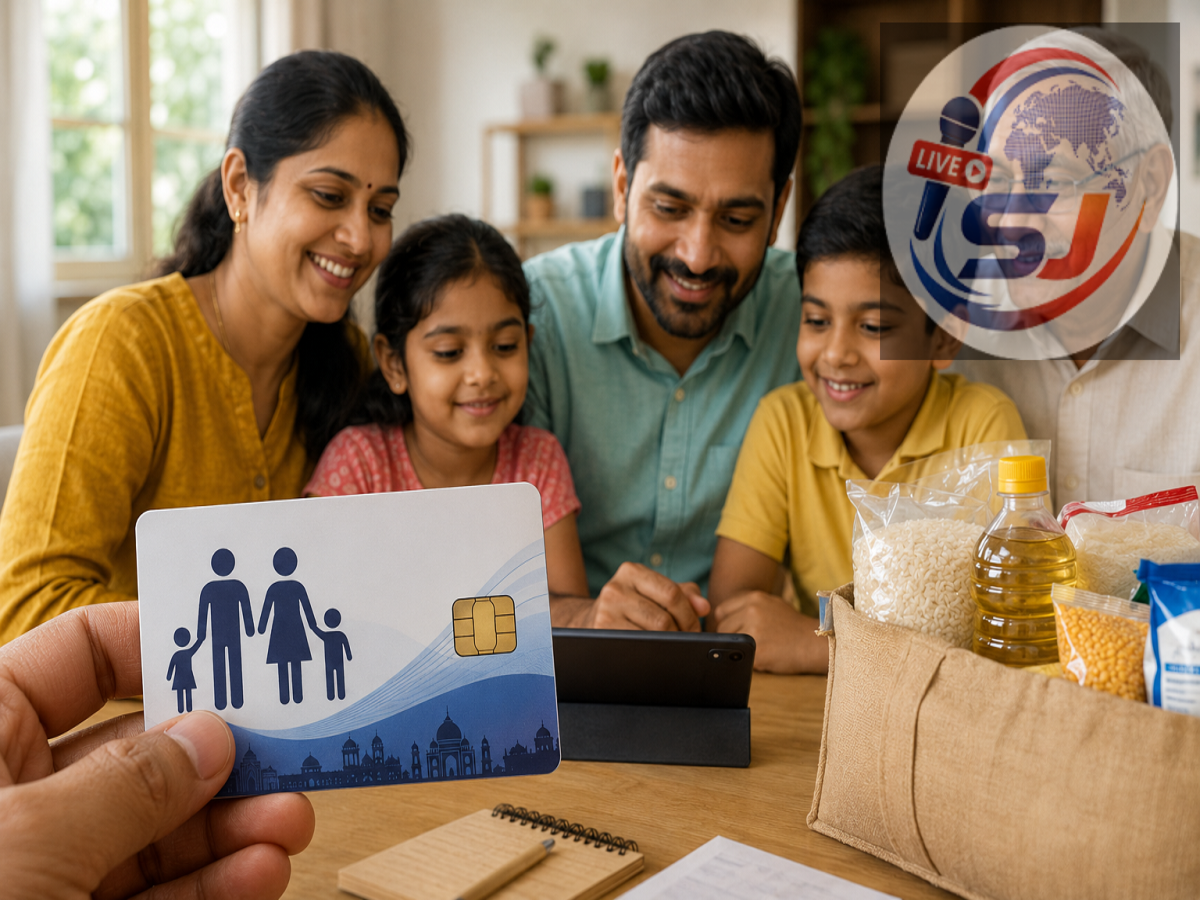
Delhi residents could soon get a new Family Card designed to bring household information and government welfare-related data onto a common platform. The Delhi government is reportedly working on the proposed system with the aim of making access to public schemes easier while improving the identification of eligible beneficiaries.
The initiative could create a consolidated digital record of families and their members, potentially reducing the need to repeatedly submit the same information while applying for different government services.
However, one question is likely to concern many households: Will the Family Card replace the existing ration card?
Based on the information available so far, the Family Card should not be considered a direct replacement for the ration card. The two are intended to serve different purposes, although the Family Card could eventually become an important tool for managing access to multiple welfare schemes.
What Is the Delhi Family Card?
The proposed Family Card is intended to create a unified household-level database.
Instead of government departments maintaining completely separate information about the same family, the new system could bring key household details together in one place.
The database is expected to contain information about all members of a family and their eligibility or participation in government welfare programmes.
Officials believe such a system could help the administration determine whether benefits are reaching the correct households and identify cases where someone may be receiving benefits for which they are not eligible.
The Delhi government is also reportedly preparing a legal framework for implementing the proposed system.
Who Could Be the Head of the Family Card?
One notable proposal is that the Family Card may be issued in the name of the eldest woman in the household.
If this provision is included in the final framework, the eldest female family member could be recorded as the primary household representative, while details of other members would be linked to the same family record.
However, residents should wait for the government's final rules for confirmation of eligibility, documentation requirements and the process for identifying the head of the family.
Will the Family Card Replace Delhi's Ration Card?
At present, describing the Family Card as a replacement for the ration card would be misleading.
A ration card has a specific role in India's public food-distribution framework. Eligible households use it to access subsidised foodgrains and other benefits provided under applicable food-security programmes.
The proposed Family Card has a broader objective.
Rather than being designed only for food distribution, it is expected to create a consolidated record of the household and help connect eligible families with different government schemes.
Therefore, residents should not surrender, cancel or stop using their existing ration cards based merely on reports about the proposed Family Card.
Any future change affecting ration cards would require an official government announcement.
Why Is Delhi Planning a Family-Level Database?
Government welfare systems often require beneficiaries to provide similar documents repeatedly.
A household applying for different schemes may have to submit proof of identity, family details, income-related information, residence documents and other records multiple times to different departments.
A centralised family database could reduce this duplication.
If information is already verified and available in the government's system, departments may be able to use the existing family record when processing eligible services.
This could make administration faster while reducing paperwork for residents.
What Information Could the Family Card Contain?
The proposed system is expected to maintain information relating to all members of a household.
This may include basic family-member details along with changes in household composition over time.
Birth and death information is also expected to be integrated into the family record. Such integration could allow the database to be updated when a new member is born or when a registered family member dies.
Depending on the final design, the system could potentially reduce outdated beneficiary records and make it easier for government departments to determine the current composition of a household.
The exact categories of data to be collected, however, will depend on the final rules and legal framework.
How Could Delhi Residents Benefit?
If implemented effectively, the Family Card could simplify interaction with multiple government departments.
One potential benefit is reduced documentation. Residents may not have to provide the same family information repeatedly when applying for different eligible schemes.
Another possible advantage is easier access to certain services from home. If household information has already been verified digitally, some applications or updates may be processed online rather than requiring repeated physical visits to government offices.
A common database could also help residents keep track of schemes associated with their household.
Government Could Identify Duplicate or Ineligible Benefits
The system is not being designed only for convenience.
A unified family database could also help authorities identify discrepancies in welfare records.
For example, if different government databases contain conflicting information about the same household, a consolidated system could make those inconsistencies easier to detect.
It could potentially help identify duplicate beneficiaries, outdated records or cases where benefits are being claimed incorrectly.
The broader objective would be to ensure that public money and welfare assistance reach eligible households rather than being lost through duplication or inaccurate records.
Could One Family Card Give Access to Multiple Schemes?
This appears to be one of the major objectives behind the proposal.
Instead of creating an entirely separate beneficiary identity for every programme, the Family Card could act as a common household reference across participating government schemes.
However, having a Family Card would not necessarily mean that every household automatically qualifies for every scheme.
Individual welfare programmes can have their own eligibility requirements based on income, age, occupation, family circumstances or other criteria.
The card could simplify identification and verification, but eligibility would still depend on the rules governing each scheme.
Residents Should Wait for Official Application Details
Since the Family Card is still being prepared, residents should be cautious about messages claiming that applications have already started unless they come from an official Delhi government source.
Important details—including eligibility, required documents, application procedure, launch date and whether registration will be automatic—will become clearer once the government formally announces the framework.
Residents should also be wary of websites, social media posts or agents asking for money or sensitive personal information in the name of obtaining a Family Card before an official application process is announced.
Family Card and Ration Card Could Serve Different Purposes
The key point for Delhi residents is that the proposed Family Card and the existing ration card should currently be viewed as separate systems.
The ration card remains associated with eligible food-distribution benefits, while the Family Card is being planned as a broader household information and welfare-delivery platform.
If implemented as proposed, the system could reduce repeated paperwork, improve coordination between departments and help the government maintain more accurate beneficiary records.
Until detailed rules are officially notified, however, Delhi residents should continue using their existing documents and should not assume that their ration card or any other welfare card has automatically become invalid because of the proposed Family Card.