
Car Damaged or Swept Away in Floods? Know When Motor Insurance Pays and How to File a Claim
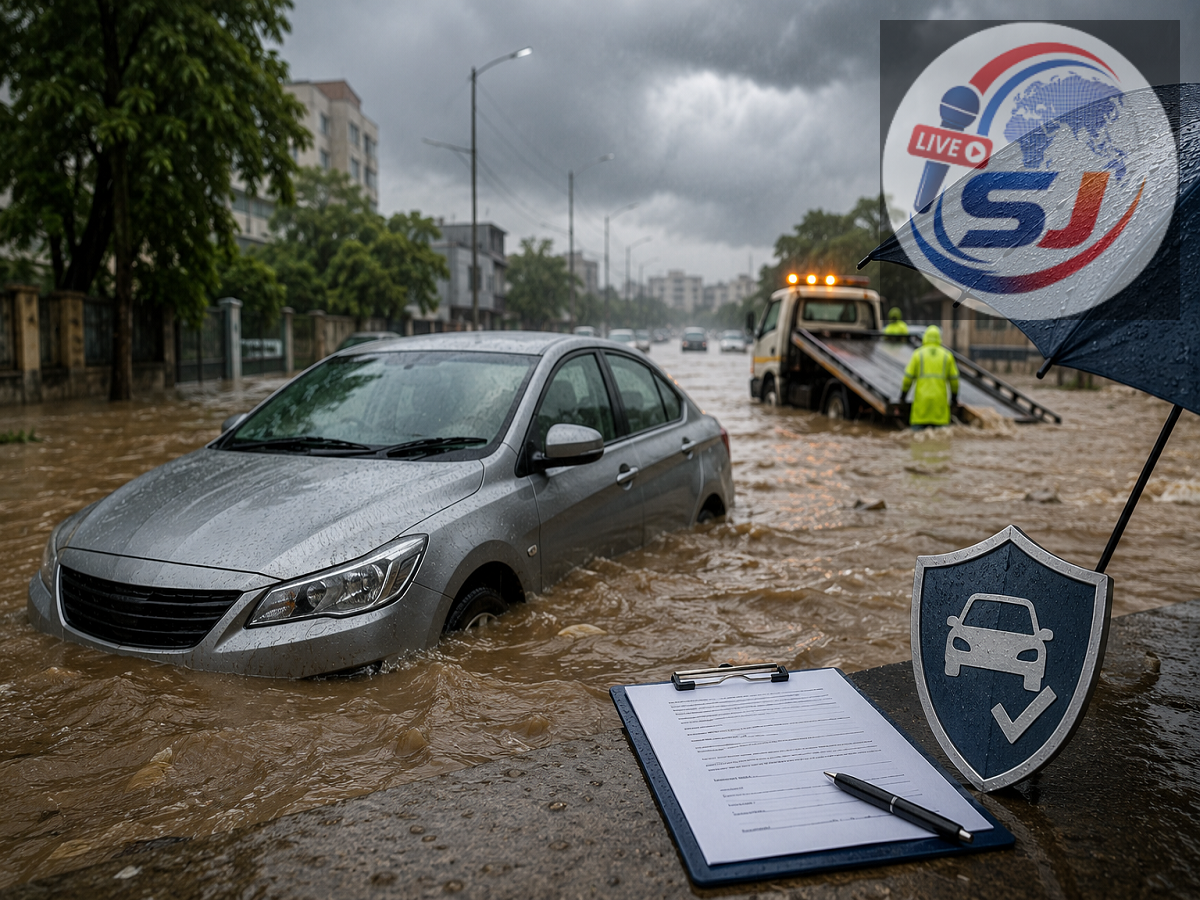
Flood Car Insurance Claim Rules: Heavy rainfall and waterlogging can create serious problems for vehicle owners, especially in areas where roads and parking spaces are submerged. A car may stop working after water enters the engine, suffer electrical damage, or in extreme cases, get swept away by strong floodwater.
When this happens, one of the biggest concerns for car owners is whether the insurance company will pay for the loss. The answer depends mainly on the type of motor insurance policy you have, the nature of the damage and the steps you take immediately after the incident.
Not every motor insurance policy provides protection against flood-related damage. Understanding the difference between basic third-party insurance and comprehensive cover can therefore save you from unpleasant surprises during the monsoon season.
Does Car Insurance Cover Flood Damage?
Whether you can claim compensation for a flood-damaged vehicle depends largely on your insurance coverage.
If your car is insured only under a third-party motor insurance policy, damage to your own vehicle due to flooding is generally not covered. Third-party insurance is primarily designed to cover legal liability arising from injury, death or damage caused to another person or their property.
A comprehensive motor insurance policy, on the other hand, usually provides broader protection for the insured vehicle. Depending on the policy terms, it may cover damage caused by natural events such as floods, storms and other specified calamities, along with risks such as theft and accidents.
Therefore, vehicle owners who have comprehensive insurance are generally in a much better position to claim for direct flood-related damage than those who hold only third-party insurance.
Why Add-On Covers Can Make a Big Difference
Even with comprehensive insurance, every type of water-related loss may not automatically be reimbursed in full. Certain expensive components and repair expenses may require additional protection.
One of the most useful add-ons during the rainy season is engine protection cover. If water enters the engine and causes internal damage, repairs can be extremely expensive. Standard comprehensive policies may not always cover consequential engine damage caused after water ingress, particularly when the vehicle is restarted after becoming submerged.
An engine protection add-on can provide additional financial protection in such situations, subject to the insurer's policy conditions.
Another useful option is zero depreciation cover. Normally, insurers may deduct depreciation on replaced parts while settling a claim. With zero-depreciation protection, eligible depreciation deductions on covered parts can be reduced or waived according to the terms of the policy.
A consumables cover may also help with expenses involving items such as engine oil, lubricants, brake fluid, nuts, bolts and similar materials used during repairs.
Meanwhile, roadside assistance can be particularly valuable if a car becomes stranded in a flooded area. It may help arrange towing or transportation to an authorised workshop without forcing the owner to attempt to drive the damaged vehicle.
Never Try to Restart a Flooded Car
One of the most important precautions after a vehicle gets stuck in deep water is to avoid repeatedly trying to start the engine.
If the engine has stalled due to waterlogging, attempting to restart it can allow water to enter critical engine components. This may result in hydrostatic lock or serious internal damage.
Such damage may be treated differently from the original flood damage because the insurer may consider whether the driver's actions worsened the loss.
For this reason, once a vehicle stalls in floodwater, the safer approach is to switch off the ignition, move to a safe location and contact the insurer or roadside assistance service.
Avoid pushing the vehicle into operation or trying repeated ignition attempts merely to move it out of the water.
What Should You Do Immediately After Flood Damage?
Once you and other passengers are safe, document the condition of the vehicle as clearly as possible.
Take photographs and videos showing the water level, the location of the car and visible damage. These records may become important while submitting a claim.
Inform the insurance company as soon as possible through its helpline, mobile app, website or authorised representative. The insurer may then arrange for a surveyor to inspect the vehicle.
Avoid carrying out major repairs before the inspection unless the insurer has specifically authorised them. If the car needs to be moved, use professional towing services instead of attempting to drive it.
Keep all relevant documents ready, including the insurance policy, registration certificate, driving licence and any towing or repair-related receipts.
What Happens if the Car Is Swept Away and Cannot Be Found?
Floods can sometimes be powerful enough to carry away parked or stranded vehicles. If the car cannot be located, the claim process may involve additional documentation.
The owner should report the incident to the police and inform the insurance company immediately.
If the vehicle remains untraceable after the required investigation, the insurer may process the case according to the policy's total-loss or theft-related provisions, depending on the circumstances and documentation.
The settlement amount is generally linked to the vehicle's Insured Declared Value (IDV) mentioned in the policy rather than the original purchase price of the car.
The insurer may require documents such as the police complaint, investigation records and an untraced or similar report before completing the claim settlement.
When Is a Flood-Damaged Car Considered a Total Loss?
A vehicle does not necessarily need to disappear to qualify as a total loss. Severe flood damage can sometimes make repairs financially impractical.
If the estimated repair cost crosses the threshold specified under the motor insurance policy and applicable rules, the insurer may classify the vehicle as a total loss or constructive total loss.
In such cases, settlement is generally calculated with reference to the insured declared value and applicable deductions under the policy.
This is why checking the IDV while purchasing or renewing car insurance is important. Choosing an unrealistically low IDV may reduce the premium slightly but could also lower the amount payable in a major-loss claim.
Check Your Insurance Before the Monsoon Gets Worse
Flood damage can lead to costly repairs, particularly when the engine, electronics, transmission or interior components are affected. Having only the legally required third-party cover may leave the vehicle owner responsible for these expenses.
A comprehensive policy combined with relevant add-ons such as engine protection, zero depreciation and roadside assistance can provide significantly wider protection.
Car owners should also remember that insurance is not a substitute for taking reasonable precautions. Avoid driving through heavily flooded roads, never attempt to restart a submerged vehicle and report any damage to the insurer without unnecessary delay.
Disclaimer: Motor insurance coverage, exclusions, claim requirements and settlement conditions vary by insurer and policy. Vehicle owners should read their policy wording carefully and confirm applicable coverage with their insurance provider before filing a claim.