35 Bihar-Bound Trains Cancelled, 33 Diverted: Check Your Train Before Starting the Journey
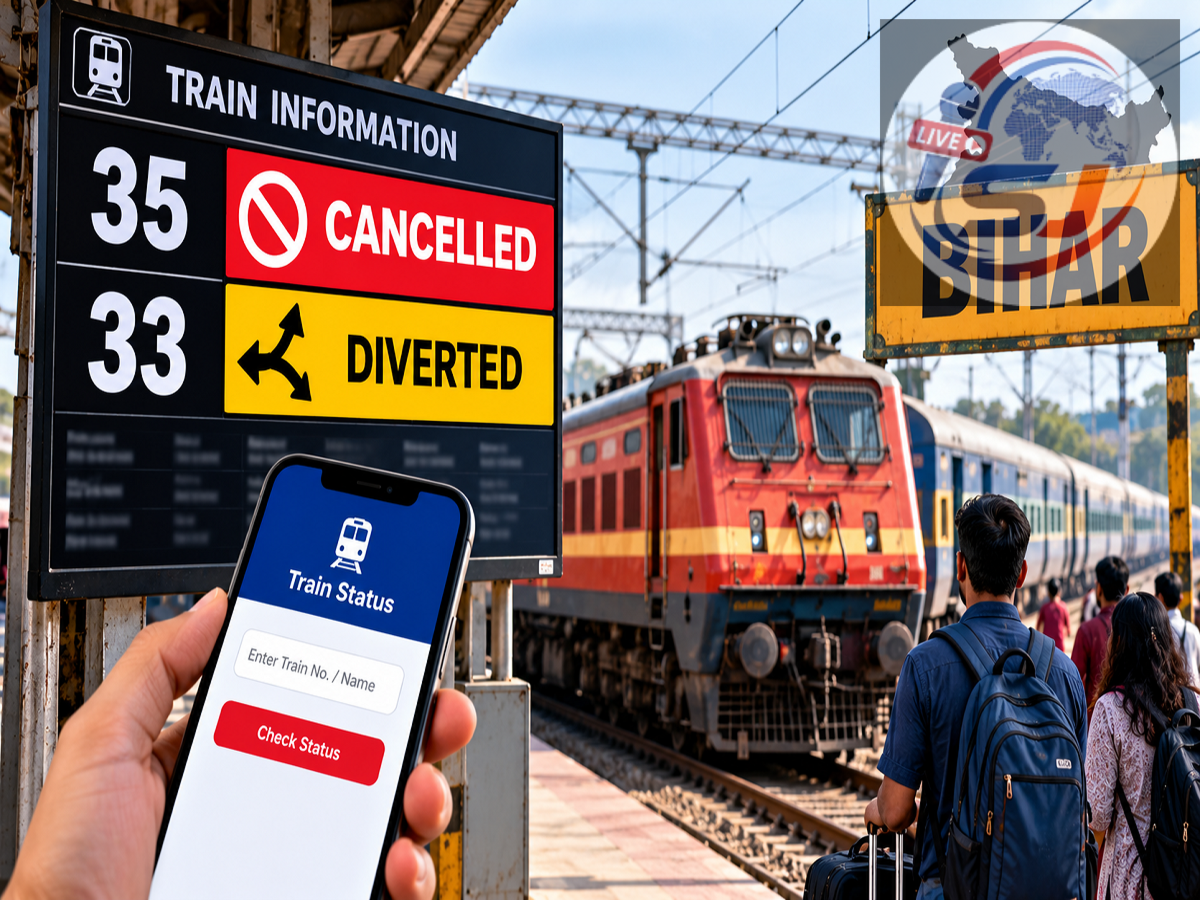
Rail passengers travelling to or through Bihar should check their train status before leaving for the station, as ongoing work at the Rajendra Bridge has led to major changes in railway operations.
According to the September 28 report, 35 trains have been cancelled and 33 services have been diverted because of the work. Several other trains are also facing operational changes, including short termination and short origination.
The disruption is affecting services connected with several important railway stations and routes, including Patna, Barauni, Mokama, Kiul, Jaynagar and Howrah.
Passengers with confirmed reservations should therefore not assume that their train will operate on its usual route or from its regular originating station.
Why Have So Many Trains Been Cancelled or Diverted?
The operational changes are linked to ongoing work at the Rajendra Bridge.
When major railway infrastructure work is carried out on an important route, train movement may need to be restricted to provide the necessary operational block and ensure safe execution of the work.
Railways can respond to such restrictions in several ways.
A train may be completely cancelled, diverted through an alternative route, terminated before its normal destination or started from a station different from its scheduled originating point.
As a result, even passengers whose trains have not been cancelled may still face changes to their journey.
35 Trains Reported Cancelled
According to the report, 35 trains have been cancelled as part of the temporary operational arrangement.
Passengers booked on affected trains should verify the cancellation status using their train number and journey date.
This is especially important because a cancellation may apply only on specified dates rather than throughout the entire period of infrastructure work.
Passengers should therefore check the status for their actual date of travel instead of relying solely on the train's general timetable.
33 Trains Will Operate on Diverted Routes
Another 33 trains have reportedly been diverted.
A diverted train continues operating but does not necessarily follow its normal route.
This can be particularly important for passengers boarding or getting off at an intermediate station.
If your station lies on the section being bypassed, the train may not stop there at all on the affected date.
A diversion can also alter journey times because the alternative route may be longer or operationally busier than the regular route.
Passengers travelling on diverted trains should check both the revised route and updated arrival/departure information.
What Does Short Termination Mean?
Some trains may be short-terminated because of the disruption.
Short termination means a train starts its journey normally but ends at a station before its scheduled final destination.
For example, if a service is normally scheduled to travel from one city to another but is terminated at an intermediate station, passengers travelling beyond that point would need to make alternative arrangements.
This is why checking only whether a train is shown as "running" may not provide enough information.
Passengers should also verify whether the train will reach their booked destination.
What Is Short Origination?
Short origination is essentially the opposite.
Instead of starting from its normal originating station, the train begins its journey from a later station on the route.
Passengers booked from stations located before the revised originating point may therefore be unable to board the train as originally planned.
If your service is short-originated, check the revised departure station and time before travelling to the station printed on your original ticket.
Patna, Barauni and Mokama Routes Among Those Affected
The operational changes have implications for services connected with major railway points including Patna, Barauni and Mokama.
These locations are important parts of the regional rail network, so changes around the affected section can have consequences for passengers travelling beyond the immediate area.
Services associated with Kiul and Jaynagar are also mentioned among those affected.
Passengers travelling between Bihar and other states should therefore check their individual train rather than assuming that only local services are disrupted.
Howrah-Linked Services Also Face Changes
The impact is not limited to passengers travelling entirely within Bihar.
According to the report, some services connected with Howrah are also affected.
This means passengers travelling between West Bengal and Bihar, or using trains that pass through the affected corridor on longer journeys, should also verify their travel status.
A route diversion in Bihar can potentially affect arrival times at stations located much farther away.
Check These Details Before Leaving Home
Passengers with journeys scheduled during the affected period should verify several details before travelling:
-
Whether the train is operating on the scheduled date
-
Whether it has been completely cancelled
-
Whether the route has been diverted
-
Whether your boarding station is still included
-
Whether the train has been short-originated
-
Whether your destination is still being served
-
Whether the train has been short-terminated
-
Whether departure or arrival timings have changed
Checking these details shortly before departure can prevent unnecessary travel to the station.
A Confirmed Ticket Does Not Guarantee the Original Schedule
Having a confirmed reservation does not mean that the train's original operating plan cannot change.
Railways can modify train operations because of engineering work, infrastructure upgrades, operational restrictions, weather conditions or other requirements.
Therefore, passengers should check the latest running and operational status even if their ticket was booked weeks or months earlier.
This is especially important when a large number of trains have been affected at the same time.
What Happens If Your Train Is Cancelled?
Refund treatment depends on factors such as whether the train is fully cancelled, the type of ticket and the applicable railway refund rules.
Passengers with e-tickets on a fully cancelled train should check the refund status through the platform used for booking and the applicable railway rules.
The situation can be different for a diverted train or when a passenger decides not to travel because the train is skipping their boarding or destination station.
In such cases, the relevant refund procedure and time limits should be checked carefully.
Don't Rely on an Old Screenshot or Social-Media List
Railway operational plans can be updated.
A cancellation or diversion list circulated on messaging apps or social media may be incomplete or may relate to a different journey date.
Passengers should verify their specific train number and date using official railway information before changing their travel plans.
The most useful information is the latest status of your individual train—not simply the total number of trains affected.
Travelling to Bihar? Check the Train Status First
The Rajendra Bridge work has resulted in a significant temporary reshuffling of train operations.
According to the report, 35 trains have been cancelled and 33 diverted, while additional services are facing short termination, short origination or other operational changes.
The impact extends across important railway connections involving Patna, Barauni, Mokama, Kiul, Jaynagar and Howrah.
Passengers travelling on affected routes should verify their train number, date, boarding station, destination and revised route before starting for the railway station.
A few minutes spent checking the latest status can help avoid reaching the station only to discover that the train has been cancelled, diverted or is no longer operating from the originally scheduled boarding point.
Note: The supplied report excerpt does not contain the complete train-number-wise cancellation/diversion schedule or the specific dates applicable to each service. Passengers should therefore verify the latest official railway status for their train and journey date before travelling.