
Teachers’ Day 2026: Why India Celebrates Teachers’ Day on September 5 and the Story Behind the Tradition
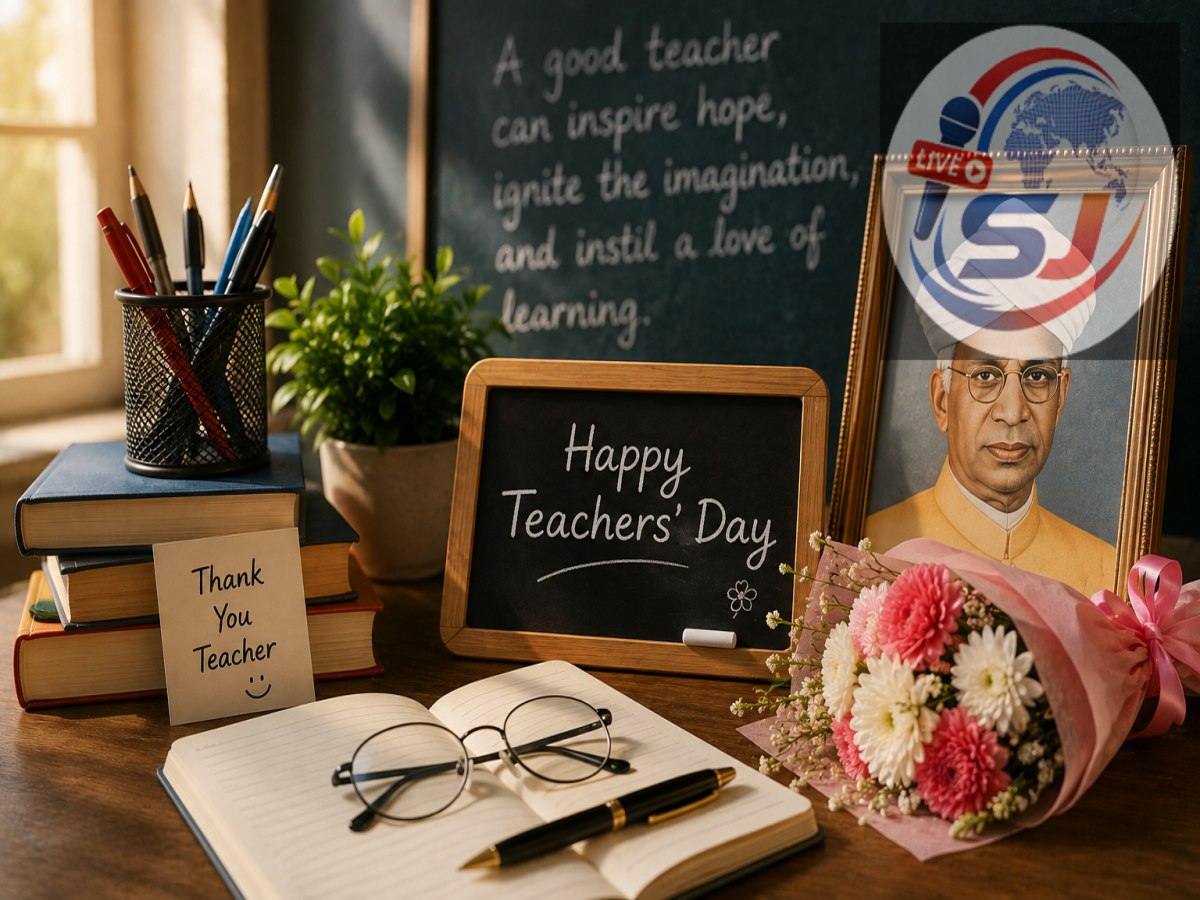
Teachers’ Day 2026: Every year on September 5, students across India celebrate Teachers’ Day to honour the educators who play an important role in shaping their knowledge, character and future. Schools, colleges and educational institutions mark the occasion with cultural programmes, speeches, performances and special activities dedicated to teachers.
In many schools, senior students temporarily step into the role of teachers, while elsewhere educators are felicitated for their contribution to learning and student development.
But why was September 5 chosen as Teachers’ Day in India? The answer is closely connected with Dr Sarvepalli Radhakrishnan, one of India's most distinguished philosophers, educators and statesmen.
Why Is Teachers’ Day Celebrated on September 5?
September 5 marks the birth anniversary of Dr Sarvepalli Radhakrishnan, who served as India's first Vice-President and later became the country's second President.
He was born on September 5, 1888, in Tiruttani, which was then part of the Madras Presidency.
Long before holding the country's highest constitutional offices, Radhakrishnan established himself as a respected scholar and teacher of philosophy. Education remained a major part of his intellectual and professional life, and he taught at several academic institutions during his career.
His work also helped introduce Indian philosophical thought and traditions to a wider international audience.
It is this close association with teaching and education that eventually linked his birthday with the celebration of teachers across India.
How Did Teachers’ Day Begin in India?
The widely told story behind Teachers’ Day dates to the period after Dr Radhakrishnan became President of India.
According to the account, some of his students and friends wanted to celebrate his birthday on September 5. Rather than treating the occasion as a personal celebration, Radhakrishnan reportedly suggested that it would be more meaningful if the day were dedicated to recognising teachers.
That idea eventually became the foundation of India's Teachers’ Day tradition.
Instead of commemorating September 5 simply as the birthday of an individual, the occasion developed into a nationwide celebration of teachers and their contribution to society.
Who Was Dr Sarvepalli Radhakrishnan?
Dr Radhakrishnan was a philosopher, academic, teacher and statesman whose career extended across both education and public life.
His scholarly work focused heavily on philosophy, including interpretations of Indian philosophical and religious traditions.
His academic background was especially significant because his later political career did not overshadow his identity as an educator.
He became the first Vice-President of India and subsequently served as the second President of India.
His association with Teachers’ Day reflects the importance he placed on education and the role educators can play in the intellectual and personal development of students.
What Did Radhakrishnan Believe About Education?
For Radhakrishnan, education was not merely about textbooks, examinations or obtaining academic qualifications.
His broader educational outlook emphasised the development of a person's ability to think, understand and grow.
In this view, the responsibility of a teacher goes beyond delivering lessons in a classroom. Teachers can become mentors who encourage students to think independently, understand values and develop into responsible individuals.
This philosophy also explains why Teachers’ Day is intended to be more than an annual school celebration.
It provides an opportunity to recognise how educators can influence a student's life long after formal classroom teaching has ended.
How Is Teachers’ Day Celebrated in Schools?
Teachers’ Day celebrations differ from one institution to another, but students are usually at the centre of the activities.
Schools and colleges may organise speeches, cultural performances, competitions, games and felicitation ceremonies.
One popular tradition involves students taking over classroom responsibilities for a short period and playing the role of their teachers. The activity gives them an opportunity to experience, even briefly, the responsibility involved in teaching and managing a classroom.
Students also express their appreciation through handmade cards, messages and personal notes.
The purpose does not have to be an expensive celebration. A sincere message acknowledging a teacher's influence can often be more meaningful.
Why Teachers Continue to Matter in the Digital Age
Education has changed dramatically with the growth of smartphones, online classes, artificial intelligence and digital learning platforms.
Students today can access enormous amounts of information almost instantly.
Yet access to information does not automatically translate into understanding.
Teachers continue to play an important role in helping students interpret information, develop critical-thinking abilities, identify their strengths and learn from mistakes.
Technology can support the learning process, but the guidance, encouragement and human understanding offered by a good teacher remain valuable parts of education.
Teachers’ Day in India vs World Teachers’ Day
India's Teachers’ Day should not be confused with World Teachers’ Day.
India celebrates Teachers’ Day on September 5 because of its connection with Dr Sarvepalli Radhakrishnan's birth anniversary.
World Teachers’ Day, on the other hand, is observed on October 5.
The international observance is associated with the 1966 ILO/UNESCO Recommendation concerning the Status of Teachers, which addressed important issues related to teachers' rights, responsibilities, working conditions and professional standards.
Therefore, September 5 in India and October 5 internationally have different historical backgrounds, even though both occasions recognise the importance of teachers.
Teachers’ Day 2026: More Than a School Celebration
Teachers’ Day is ultimately about acknowledging people who contribute to learning and personal development.
A teacher's influence can extend beyond marks and examinations. The right guidance at an important stage of life can affect a student's confidence, career choices, values and approach to challenges.
This is why the occasion remains relevant decades after the tradition began.
As India observes Teachers’ Day on September 5, 2026, the day provides students with an opportunity to remember the teachers who have influenced their lives and express gratitude for their guidance.
The history behind September 5 also carries a simple message: Dr Sarvepalli Radhakrishnan's birthday became significant not merely because of the positions he held, but because of the value he placed on teachers, education and the transformative power of learning.