
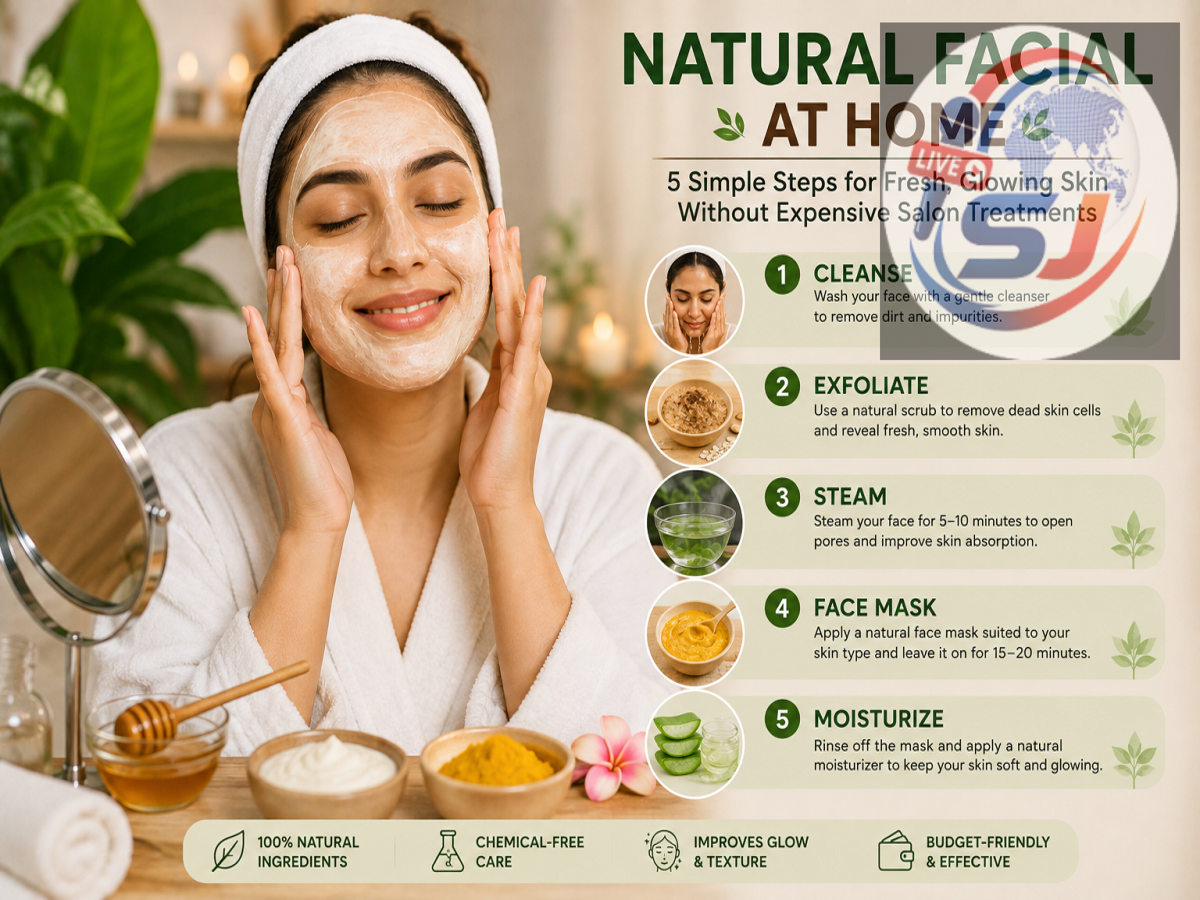
Natural Facial at Home: 5 Simple Steps for Fresh, Glowing Skin Without Expensive Salon Treatments
Festivals, weddings and special occasions often make people pay extra attention to their skin. While salon facials are a popular choice, getting a fresh-looking complexion does not necessarily require an expensive beauty treatment. A simple skincare routine using commonly available ingredients can also help cleanse and moisturise the skin at home.
However, "natural" does not automatically mean suitable for every skin type. Ingredients such as milk, essential oils, fragrances, turmeric or even aloe vera may irritate sensitive skin in some people. It is therefore sensible to patch-test any new mixture before applying it across the face.
Here is a simple five-step home facial routine that can be adapted according to your skin type.
Step 1: Start With Gentle Cleansing
Cleansing is the foundation of any facial because it removes dirt, excess oil, sweat and other impurities from the skin.
Begin by washing your face with a mild cleanser and lukewarm water. If your skin tolerates dairy products, some traditional home routines use milk or plain curd as part of cleansing, but these aren't necessary for effective skincare.
Apply your chosen cleanser gently rather than rubbing aggressively. Massage it over the face and neck for a short time before rinsing thoroughly.
The objective is simply to start the facial with clean skin without damaging its natural barrier.
Step 2: Exfoliate Carefully
Exfoliation helps remove loose dead skin cells from the surface and can temporarily make the skin feel smoother.
For a homemade option, finely ground oats can be mixed with a small quantity of honey and enough water or rose water to create a soft paste. Let the oats soften before applying the mixture.
Massage it extremely gently using circular movements. Avoid vigorous scrubbing, particularly around the eyes.
People with acne, irritated skin, eczema, rosacea or a damaged skin barrier may be better off skipping physical exfoliation altogether. Over-exfoliating can cause redness, irritation and increased sensitivity rather than giving the desired glow.
Step 3: Give Your Skin a Moisturising Massage
After cleansing and exfoliation, the next step focuses on hydration.
A simple moisturiser suitable for your skin type is the safest choice. Aloe vera gel is another commonly used option, although it should only be used if your skin tolerates it.
Instead of aggressively massaging or pulling the skin, spread the product gently across your face and neck.
People with oily or acne-prone skin should be particularly cautious about adding heavy oils such as almond oil to facial mixtures because they may not suit everyone.
After a few minutes, remove any excess product gently with lukewarm water or a clean, damp cloth.
Step 4: Apply a Face Pack
Traditional homemade face packs often combine ingredients such as multani mitti, gram flour, turmeric and rose water.
But the right mask depends largely on your skin type.
Multani mitti may feel useful on oily skin because of its oil-absorbing properties, but it can leave dry or sensitive skin feeling tighter. Likewise, turmeric and fragranced rose-water products can irritate some people.
If you choose a homemade mask, prepare a smooth mixture and apply a thin, even layer while avoiding the eyes and lips.
Do not wait until the mask becomes extremely dry and starts cracking. Rinse it gently after around 10 minutes or earlier if you experience itching, burning or discomfort.
Step 5: Finish With Hydration
Instead of treating a homemade mixture as a conventional "serum," the final step should focus on restoring moisture to the skin.
You can apply a lightweight moisturiser that suits your skin type. Aloe vera gel may also be used by people who tolerate it well.
Some DIY recipes recommend combining aloe vera, rose water, glycerin and vitamin E capsules. Such mixtures, however, do not have the same formulation, stability or preservation standards as commercially manufactured skincare products. Preparing large quantities and storing them for extended periods may therefore not be advisable.
For daytime skincare, finish with a broad-spectrum sunscreen before going outdoors. Sun protection is one of the most important steps for preventing tanning, pigmentation and premature signs of skin ageing.
Don't Try a New Facial Just Before an Important Event
If you have a wedding, festival or party coming up, avoid experimenting with several unfamiliar ingredients on the same day. Even commonly used kitchen ingredients can trigger redness, breakouts or allergic reactions.
Patch-testing beforehand is particularly important for people with sensitive or allergy-prone skin.
A healthy-looking complexion also depends on everyday habits rather than a single facial. Regular cleansing, adequate moisturisation, sun protection, sufficient sleep and a balanced diet can play a much bigger role in maintaining healthy skin over time.
Disclaimer: This article provides general skincare information and is not a substitute for professional medical advice. People with persistent acne, allergies, eczema, pigmentation or other skin conditions should consult a dermatologist before trying new home remedies.