
How to Raise Independent Kids: 5 Everyday Habits That Build Responsibility and Confidence
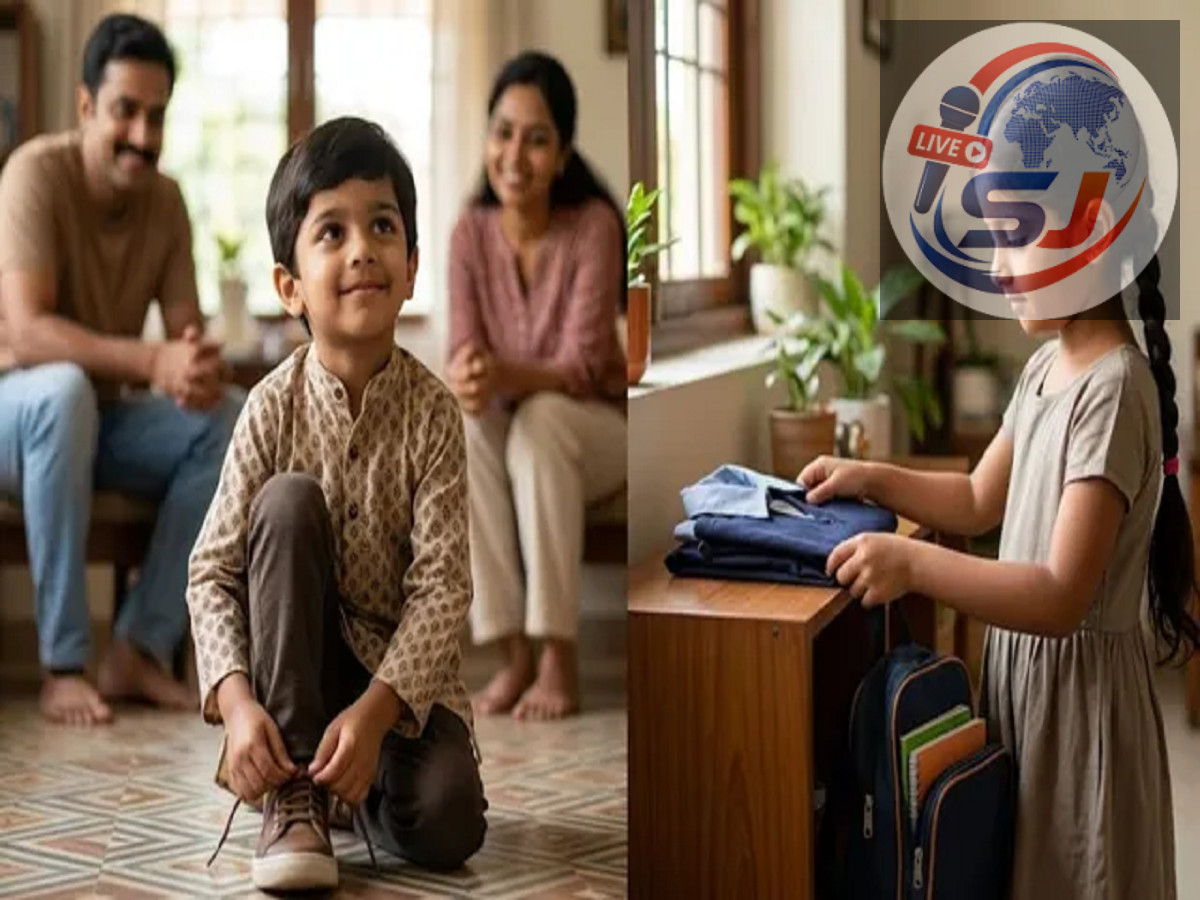
Parenting Tips for Independent Children: Every parent wants their child to grow into a responsible, confident and capable adult. But responsibility does not develop automatically. Children need age-appropriate freedom, regular practice and opportunities to handle small tasks on their own. Simple daily habits—such as getting ready for school, organising their room and helping at mealtimes—can gradually build independence.
Children learn independence through experience. When parents handle every small task for them, youngsters may become used to depending on adults even for things they are capable of doing themselves.
Giving children manageable responsibilities does not mean leaving them without support. Instead, it means allowing them to try, make small mistakes, learn from those mistakes and gradually become more confident in their own abilities.
Parents can begin with ordinary household routines. The aim is not perfection but consistency. Here are some practical habits that can encourage children to become more self-reliant.
Let Children Get Ready for School on Their Own
Morning routines offer one of the easiest opportunities to teach independence.
Once children are old enough, parents can encourage them to wake up on time, wear their school uniform and prepare for the day with less assistance.
They can also learn to check their class timetable and pack the required books, notebooks and stationery in their school bag.
Initially, parents may need to remind them or supervise the process. Over time, however, the child should gradually take greater responsibility.
A simple routine like packing a school bag can teach planning, organisation and accountability. It also helps children understand that forgetting something has consequences and that being prepared is part of their responsibility.
Encourage Them to Keep Their Own Space Organised
Children do not need to perform heavy household cleaning to learn responsibility. Even small age-appropriate chores can make a meaningful difference.
After waking up, they can be encouraged to straighten their bed or arrange their bedding. If books are scattered around the room, they can return them to the shelf. Toys can be placed back in their basket after playtime, while the study table can be organised at the end of the day.
These simple tasks help children understand that keeping a shared living space clean is not solely a parent's responsibility.
Parents should keep expectations realistic. A young child's idea of an organised room will naturally be different from an adult's. The objective should be to develop the habit of taking responsibility for personal belongings rather than demanding perfect cleaning.
Don't Complete School Projects for Them
School assignments and activity projects can sometimes become more demanding for parents than for children.
Many parents step in because they want the project to look impressive or because completing it themselves appears faster. However, doing most of the work on a child's behalf can reduce an important learning opportunity.
Parents can guide children, explain instructions and provide materials, but the child should ideally perform as much of the actual work as possible.
If they make a small mistake or produce something that does not look perfect, that is part of the learning process.
Completing projects independently can help children develop patience, creativity, planning skills and confidence. It also teaches them that their own effort matters more than producing something that looks professionally made.
Teach Both Boys and Girls Basic Kitchen Responsibilities
Basic household skills should not be treated as responsibilities belonging only to girls or boys.
Children of all genders can learn simple kitchen and dining tasks according to their age and safety level.
For younger children, this may involve placing glasses or napkins on the dining table. Older children can help serve food, fill water bottles, arrange plates or clear their own dishes after eating.
As they grow, they can gradually learn basic food preparation under adult supervision.
These everyday skills help children become less dependent on others and prepare them for later life when they may need to manage their own meals and household routines.
The key is to assign tasks based on age, maturity and safety rather than gender.
Give Children Time to Solve Problems Themselves
Parents naturally want to help when their child struggles. But immediately providing the solution every time can unintentionally prevent children from developing problem-solving skills.
If a child is stuck on a puzzle, homework question or simple everyday challenge, parents can give them some time to think before stepping in.
Instead of giving the answer directly, they can ask questions such as, "What have you tried already?" or "What do you think could work next?"
This encourages children to think independently rather than automatically seeking adult intervention.
Of course, parents should still step in when the issue involves safety, serious emotional distress or something beyond the child's ability.
For everyday challenges, however, allowing children to work through some frustration can help build persistence and confidence.
Listen to Their Opinions at Home
Independence is not limited to doing chores. It also involves learning how to express thoughts and participate in decisions.
As children grow older, parents can invite their views on age-appropriate family matters.
For example, children might be asked which activity they would prefer for the weekend, how they would organise their study schedule or what they think about a simple household decision.
Parents do not have to agree with every opinion. What matters is giving children the experience of being heard and explaining why certain decisions are ultimately made.
This can help them develop confidence in expressing ideas while also learning that freedom comes with discussion, compromise and responsibility.
Avoid Doing Everything Just Because It Is Faster
One of the biggest obstacles to developing independence is convenience.
Parents often complete a child's task themselves because it takes less time. Tying shoelaces, packing a bag, cleaning toys or arranging clothes may take an adult only a minute, while a child could need much longer.
But repeatedly choosing speed over practice means the child gets fewer opportunities to learn.
Whenever time and circumstances allow, letting children complete manageable tasks themselves can be more beneficial in the long term.
They may be slower in the beginning, but repetition usually improves both confidence and ability.
Give Freedom According to Age and Maturity
Independence should always be age-appropriate.
A five-year-old and a 15-year-old cannot be expected to manage the same responsibilities or enjoy the same level of freedom. Parents can gradually increase independence as children demonstrate that they can handle existing responsibilities safely.
This creates an important connection between freedom and accountability.
Children learn that greater independence is not simply something they receive as they grow older; it is also linked to becoming more capable of managing their own tasks and decisions.
Appreciation Can Encourage Better Habits
Children are more likely to continue a new responsibility when their effort is noticed.
Instead of focusing only on whether the task was completed perfectly, parents can acknowledge the effort behind it.
For example, appreciating a child for remembering to pack their school bag or clearing their plate can reinforce the behaviour without turning every household task into something that requires a reward.
The emphasis should be on helping children feel capable rather than creating pressure to perform perfectly.
Independence Develops One Small Habit at a Time
Raising a self-reliant child does not require dramatic changes in parenting. Everyday routines can provide enough opportunities to build responsibility.
Allowing children to prepare for school, manage their belongings, complete their own assignments, participate in household work and solve everyday problems can gradually strengthen their confidence.
Parents still provide guidance, safety and emotional support, but they do not need to remove every difficulty from the child's path.
The long-term goal is to help children understand a simple principle: freedom and responsibility grow together. The more opportunities children receive to practise age-appropriate independence, the better prepared they may be to handle larger responsibilities later in life.