Baba Vanga’s 2026 Predictions Resurface After Nepal Floods—but Is There Any Evidence?
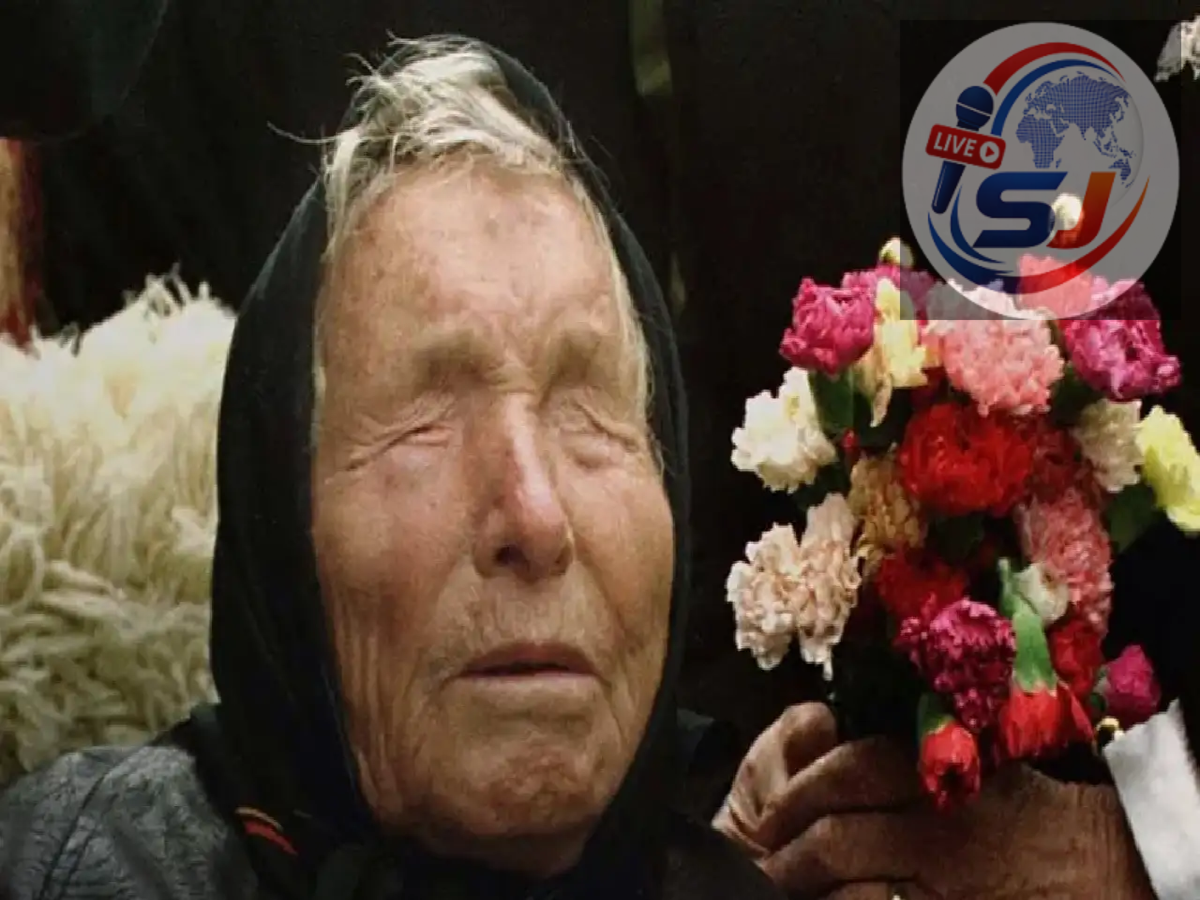
Claims about Baba Vanga’s supposed predictions for 2026 have returned to social media following the devastating floods in Nepal. Viral posts are linking the disaster to a list of alleged forecasts involving natural catastrophes, World War III, alien contact, artificial intelligence, a global financial crisis and political change in Russia.
However, there is an important distinction between a documented prediction and a claim attributed to someone years after their death. No authenticated written record or recording has been produced to establish that Baba Vanga made these specific forecasts for 2026.
The Bulgarian mystic, whose birth name was Vangeliya Pandeva Gushterova, died in 1996. Many statements now circulated under her name come from second-hand accounts, interpretations and lists published long after her death. This makes it difficult to establish when a particular prediction first appeared or whether she said it at all.
Nepal Disaster Revives Online Prophecy Claims
Nepal is dealing with the aftermath of catastrophic flooding triggered by a glacier collapse near the Nepal-Tibet border. Rescue teams have been searching hydropower tunnels and other affected locations for missing workers and residents. The disaster has caused extensive loss of life and damage to homes, roads and energy infrastructure. Reuters report on Nepal rescue operations
Soon after the disaster, online users began connecting it with an alleged Baba Vanga prediction that earthquakes, floods, storms and volcanic eruptions would devastate parts of the world in 2026.
A natural disaster occurring during a particular year does not prove that an earlier prophecy predicted it. To establish such a connection, there would need to be a dated, authentic and sufficiently specific record created before the event. No verified primary document has emerged showing that Baba Vanga identified Nepal, the flood or its timing.
Broad statements about disasters can also appear convincing after almost any major event because earthquakes, floods, wildfires and storms occur somewhere in the world every year.
Did Baba Vanga Predict World War III?
Another viral claim says that a third world war will begin in 2026. Social media posts often connect this supposed warning with tensions between Russia and Western countries, the China-Taiwan dispute and continuing conflict in the Middle East.
There is no reliable evidence that Baba Vanga gave a precise and authenticated forecast of a global war beginning in 2026.
Geopolitical risks are real and can be assessed through military developments, diplomatic relations and government policy. However, present-day tensions cannot retroactively verify an undocumented prediction.
Vague claims are particularly difficult to test because they can be repeatedly reinterpreted to match changing events.
Viral Posts Claim Alien Contact in November
One of the most unusual stories attributed to Baba Vanga suggests that a giant spacecraft will approach Earth in November 2026, leading to contact with extraterrestrial beings.
No scientific evidence supports this claim. NASA says it has not found credible evidence of extraterrestrial life or proof that unidentified anomalous phenomena have an alien origin. NASA’s UAP facts
Scientists continue to search for possible life beyond Earth by studying planets, moons, atmospheric signals and potential technosignatures. That scientific effort should not be confused with an unsupported claim that an alien spacecraft is scheduled to arrive in a particular month.
Any genuinely hazardous object or unusual astronomical event would require confirmation through observations by multiple scientific institutions.
AI ‘Taking Control’ Is Another Unverified Prediction
Some online lists claim Baba Vanga foresaw artificial intelligence becoming so powerful in 2026 that it would escape human control and begin influencing major decisions.
AI safety, automation and responsible governance are legitimate areas of public debate. Governments, researchers and technology companies are examining risks such as misinformation, algorithmic bias, job disruption, cybersecurity and the misuse of advanced systems.
Those contemporary concerns do not demonstrate that Baba Vanga predicted them decades ago. No verified source confirms that she made a specific 2026 forecast about modern artificial intelligence.
The claim may sound convincing because it reflects an issue already receiving widespread public attention.
Global Financial Crisis Claim Also Lacks Proof
Another alleged forecast points to a worldwide economic breakdown involving bank failures, weakening currencies and rising demand for assets such as gold and silver.
Financial crises can result from many measurable factors, including excessive debt, policy mistakes, asset bubbles, banking instability, geopolitical conflict or sudden disruptions to trade and energy supplies.
There is no authenticated record proving that Baba Vanga forecast a global financial collapse in 2026. Investors should not make decisions based on viral predictions, particularly those lacking a traceable source.
Financial choices should instead be based on individual goals, risk tolerance, verified economic information and qualified professional advice.
Claims About Vladimir Putin Remain Unconfirmed
Some versions of the prediction list claim that Russian President Vladimir Putin will lose power or that Russia will undergo a major leadership change before the end of 2026.
The claim has not been verified, and no reliable primary source shows that Baba Vanga made such a statement. Political transitions can occur for several reasons, but any future development would not prove that an undocumented prophecy was genuine.
Why These Predictions Keep Going Viral
Prophecy stories often gain momentum after a major disaster because people naturally search for explanations and patterns during uncertain times. Broad statements can be reshaped after an event, while failed predictions are often forgotten.
Readers should ask several questions before believing or sharing such content:
-
Is there an original dated document or recording?
-
Was the prediction publicly available before the event?
-
Is the wording specific enough to be tested?
-
Has the claim been independently verified?
-
Are failed predictions being reported alongside supposed successes?
Baba Vanga’s name remains popular in internet folklore, but the 2026 claims circulating online are not supported by authenticated evidence. Nepal’s disaster is a real humanitarian crisis deserving attention, relief and scientific investigation—not an event that proves an unverifiable prophecy.