
Delhi Drone Policy: Government Plans ₹85 Crore Push, Over 1,000 New Jobs Could Be Created
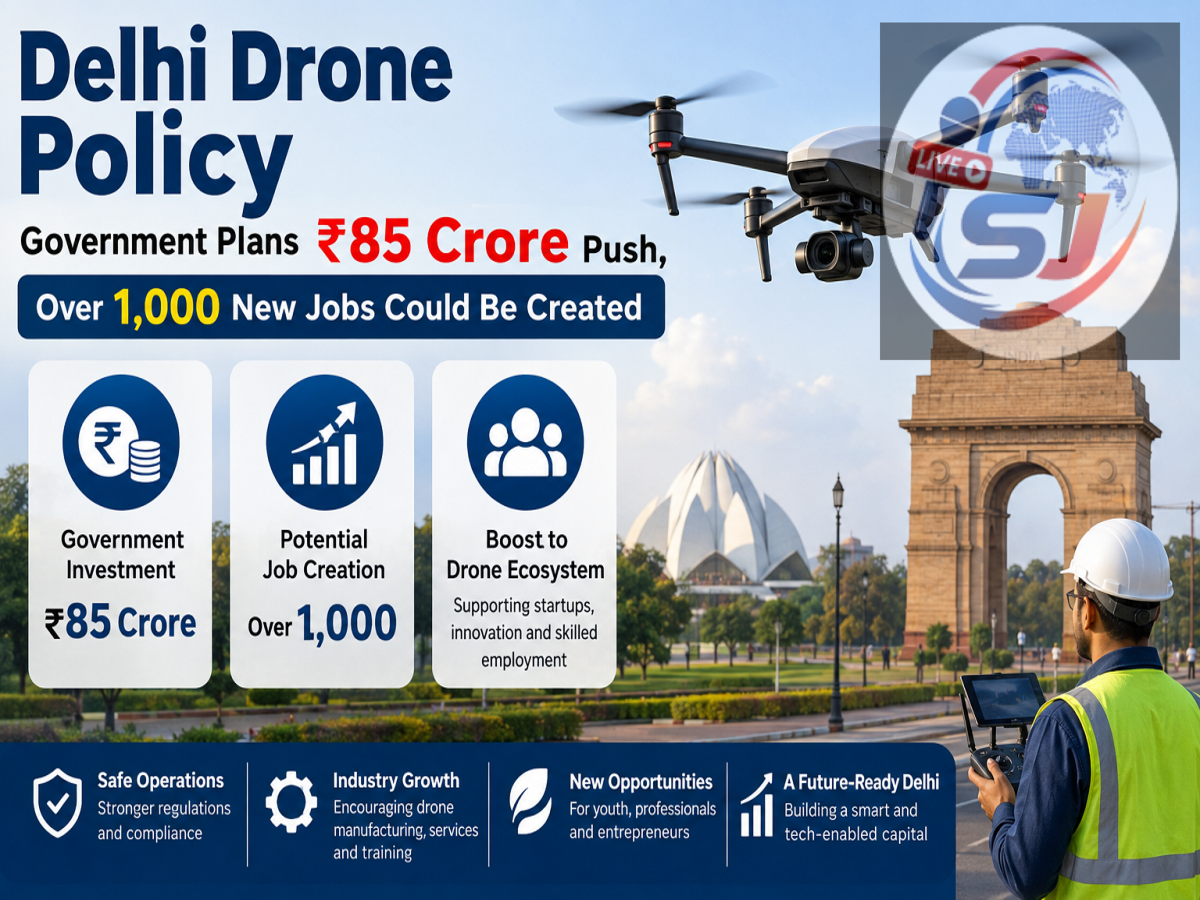
Delhi Drone Policy 2026: Delhi could soon see new employment and business opportunities in the fast-growing drone industry. The Delhi government has prepared a draft drone policy aimed at promoting research, training, testing, startups and commercial applications of drone technology.
The proposed policy could be placed before the Cabinet for approval within a month after completing consultations with various departments. One of its major objectives is to generate more than 1,000 jobs in the drone and related technology sectors.
Delhi's Proposed Drone Policy Awaits Cabinet Approval
According to the details available, the draft policy has already been prepared and is currently going through inter-departmental consultations.
Delhi Information Technology Minister Pankaj Singh has said that after receiving the required approvals, the proposal will be sent to legal, finance and other concerned departments before being presented to the Cabinet.
The proposed policy is expected to remain in force for five years, with an estimated budgetary allocation of around ₹85 crore.
However, these provisions remain proposals until the policy receives final approval.
More Than 1,000 Jobs Could Be Created
Employment generation is expected to be a major focus of the policy.
The government is targeting the creation of over 1,000 employment opportunities through the development of the drone ecosystem in Delhi.
Jobs could emerge across areas such as drone operations, maintenance, software, research, testing, data processing and training.
As the industry expands, demand could also increase for certified remote pilots and professionals with expertise in mapping, surveillance and drone-based data analysis.
Startups and Businesses May Receive Support
The proposed policy seeks to encourage companies and startups working in drones and associated technologies.
Financial incentives are reportedly under consideration, including subsidies and possible reimbursement of state GST for qualifying businesses.
Educational and research institutions working on drone technology may also receive support under the proposed framework.
The objective is to build an ecosystem where companies, research institutions, training organisations and government agencies can work together on drone-related technologies and applications.
Drone Research Clusters and Testing Facilities Planned
Infrastructure development could be another important component of the policy.
The government is considering setting up drone research clusters, dedicated flight-testing facilities and Centres of Excellence.
Such facilities could provide companies and researchers with controlled environments for developing and testing drone hardware, software and related technologies.
Research institutions could also benefit from dedicated infrastructure for developing new drone applications.
ITIs Could Offer Drone Skill Training
As drone adoption expands, trained professionals will be required to operate, repair and maintain the equipment.
The proposed policy therefore includes a strong focus on skill development. The government is reportedly considering introducing drone-related training through Industrial Training Institutes (ITIs).
Remote pilot training programmes could also form part of the initiative.
Additionally, awareness programmes may be introduced in schools to familiarize students with drone technology and its potential applications.
Drones Could Be Used for Policing and Traffic Management
The government is also identifying areas where drones could improve public services and administrative operations.
Potential applications include:
-
Policing and surveillance
-
Traffic management
-
Disaster management and emergency response
-
Land surveys
-
Detection of encroachments
-
3D mapping
-
Monitoring of specific areas, including the Yamuna region
Drone-based mapping and monitoring can provide authorities with aerial information that may be difficult or time-consuming to collect through conventional methods.
Commercial Drone Use Could Also Expand
The proposed policy is not limited to government operations. Delhi is also exploring opportunities for wider commercial adoption of drones.
Industries such as real estate, telecommunications and media could potentially increase their use of drone technology.
Real estate companies can use drones for aerial surveys and project monitoring, while telecom companies can deploy them for infrastructure inspection. Media organisations can use authorised drone operations for aerial photography and video production.
All such operations would remain subject to applicable aviation, security and privacy regulations.
Safety and Regulation to Remain a Priority
With increased drone activity comes the need for stronger safety and monitoring mechanisms.
The proposed framework is expected to operate in accordance with existing national drone regulations and restrictions.
The Delhi government is also considering measures aimed at preventing misuse, strengthening enforcement and improving coordination with the DGCA's Digital Sky platform.
Drone operators would still be required to comply with applicable permissions, airspace restrictions and other regulatory requirements.
Delhi Drone Policy 2026: Key Details
| Particular | Proposed Details |
|---|---|
| Policy Duration | 5 years |
| Proposed Budget | ₹85 crore |
| Employment Target | 1,000+ jobs |
| Focus Areas | Research, testing, training and commercial use |
| Training | ITIs and remote pilot programmes being considered |
| Infrastructure | Research clusters, testing facilities and Centres of Excellence |
| Government Uses | Policing, traffic, disaster management, surveys and mapping |
| Commercial Opportunities | Real estate, telecom, media and related industries |
| Current Status | Draft policy; Cabinet approval awaited |
What Happens Next?
The draft will need to complete the government's departmental review process before it can be presented to the Delhi Cabinet.
If approved, the five-year policy could create opportunities not only for drone pilots but also for engineers, technicians, software professionals, trainers, researchers, startups and data specialists.
For now, the employment target, ₹85-crore allocation and proposed incentives should be treated as part of the draft framework rather than final benefits, as details could change before Cabinet approval.