
Biswajit Chatterjee Revisits Controversial Rekha Kiss, Compares It With Intimate Scenes in Animal
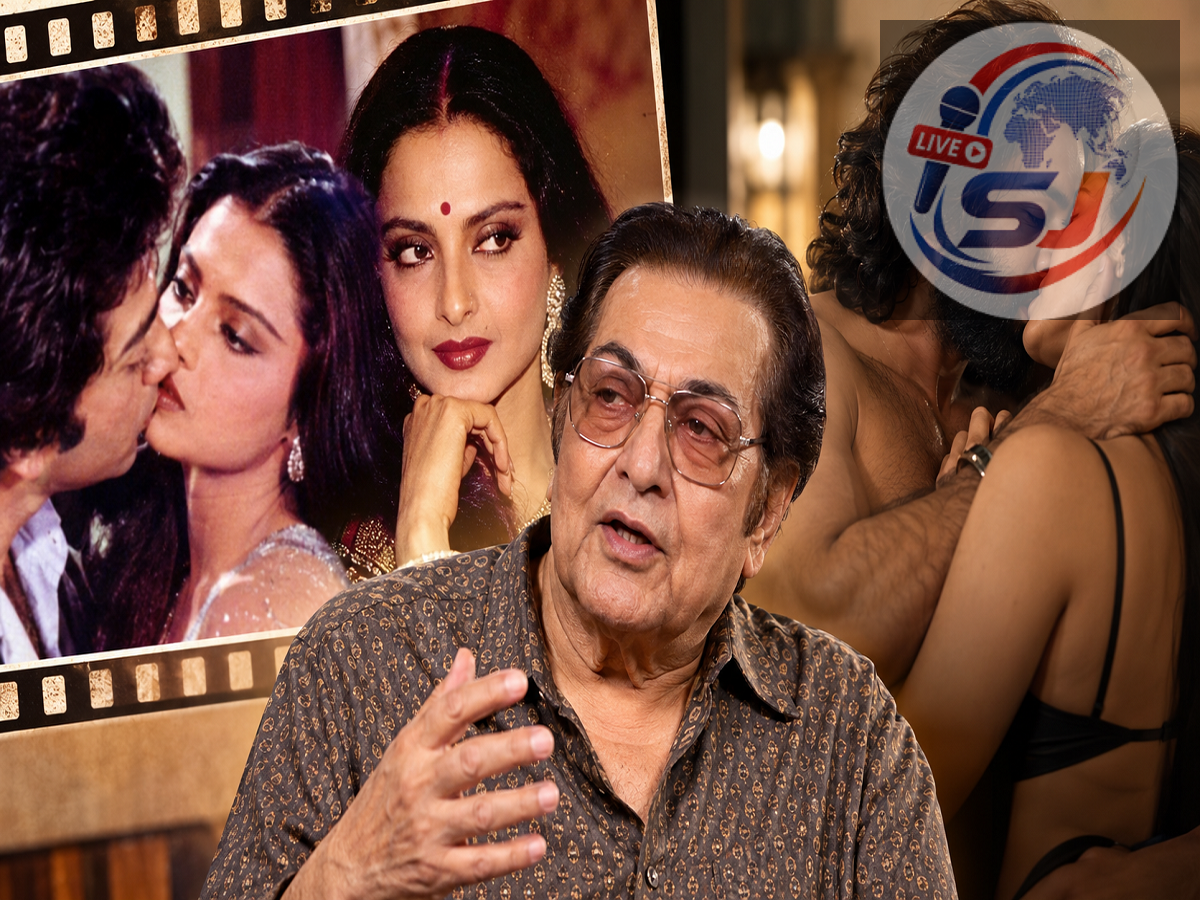
Veteran Bollywood actor Biswajit Chatterjee has once again spoken about the decades-old controversy surrounding a kissing scene he filmed with Rekha during the early years of her career. The actor compared the episode with the far more explicit intimacy commonly portrayed in contemporary Hindi films, including the much-discussed scenes in Ranbir Kapoor-starrer Animal.
The scene was originally filmed for Anjana Safar, which was eventually released years later under the title Do Shikaari. It has remained controversial because Rekha later alleged that the kiss was not discussed with her beforehand and happened without her consent.
Speaking recently on an ANI podcast, Biswajit revisited the controversy and reflected on how dramatically the portrayal of physical intimacy in Indian cinema has changed over the decades.
Biswajit Chatterjee Talks About the Rekha Controversy Again
During the conversation, Biswajit was asked about the controversial kissing sequence involving Rekha.
He argued that what was regarded as shocking decades ago appears very different when compared with intimate scenes routinely shown in contemporary cinema.
Referring to modern films such as Animal, the veteran actor said that on-screen kissing is no longer considered unusual and that he is sometimes surprised by the bedroom scenes shown in current movies.
His comments have once again brought attention to the old controversy and the conflicting accounts surrounding how the original scene was filmed.
Why the Scene Remains Controversial
The controversy is not simply about the fact that a kissing scene appeared in an old Hindi film.
It has endured because of questions surrounding consent during its filming.
Rekha was at an early stage of her career when she worked on Anjana Safar. Accounts of the episode have described her as a teenager at the time.
In later accounts attributed to Rekha, she alleged that she had not agreed beforehand to the prolonged kiss filmed with Biswajit.
That distinction remains important when discussing the controversy today. Changing standards around how much intimacy is shown on screen are separate from the question of whether performers agreed to what happened during filming.
Rekha's Account of What Happened
The incident was discussed in Rekha: The Untold Story, the biography written by Yasser Usman.
According to the account associated with Rekha and reproduced in reports about the episode, she alleged that Biswajit kissed her during the shoot without her prior consent.
She further alleged that the kiss continued for several minutes and that she felt unable to stop what was happening.
Reports recounting her version also state that members of the cast and crew cheered and whistled during the filming, while Rekha was deeply distressed by the experience.
These details represent the account attributed to Rekha and should be understood as such when discussing the decades-old incident.
Biswajit Has Given a Different Account
Biswajit has addressed the controversy on previous occasions and has offered a different perspective.
He has maintained that the scene was connected to the requirements of the film and has previously described the kiss as an improvisation.
At an earlier public event, the veteran actor also suggested that the media had exaggerated the controversy.
His recent remarks again focus largely on how attitudes towards intimacy in cinema have changed since that period.
The two accounts therefore differ significantly, particularly on the circumstances in which the scene was filmed.
Biswajit Says Rekha Later Worked in His Film
In his latest remarks, Biswajit also spoke about his relationship with Rekha following the controversy.
According to the actor, the two met again and Rekha subsequently appeared in a film that he produced and directed.
He cited their later professional association while discussing what happened after the controversial sequence.
Biswajit suggested that controversies are part of the film industry and continue to be discussed long after the events themselves.
However, a later professional collaboration does not by itself resolve the conflicting accounts about the earlier incident.
How ‘Anjana Safar’ Became ‘Do Shikaari’
The film at the centre of the controversy had a complicated journey to theatres.
Anjana Safar was made during the early phase of Rekha's Hindi-film career. She had arrived in Mumbai as a young performer and was cast in the project in 1969.
The movie, directed by Kuljit Pal, subsequently ran into problems with the censor authorities and did not receive a normal theatrical release at the time it was made.
The project remained unreleased for years.
By the time work surrounding its release resumed in the late 1970s, Rekha's career had changed dramatically and she had become one of Hindi cinema's prominent stars.
The film was renamed Do Shikaari and was eventually released in 1979.
Biswajit Compares Old Controversy With ‘Animal’
Biswajit's latest comments have attracted attention partly because he referred to Animal while discussing changing cinematic standards.
Directed by Sandeep Reddy Vanga, Animal stars Ranbir Kapoor as Ranvijay alongside Rashmika Mandanna, Anil Kapoor, Bobby Deol and Triptii Dimri.
Triptii plays Zoya, a woman Ranvijay meets during the course of the story. Their relationship leads to one of the film's widely discussed intimate sequences.
Biswajit referred to the level of intimacy seen in films such as Animal while arguing that a kissing scene from decades ago appears far less unusual by contemporary cinematic standards.
On-Screen Intimacy Has Changed, but Consent Is a Separate Issue
The comparison highlights how significantly mainstream Indian cinema has changed.
Scenes that would once have attracted substantial censorship or public controversy are considerably more common in modern films and streaming productions.
But there are two different questions involved.
One concerns what audiences and censorship systems consider acceptable to show on screen. The other concerns whether actors have agreed to what they are asked to perform.
Modern film productions increasingly use closed sets, detailed discussions and, in some cases, intimacy coordinators for sensitive scenes. Such practices are designed to establish boundaries and help performers understand what will happen before filming begins.
That makes consent behind the camera distinct from how explicit the finished scene appears on screen.
Decades-Old Controversy Returns to Spotlight
Biswajit Chatterjee's latest remarks have once again brought one of Hindi cinema's longest-running controversies back into public discussion.
The veteran actor believes the old kissing sequence appears relatively minor when compared with intimate scenes shown in contemporary films such as Animal.
Rekha's reported account, however, has focused on a different issue: her allegation that she had not consented beforehand to the way the scene was filmed.
That difference explains why the episode continues to attract attention decades after Anjana Safar was made and Do Shikaari eventually reached cinemas.
Tighten the opening for stronger impactReduce repeated consent explanations