Zepto Raises Free Delivery Limit to ₹199; Zomato Orders Could Cost More With Eco-Friendly Packaging
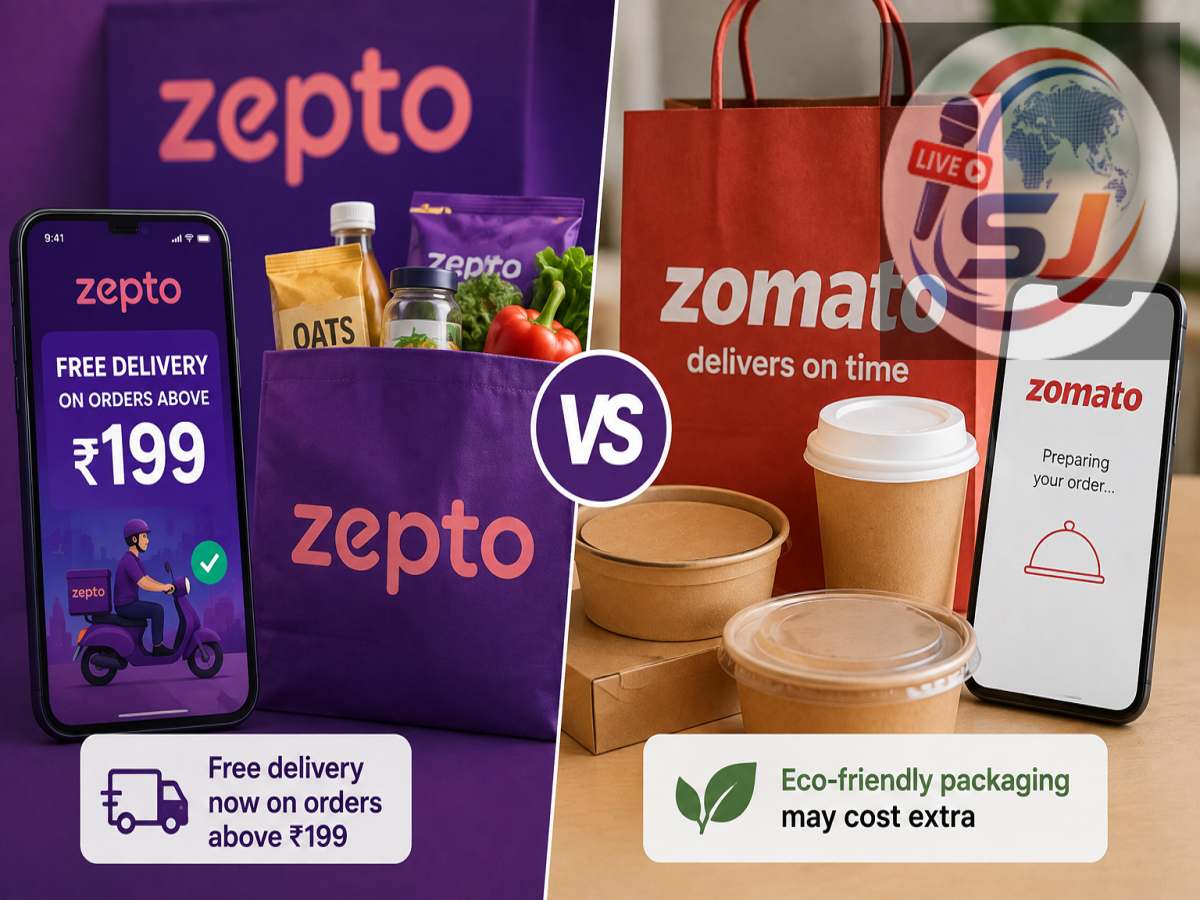
Online shopping and food delivery could become a little more expensive for consumers as quick-commerce and food-delivery platforms rethink delivery thresholds and packaging costs. Zepto has increased the minimum cart value required to qualify for free delivery, while a shift towards sustainable packaging could potentially raise the cost of food orders placed through Zomato.
The changes are particularly relevant for customers who frequently use instant-delivery platforms for small grocery purchases or depend on food-delivery apps for regular meals. While the two developments are different, both could influence the final amount consumers pay for online orders.
Zepto Increases Free Delivery Threshold to ₹199
Zepto has raised the minimum order value required for free delivery from ₹149 to ₹199. Customers will now need to build a cart worth at least ₹199 to avoid a delivery fee, subject to the platform's applicable conditions.
For consumers who usually place small orders, the higher threshold could mean either adding more products to the cart or paying an additional delivery charge.
The revised ₹199 level also puts Zepto's standard free-delivery threshold closer to competing quick-commerce services such as Blinkit and Instamart.
The requirement may rise further during periods of high demand. During peak hours, the minimum cart value for free delivery can reportedly increase to as much as ₹299.
This means customers should check the delivery conditions displayed in the app before completing an order, as the applicable threshold may vary depending on demand and other factors.
Why Is Zepto Raising the Minimum Cart Value?
Quick-commerce companies face a major challenge in making smaller orders economically viable.
Every delivery involves several operating costs, including picking and packing products, packaging material, maintaining fulfilment infrastructure and paying delivery partners. When a customer places a very small order, these expenses can account for a substantial portion of the transaction value.
By increasing the minimum cart value for free delivery, Zepto can encourage customers to purchase more items in a single transaction.
A larger average basket value can help spread fulfilment and delivery expenses across a bigger order, potentially improving the economics of each delivery.
For customers, however, the change may reduce the appeal of placing very small orders simply for convenience.
What Does the Change Mean for Zepto Customers?
Suppose a customer wants to purchase products worth ₹160. Under the earlier ₹149 threshold, such an order could meet the minimum cart-value requirement for free delivery.
Under the revised ₹199 level, the same customer may have to add products worth at least ₹39 more to reach the threshold or accept the delivery fee shown by the platform.
During peak-demand periods, if the threshold rises to ₹299, customers could have to spend considerably more to qualify.
Therefore, shoppers who regularly place low-value orders may want to compare the cost of adding unnecessary products against simply paying the applicable delivery charge.
Zomato Food Orders Could Face Higher Packaging Costs
A separate development could affect customers ordering restaurant food online.
The transition from conventional plastic packaging to sustainable and biodegradable alternatives may increase packaging costs. Zomato Limited's Chief Sustainability Officer, Anjalli Ravi Kumar, has indicated that moving away from plastic packaging could result in higher costs for consumers.
Depending on the type of sustainable material being used, the increase could reportedly range from around 10% to 30%.
This does not necessarily mean that every Zomato food order will immediately become 10% to 30% more expensive. The potential increase relates specifically to the cost impact associated with adopting more sustainable packaging alternatives.
Why Eco-Friendly Food Packaging Costs More
Many restaurants currently rely on plastic containers, plastic wrapping and similar materials because they are widely available, durable and relatively inexpensive.
Packaging costs can account for around 5% of the overall order value in many cases, and restaurants may pass some or all of these expenses on to customers.
Replacing conventional plastic with biodegradable or environmentally sustainable alternatives can increase this cost because such materials may be more expensive to manufacture and procure.
Businesses therefore face a balancing act: reducing plastic consumption while ensuring that packaging costs do not make online food orders significantly less affordable for customers.
Sustainability Versus Affordability
The food-delivery industry has been under increasing pressure to reduce the use of single-use plastic. With millions of food orders being delivered, even a small amount of packaging per transaction can translate into substantial plastic consumption.
Sustainable containers, paper-based materials and biodegradable packaging can help reduce the environmental impact, but their higher price remains a challenge.
According to Zomato's sustainability leadership, the transition is influenced by both environmental considerations and consumers' willingness to absorb additional costs.
That makes affordability an important part of the sustainability debate.
Online Convenience May Come With Higher Costs
The developments at Zepto and around Zomato highlight a broader shift taking place across India's online delivery market.
Quick-commerce companies are increasingly focused on improving the economics of each transaction rather than simply maximising the number of orders. At the same time, food-delivery platforms and restaurants are facing pressure to adopt more environmentally responsible packaging.
For customers, the practical takeaway is straightforward: the final cost of convenience may depend increasingly on cart size, delivery timing, packaging and other platform-specific charges.
Before placing an order, consumers may benefit from checking the minimum free-delivery requirement and reviewing all fees shown at checkout. For small purchases in particular, comparing the extra delivery fee with the amount needed to reach the free-delivery threshold could help avoid spending more than necessary.