
This bank makes a big announcement as RBI raises repo rate, rejoices for FD holders
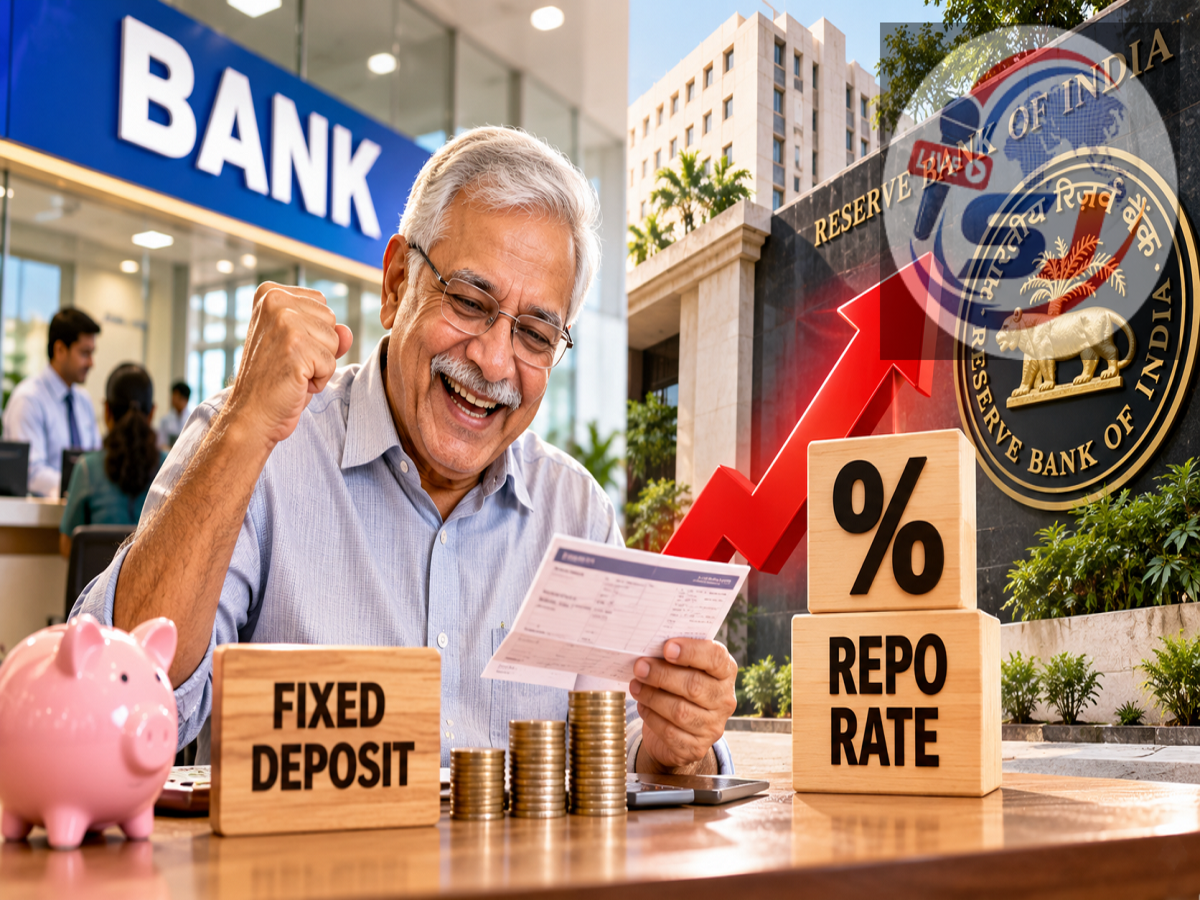
Fixed deposit investors have received a fresh update following the Reserve Bank of India’s latest repo rate decision. Bajaj Finance has announced higher interest rates on select fixed deposit tenures, with returns now going up to 8.15% per annum, according to information reported on October 7, 2026.
The move comes after the RBI increased the repo rate, a development that can influence borrowing as well as deposit rates across the financial system. When policy rates move higher, banks and non-banking financial companies may revise their deposit rates depending on their funding requirements and market conditions.
For investors who prefer relatively predictable returns and do not want direct exposure to stock market fluctuations, the latest FD rate revision could attract attention.
Bajaj Finance FD Interest Rate Increased
Following the RBI’s repo rate increase, Bajaj Finance has revised interest rates on certain fixed deposit options.
Under the revised structure, eligible investors can reportedly earn interest of up to 8.15% per annum, depending on the tenure and applicable customer category.
However, investors should remember that the maximum advertised interest rate may not apply to every FD tenure or every depositor. The final rate offered can depend on factors such as the investment period, deposit amount, age of the investor and the specific FD option selected.
Therefore, customers should check the latest applicable rate for their chosen tenure before opening a fixed deposit.
Why Can Repo Rate Changes Affect FD Returns?
The repo rate is the interest rate at which the Reserve Bank of India lends short-term funds to eligible commercial banks against specified securities.
Changes in the repo rate can gradually influence interest rates throughout the economy.
When the RBI raises the repo rate, borrowing costs for banks can increase. Depending on liquidity conditions and their need to attract deposits, financial institutions may subsequently offer higher rates on fixed deposits and other deposit products.
However, there is no automatic rule requiring every bank or financial institution to increase FD rates immediately after a repo rate hike. Each lender decides its deposit pricing based on funding costs, liquidity, competition and business requirements.
Bajaj Finance's latest revision therefore comes at a time when investors are closely watching how financial institutions respond to the RBI's policy action.
What Does an 8.15% FD Rate Mean for Investors?
An interest rate of up to 8.15% can make fixed deposits more attractive for investors looking for predetermined returns over a specified period.
For example, if an investor places money in a cumulative FD, the interest earned is generally added to the principal at specified intervals according to the product terms. This allows subsequent interest to be calculated on the accumulated amount, creating a compounding effect.
The final maturity value, however, depends on the applicable interest rate, investment amount, tenure and compounding frequency.
Investors should therefore avoid calculating returns solely on the basis of the highest advertised rate unless their selected deposit qualifies for that rate.
Senior Citizens Should Check Applicable Rates
Senior citizens are often offered an additional interest rate over the rate available to regular depositors on fixed deposits.
Anyone aged 60 years or above considering a Bajaj Finance FD should check the latest senior citizen rate separately, as the applicable return can differ depending on the tenure and prevailing terms.
This additional interest can be particularly relevant for retirees who use fixed deposits as part of their regular-income or capital-preservation strategy.
Should You Lock Your Money Into an FD Now?
Higher interest rates can make this an important period for FD investors, but choosing a fixed deposit should not be based only on the headline rate.
Investors should compare the effective interest rate, tenure, premature withdrawal conditions, payout frequency and taxation before making a decision.
For people who may require funds at short notice, locking the entire investment into a long-term FD may not always be suitable. One alternative is to divide the investment among fixed deposits with different maturity dates, commonly known as an FD ladder.
This approach can provide periodic access to funds while reducing the need to lock the entire amount for one long period.
Remember the Tax Rules on FD Interest
Interest earned from fixed deposits is generally taxable according to the investor's applicable income-tax rules. The institution may also deduct tax at source when relevant conditions and thresholds are met.
As a result, the advertised FD rate should not automatically be treated as the investor's post-tax return.
People in higher tax brackets, in particular, may want to calculate the effective return after tax before comparing an FD with other investment products.
What Investors Should Check Before Booking an FD
Before investing, customers should verify the latest interest-rate chart directly through Bajaj Finance's official channels. They should also check whether the maximum 8.15% rate applies to their preferred tenure and customer category.
Premature withdrawal rules, interest payout options and maturity instructions should also be reviewed carefully.
The latest increase in Bajaj Finance FD rates comes shortly after the RBI's repo rate hike and could offer an opportunity for depositors seeking higher fixed returns. Still, investors should choose the tenure and deposit option according to their liquidity requirements, tax position and financial goals rather than focusing only on the maximum headline rate.