
Sugar Price Today: Prices Jump Over ₹4 Per Kg in One Month, Check Latest Rates in Delhi, Mumbai and Kolkata
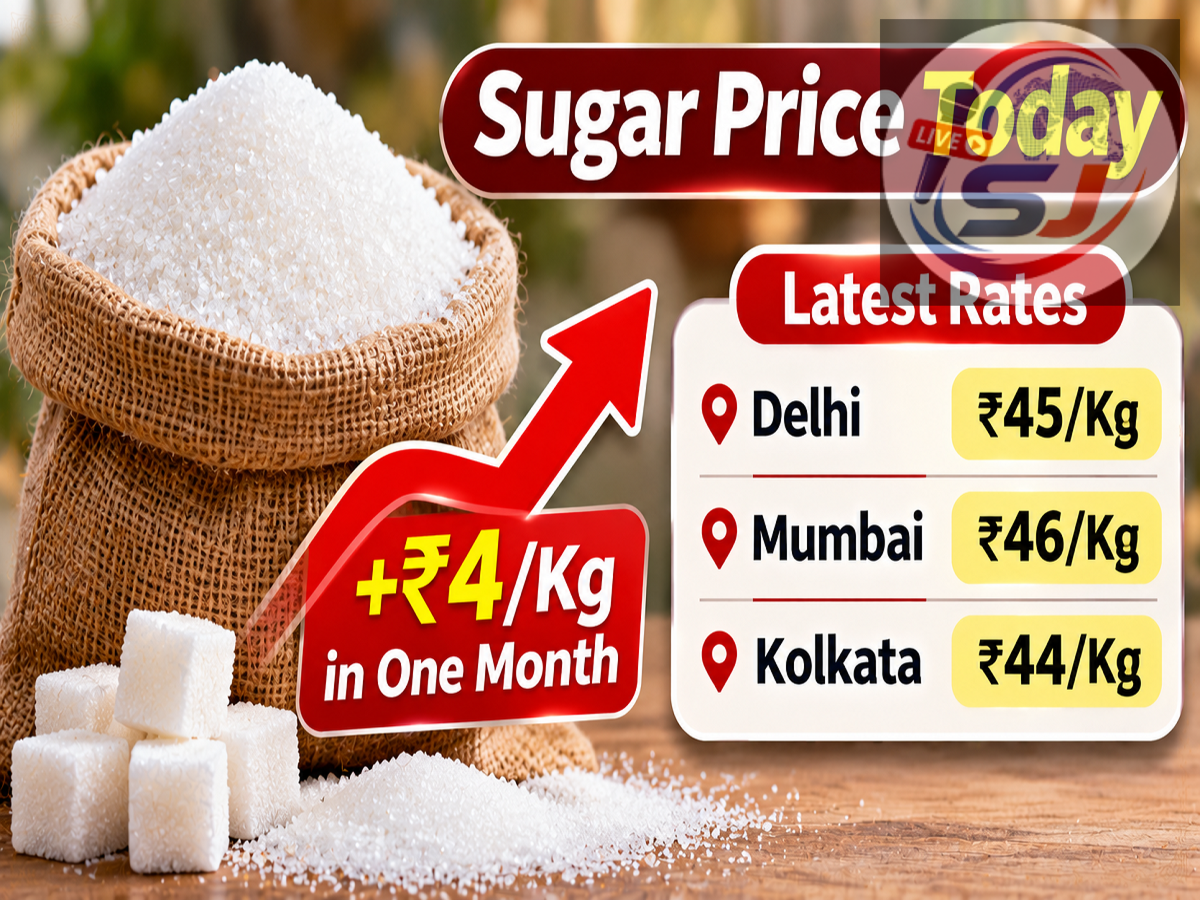
Sugar Price Hike November 2026: With the festive season underway, rising sugar prices are adding pressure to household budgets across India. As families prepare traditional sweets and food businesses increase purchases ahead of Diwali celebrations, the cost of sugar has climbed significantly in both retail and wholesale markets.
According to figures reported by Live Hindustan on November 5, 2026, sugar prices have increased by more than ₹4 per kilogram over the past month. The national average retail price has reached ₹59.50 per kg, while the average wholesale rate stands at ₹55.40 per kg.
Consumers in major metropolitan cities are paying even higher prices. Sugar is reportedly selling for ₹65 per kg in Kolkata, ₹64 in Delhi and ₹61 in Mumbai.
The increase has been attributed to a combination of lower-than-expected production, strong festive demand and supply-related pressures. Although the government has reportedly taken steps to improve availability, prices remain elevated.
Sugar Price Today: Retail and Wholesale Rates in India
The latest reported figures indicate that sugar has become considerably more expensive compared with the previous year.
The national average retail price currently stands at ₹59.50 per kilogram, compared with approximately ₹46.50 per kilogram a year earlier.
Similarly, the average wholesale price has increased from ₹43.23 to ₹55.40 per kilogram.
| Market Category |
Current Price |
Price One Year Ago |
Increase |
|---|---|---|---|
| Average Retail Price |
₹59.50/kg |
₹46.50/kg |
₹13.00 |
| Average Wholesale Price |
₹55.40/kg |
₹43.23/kg |
₹12.17 |
Source: Live Hindustan, November 5, 2026. Figures represent reported national averages.
The retail increase of ₹13 per kilogram represents a rise of approximately 28% over the past year.
Meanwhile, wholesale prices have climbed by around 28.2% during the same period.
These increases are particularly significant because sugar is a commonly purchased household product and an important ingredient in the food processing industry.
Sugar Prices in Delhi, Mumbai and Kolkata
Sugar prices vary across cities due to differences in transportation expenses, distribution networks, local supply and market conditions.
According to the November 3 price data cited in the report, Kolkata recorded the highest retail sugar price among the three major metropolitan cities highlighted.
| City |
Current Price |
Price One Year Ago |
Increase |
|---|---|---|---|
| Kolkata |
₹65/kg |
₹50/kg |
₹15 |
| Delhi |
₹64/kg |
₹46/kg |
₹18 |
| Mumbai |
₹61/kg |
₹45/kg |
₹16 |
Delhi has experienced the largest increase among these cities, with prices rising by ₹18 per kilogram over the past year.
In percentage terms, this represents an increase of approximately 39.1%.
Mumbai has witnessed a rise of around 35.6%, while Kolkata has recorded an increase of 30%.
These figures show that sugar price inflation has been particularly noticeable in major urban markets.
Why Are Sugar Prices Increasing During the Festive Season?
Several factors are contributing to the rise in sugar prices across India.
1. Lower Sugar Production in 2025–26
One of the major reasons cited for the increase is weaker-than-expected sugar production during the 2025–26 season.
When production falls short of expectations, available stocks may come under pressure, particularly during periods of high consumption.
Lower output can also influence wholesale prices as traders and distributors adjust their purchasing decisions.
2. Higher Demand for Sweets During Diwali
Sugar consumption typically increases during major festivals such as Dhanteras, Diwali and Bhai Dooj.
Households prepare traditional sweets, while sweet shops, bakeries, restaurants and food manufacturers purchase additional quantities to meet customer demand.
Popular festive items such as laddoos, barfi, gulab jamun, jalebi and halwa require substantial amounts of sugar.
This seasonal increase in demand can put additional pressure on prices when supplies are already tight.
3. Crop Damage and Supply Concerns
Sugar production depends heavily on the availability and quality of sugarcane.
Unfavourable weather conditions, crop damage and agricultural disruptions can affect the quantity of sugarcane supplied to mills.
Concerns about domestic availability and global supply conditions may also influence market sentiment.
4. Stockholding and Market Expectations
The report also highlights concerns about possible hoarding and supply restrictions.
When traders anticipate further price increases, stockholding decisions can affect the quantity available in the market.
However, concerns about hoarding should not be treated as proof of widespread illegal stockpiling without supporting enforcement findings.
Government Measures to Control Sugar Prices
The government has reportedly introduced or considered several measures to improve sugar availability during the festive season.
These include monitoring market stocks, examining import-related options and encouraging an earlier start to the sugarcane crushing season.
Stock-related restrictions and market surveillance are intended to discourage artificial shortages and improve supply transparency.
However, the effectiveness of such measures depends on production volumes, distribution efficiency and the availability of sufficient market stocks.
Despite these efforts, retail and wholesale sugar prices have remained under pressure.
Sugar Production 2026–27: New Crushing Season Begins Early
The early commencement of the 2026–27 sugarcane crushing season could provide some relief to the domestic market.
According to the National Federation of Cooperative Sugar Factories Limited (NFCSF), the new crushing season began on October 8, 2026.
By October 30, a total of 152 sugar mills had reportedly started production.
During the initial period of the season, approximately 8.45 lakh tonnes of sugar were produced.
| Production Indicator |
Reported Figure |
|---|---|
| Crushing Season |
2026–27 |
| Season Commencement |
October 8, 2026 |
| Operational Mills by October 30 |
152 |
| Sugar Produced |
Approximately 8.45 lakh tonnes |
The arrival of newly produced sugar may gradually improve availability in domestic markets.
However, increased production does not necessarily guarantee an immediate reduction in retail prices.
How Rising Sugar Prices Affect Household Budgets
Sugar is used regularly in tea, coffee, desserts, homemade sweets and numerous packaged food products.
Even a relatively small increase in its price can affect household expenses, particularly during festivals.
For example, a family purchasing 10 kilograms of sugar at the current national average retail price of ₹59.50 per kilogram would spend ₹595.
At last year's average price of ₹46.50 per kilogram, the same quantity would have cost ₹465.
This means the family would now spend an additional ₹130 on 10 kilograms of sugar.
For sweet manufacturers, bakeries and restaurants purchasing sugar in much larger quantities, the impact can be considerably greater.
Higher ingredient costs may also influence the prices of finished food products, depending on competition and other operating expenses.
Will Sugar Prices Fall in the Coming Weeks?
The outlook for sugar prices will depend on the pace of production, market availability and consumer demand.
If the new crushing season progresses smoothly and mills continue increasing output, domestic sugar supplies could improve.
This may help ease some of the pressure on wholesale and retail prices.
However, continued festive demand, unexpected production disruptions or supply constraints could keep prices elevated.
Market participants will also monitor government policy decisions, stock availability and sugarcane production estimates.
For consumers, the most practical approach is to compare local retail prices and avoid unnecessary bulk purchases driven by fears of future shortages.
Final Thoughts
Sugar prices have risen sharply ahead of the festive celebrations, adding to the financial burden on Indian households.
The national average retail price has reached ₹59.50 per kilogram, marking an increase of ₹13 compared with approximately ₹46.50 a year earlier.
Among the major cities highlighted, Kolkata has the highest reported price at ₹65 per kilogram, followed by Delhi at ₹64 and Mumbai at ₹61.
Although the new sugarcane crushing season has begun and production is increasing, the direction of future prices will depend on supply conditions and market demand.
For now, consumers preparing sweets and other festive dishes may have to allocate a larger portion of their household budgets to sugar purchases.