
Smart-PDS 2026: Government Integrates Digital Ration Cards, Biometric Verification and Food Grain Distribution
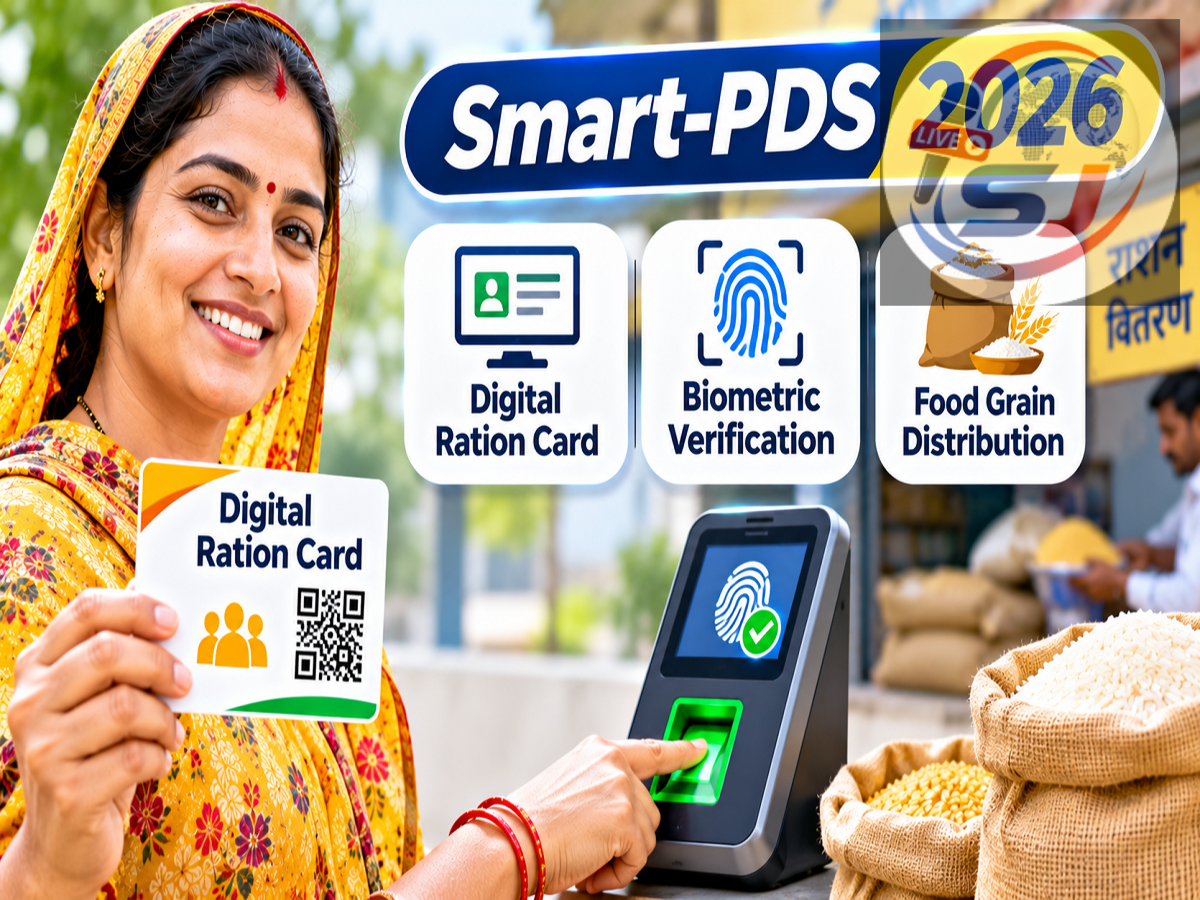
Smart-PDS 2026: India's Public Distribution System (PDS) is undergoing digital modernisation through the Smart-PDS initiative, which brings together technology-driven systems for food grain procurement, supply chain management, ration card administration, Fair Price Shop (FPS) operations and biometric-based distribution.
The initiative focuses on improving coordination across different stages of the food distribution process, from procurement and transportation to the delivery of subsidised food grains to eligible beneficiaries.
According to the public awareness communication, Smart-PDS integrates multiple digital modules to support the modernisation of processes within the Public Distribution System.
The use of connected technology platforms is intended to improve operational efficiency, strengthen record management and support greater transparency in the distribution of food grains.
However, the introduction of digital systems does not automatically change ration card eligibility, food grain entitlements or the rules governing subsidised distribution.
Smart-PDS 2026: Key Details
| Particulars | Information |
|---|---|
| Initiative | Smart-PDS |
| Full Form | Scheme for Modernisation and Reforms through Technology in Public Distribution System |
| Sector | Public Distribution System |
| Concerned Department | Department of Food and Public Distribution |
| Ministry | Ministry of Consumer Affairs, Food and Public Distribution |
| Major Components | Procurement, Supply Chain, Ration Cards, FPS Management |
| Distribution Technology | Electronic and Biometric Authentication Systems |
| Primary Objective | Modernisation of PDS Operations |
| Beneficiaries | Eligible Ration Card Holders |
| Official Website | https://dfpd.gov.in |
What Is Smart-PDS?
Smart-PDS is a technology-focused initiative intended to modernise the administrative and operational systems used in India's Public Distribution System.
The PDS plays an important role in delivering essential food grains to eligible households through a network of Fair Price Shops.
Traditionally, different stages of the distribution process have involved multiple administrative systems, databases and operational procedures.
Smart-PDS seeks to strengthen the digital infrastructure connecting these activities.
By integrating procurement, supply chain monitoring, ration card administration and distribution-related systems, the initiative aims to support more efficient management of public food resources.
The effectiveness of these improvements depends on implementation, data accuracy, connectivity and coordination among participating agencies.
How Does Smart-PDS Work?
Smart-PDS brings together different technology-enabled modules involved in the food distribution system.
These modules are intended to support the flow of information between administrative authorities and operational units.
For example, procurement systems maintain records associated with food grain acquisition, while supply chain platforms help manage the movement of stocks.
Ration card management systems maintain beneficiary-related information, and Fair Price Shop systems support distribution operations.
Biometric authentication can help verify beneficiary identity at the point of distribution, subject to the applicable rules and alternative authentication provisions.
The integration of these components can make it easier for authorities to monitor different stages of PDS operations.
Five Important Components of Smart-PDS
1. Digital Food Grain Procurement
Procurement is an important stage in the public food distribution process.
Government agencies procure eligible food grains under applicable procurement arrangements.
Technology-based procurement modules can support digital recordkeeping, transaction tracking and administrative coordination.
These systems can help authorities maintain more organised procurement information.
2. Supply Chain Management
After procurement and allocation, food grains must move through storage and transportation networks before reaching Fair Price Shops.
Digital supply chain systems can support stock monitoring, movement records and logistics management.
Better information sharing may help authorities identify delays, reconcile stock records and improve distribution planning.
However, the reliability of these systems depends on accurate data entry and effective implementation.
3. Ration Card Management
Ration cards are an important part of beneficiary identification under the Public Distribution System.
Digital ration card management systems help authorities maintain relevant household and beneficiary records.
These systems may support processes such as verification, corrections and updates, depending on state-specific arrangements.
Beneficiaries should continue to use their respective state food department's authorized channels for ration card services.
4. Fair Price Shop Management
Fair Price Shops are the last-mile distribution points through which eligible households receive their food grain entitlements.
Technology-enabled FPS management can support transaction recording, stock reconciliation and distribution monitoring.
Electronic Point of Sale (ePoS) devices are used in many locations to record eligible transactions.
Such systems can help create digital records of distribution activity.
5. Biometric Food Grain Distribution
Biometric authentication is used in many PDS transactions to help verify beneficiary identity.
Depending on the applicable system, this may involve Aadhaar-based biometric authentication through an authorized device.
The objective is to support accurate identification and reduce the risk of duplicate or unauthorized transactions.
However, eligible beneficiaries should not be denied their food grain entitlements solely because biometric authentication fails where alternative procedures are prescribed.
States and implementing authorities must follow the applicable authentication and exception-handling rules.
Smart-PDS 2026: How Technology Supports the Ration Distribution System
| Digital Module | Main Function | Intended Operational Benefit |
|---|---|---|
| Procurement Management | Maintains Procurement Records | Better Record Management |
| Supply Chain Management | Tracks Stock Movement | Improved Logistics Visibility |
| Ration Card Management | Maintains Beneficiary Information | More Organised Records |
| FPS Management | Supports Shop-Level Operations | Better Transaction Monitoring |
| Biometric Distribution | Supports Identity Authentication | Improved Verification |
| Integrated Digital Systems | Connects Relevant PDS Processes | Stronger Administrative Coordination |
These are intended operational benefits. Actual results depend on the implementation of the relevant systems.
What Does Smart-PDS Mean for Ration Card Holders?
For eligible ration card holders, the modernisation of PDS systems may help improve the reliability and transparency of food grain distribution.
More accurate digital records can support better management of beneficiary information and stock availability.
Electronic transactions may also help authorities maintain records of food grains distributed through Fair Price Shops.
However, beneficiaries should understand that Smart-PDS is primarily a system-modernisation initiative.
It does not automatically provide additional free ration, increase existing entitlements or make every household eligible for a ration card.
Eligibility and food grain allocations continue to be governed by the applicable central and state government rules.
Is Smart-PDS Connected With One Nation One Ration Card?
Smart-PDS and One Nation One Ration Card (ONORC) are related to the broader digital transformation of the Public Distribution System, but they are not identical initiatives.
ONORC is designed to facilitate portability of eligible ration entitlements across participating locations.
This is particularly useful for migrant workers and families who move between states.
Smart-PDS focuses on strengthening and modernising the technology infrastructure and administrative systems supporting PDS operations.
Both initiatives reflect efforts to improve the accessibility and efficiency of public food distribution.
Will Biometric Authentication Become Mandatory for Every Transaction?
The supplied awareness communication identifies biometric grain distribution as one of the integrated technology modules.
It does not announce a new nationwide rule requiring successful biometric authentication in every circumstance.
Authentication procedures and permitted alternatives must follow the applicable government instructions.
Beneficiaries facing fingerprint mismatches, technical failures or connectivity problems should contact the Fair Price Shop operator or the relevant food department.
Eligible households should seek assistance through authorized grievance channels if they experience problems receiving their entitled food grains.
How Can Ration Card Holders Check Their Entitlements?
Beneficiaries can obtain information about ration entitlements through official state food department portals and authorized PDS service channels.
The National Food Security Act (NFSA) portal also provides information related to the public food distribution framework.
Depending on the state and available services, beneficiaries may be able to check ration card information, Fair Price Shop details and other distribution-related records online.
Users should rely on verified government websites rather than unofficial applications requesting sensitive personal information.
What Should Beneficiaries Do if They Face Ration Distribution Problems?
If an eligible ration card holder faces difficulty receiving food grains, the first step is to contact the concerned Fair Price Shop or local food supply authority.
Complaints may relate to incorrect distribution quantities, authentication failures, stock availability or beneficiary record discrepancies.
Where available, consumers can use state grievance portals, authorized helplines or other official complaint mechanisms.
They should retain relevant transaction receipts or other supporting information.
The appropriate complaint process may vary by state.
Why Is Smart-PDS Important for India's Food Security System?
The Public Distribution System serves a large number of eligible households and involves extensive procurement, storage, transportation and retail distribution operations.
Managing these activities requires coordination across different government agencies and administrative levels.
Digital integration can help authorities maintain more consistent information and monitor operational activities.
It may also support better planning and identification of discrepancies.
At the same time, technology must remain accessible to beneficiaries who face difficulties with digital authentication, mobile connectivity or record corrections.
Effective grievance redressal and alternative verification procedures remain important parts of a reliable food distribution system.
Smart-PDS 2026: Latest Government Awareness Message
The latest public awareness communication highlights Smart-PDS as an integrated technology framework connecting procurement, supply chain management, ration card administration, Fair Price Shop operations and biometric food grain distribution.
The initiative is intended to modernise different stages of India's Public Distribution System through digital tools and coordinated information management.
For ration card holders, the most important point is that existing eligibility and entitlement rules continue to apply unless the competent authorities issue separate changes.
Beneficiaries should follow official government channels for information about ration cards, distribution schedules and grievance procedures.
Source Credit: Department of Food and Public Distribution, Government of India – Public awareness communication regarding Smart-PDS and technology-driven modernisation of the Public Distribution System.
Official Resources:
-
Department of Food and Public Distribution: https://dfpd.gov.in
-
National Food Security Portal: https://nfsa.gov.in
-
Ministry of Consumer Affairs, Food and Public Distribution: https://consumeraffairs.nic.in
Disclaimer: This article explains the Smart-PDS modules described in the supplied awareness message. It does not announce any new ration entitlement, eligibility expansion or compulsory authentication rule. Specific services and procedures may vary across states and implementing agencies.