
Silver Price Crash 2026: Silver Reportedly Falls 64% From Peak, What Should Investors Do Now?
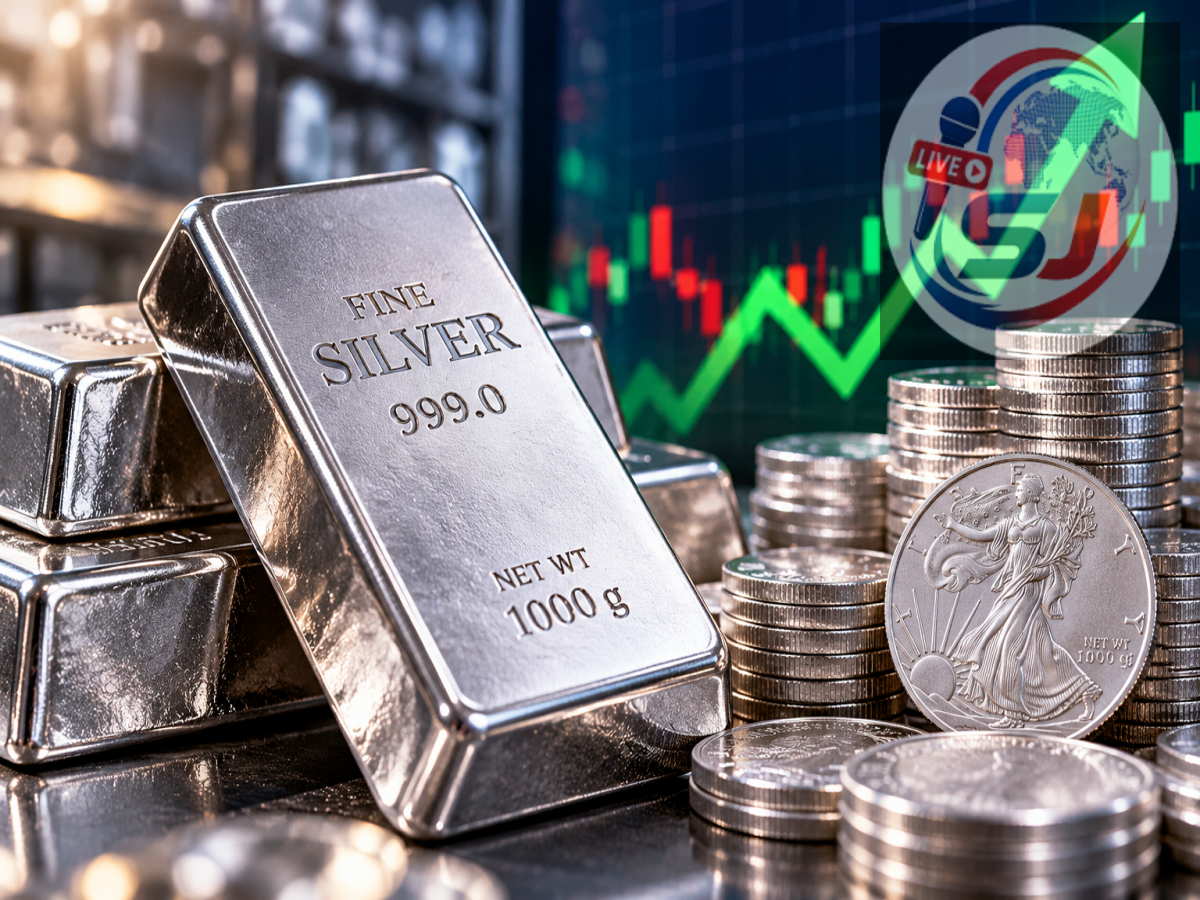
Silver Price Crash November 2026: Silver prices have reportedly witnessed a dramatic correction in domestic and international markets, raising concerns among investors who purchased the precious metal near its earlier record highs.
According to an Aaj Tak report published on November 22, 2026, silver has declined by as much as 64% from its January peak in certain market quotations. Gold prices have also faced selling pressure, adding to volatility across precious metal markets.
The reported correction has brought renewed attention to the risks associated with investing in silver, particularly after a period of exceptionally high prices.
However, the exact decline depends on the market being tracked, the contract used and the dates selected for comparison. Spot silver, MCX futures, COMEX futures and retail bullion quotations do not necessarily show identical percentage changes.
Silver Price Crash: How Much Has Silver Fallen?
The report describes a decline of up to 64% from the metal's January 2026 peak.
Such a correction would represent a substantial reduction in market value for investors who entered at elevated prices.
For example, a 64% decline means that an investment initially valued at ₹1 lakh would have a market value of approximately ₹36,000, assuming its price moved exactly in line with the quoted benchmark and excluding transaction costs.
Illustration of a 64% Price Decline
Original Investment
₹1,00,000
Value After 64% Fall
₹36,000
Remaining value: 36%
Decline: 64%
Hypothetical example, not a verified return for any particular silver investment.
An investor facing this situation would need a gain of approximately 178% from the reduced value just to recover the original investment.
This demonstrates why recovering from a steep market correction can take substantially more than an equivalent percentage increase.
Silver Price in India on November 22, 2026
A separate indicative retail quotation for November 22 places silver at approximately ₹1,75,000 per kilogram.
That quotation also indicates a weekly decline of around ₹20,000 per kilogram.
| Particulars |
Reported Price |
|---|---|
| Silver Price Per Kilogram |
₹1,75,000 |
| Silver Price Per 100 Grams |
₹17,500 |
| Silver Price Per 10 Grams |
₹1,750 |
| Reported Weekly Decline |
₹20,000 per kilogram |
These figures represent an indicative Indian retail price series and should not be directly equated with the 64% decline mentioned in the global crash report.
The latter may refer to a different benchmark, futures contract or comparison period.
Why Are Silver Prices Falling Sharply?
Silver prices are influenced by several international and domestic factors.
Unlike gold, which is primarily associated with investment, reserves and jewellery demand, silver also has extensive industrial applications.
It is used in electronics, solar panels, electrical equipment and other manufacturing processes.
Consequently, silver can react to changes in both investment sentiment and expectations for industrial activity.
A strong US dollar, changing interest rate expectations and profit-booking after a price rally can also affect precious metal prices.
When traders rapidly reduce leveraged positions, futures markets may experience particularly sharp movements.
However, without detailed trading data, it would be inappropriate to attribute the reported November 2026 correction to any single cause.
MCX vs COMEX: Why Do Silver Prices Differ?
Silver is traded through multiple markets, each with its own pricing conventions.
MCX: The Multi Commodity Exchange of India provides silver futures contracts denominated in Indian rupees.
COMEX: The US-based commodity futures market offers silver contracts generally quoted in US dollars per troy ounce.
Spot market: Spot silver quotations reflect prices for more immediate transactions, although exact settlement arrangements can vary.
Retail bullion market: Physical silver purchased from dealers may include premiums, taxes and other charges.
As a result, comparing the peak price of one contract with the current price of another can produce misleading conclusions.
Investors should use the same instrument, contract specifications and comparable dates when calculating percentage losses.
Why Is Silver More Volatile Than Gold?
Silver frequently experiences larger percentage price movements than gold.
One reason is that silver demand comes from both investment and industrial sectors.
Changes in industrial production expectations can influence silver even when broader demand for gold remains relatively stable.
Silver markets can also be more sensitive to shifts in trading activity and investor positioning.
This means that silver may rise rapidly during bullish periods but can also experience substantial corrections.
Investors should therefore avoid assuming that silver offers the same price stability as gold.
What Happens If an Investor Bought Silver at the Peak?
Investors who purchased silver near a market high may now be holding assets worth significantly less than their original purchase price.
The financial impact depends on the entry price, the amount purchased and the type of investment.
For physical silver, transaction costs and dealer buyback spreads can affect the amount recovered.
Silver exchange-traded funds may experience movements linked to their underlying benchmark, while also being affected by fund expenses and tracking differences.
Futures positions involve additional risks, including leverage, margin requirements and potentially rapid losses.
A reported market decline does not mean every investor has lost the same percentage.
Should Investors Buy, Sell or Hold Silver After the Crash?
There is no universal answer because the appropriate decision depends on an investor's financial situation, investment horizon and ability to tolerate losses.
I'm not a financial advisor.
Investors evaluating their existing silver holdings should distinguish between short-term price movements and their original investment objectives.
They should also assess whether the amount invested in silver represents an appropriate share of their overall savings.
Buying solely because prices have fallen can be risky, as a large decline does not guarantee that the market has reached its lowest point.
Similarly, selling solely because prices have dropped may not reflect an investor's longer-term financial requirements.
Any decision should account for liquidity needs, transaction costs and the risks of further volatility.
Can Silver Prices Recover After a Major Correction?
Precious metal prices can recover after substantial declines, but the timing and extent of any recovery are uncertain.
Silver prices may respond to changes in industrial demand, currency movements, interest rate expectations and investment flows.
However, historical recoveries do not guarantee similar future outcomes.
A particularly important consideration is the mathematical effect of large losses.
| Price Decline |
Gain Required to Recover Original Value |
|---|---|
| 10% |
11.1% |
| 20% |
25% |
| 30% |
42.9% |
| 50% |
100% |
| 64% |
177.8% |
The table illustrates why investors should consider downside risk rather than focusing only on potential price appreciation.
Gold Prices Also Under Pressure
The Aaj Tak report also refers to weakness in gold prices alongside the silver correction.
Gold and silver can react to some common market developments, including changes in the US dollar and global interest rate expectations.
However, their price movements are not always identical.
Gold is generally more closely associated with central bank holdings, jewellery demand and investment activity, while silver has a larger industrial component.
Therefore, the two metals may experience different levels of volatility during the same period.
Silver Price Crash 2026: What Investors Should Remember
The reported decline of up to 64% from silver's January peak highlights the risks associated with sharp commodity price movements.
A large percentage correction can substantially reduce the value of an investment, particularly for investors who purchased near the top of the market.
However, the exact scale of the decline should be verified against a consistent market benchmark before drawing conclusions about actual investment losses.
Silver prices may continue to respond to global economic conditions, industrial demand and investor sentiment.
For existing investors, understanding the type of silver exposure they hold and the risks associated with it is more useful than reacting to dramatic headlines alone.