
Silver Price Crash 2026: Prices Fall Nearly 60% From Record High, Is This the Right Time to Buy?
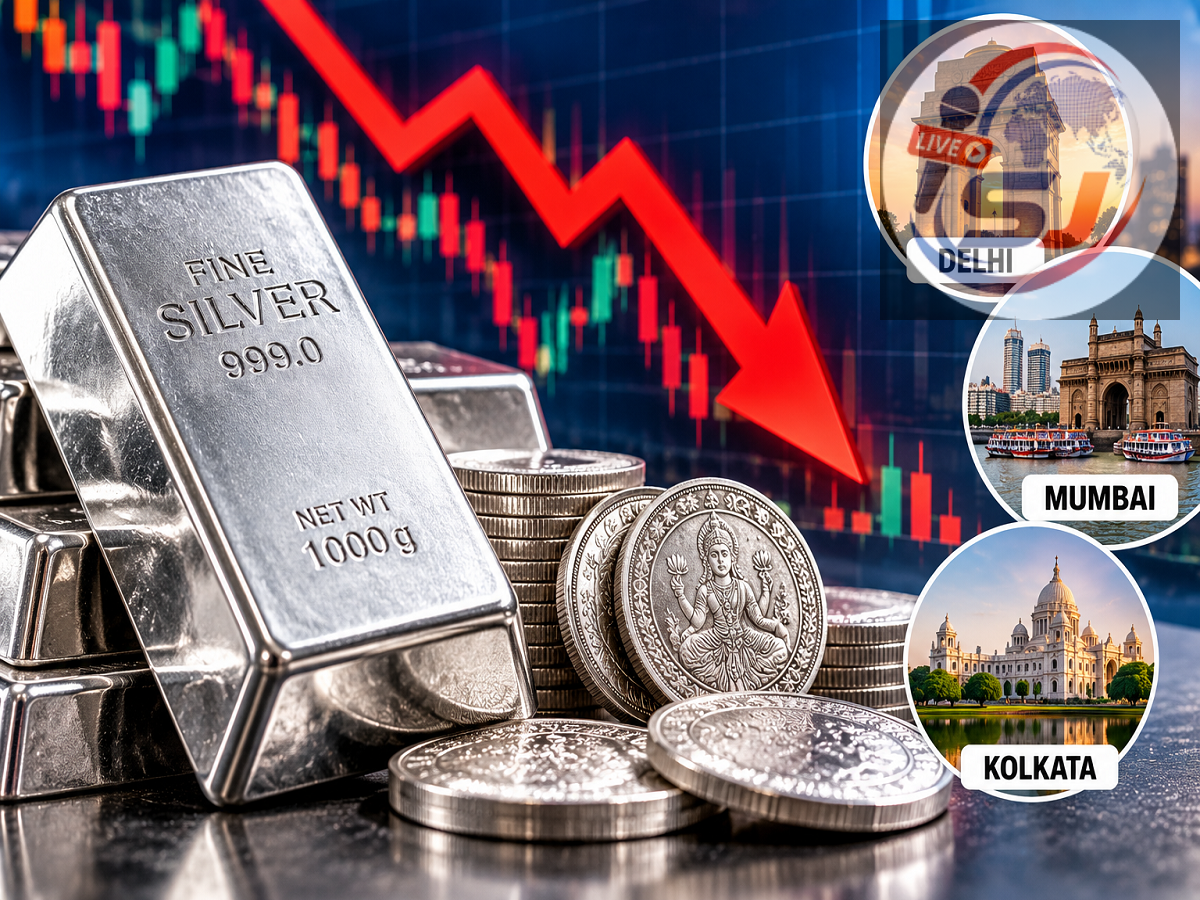
Silver Price Today, November 17, 2026: Silver has witnessed a dramatic correction in the commodities market, attracting attention from investors, traders and jewellery buyers. According to a report published by Aaj Tak on November 17, 2026, the precious metal has declined by approximately 60% from its reported lifetime high. Despite registering an increase during Tuesday's trading session, silver remained nearly ₹2.50 lakh per kilogram below its earlier peak on the Multi Commodity Exchange (MCX).
The sharp decline has raised an important question among investors: Should they purchase silver at the current price, or could further volatility create additional buying opportunities?
While a substantial correction can make an asset appear attractive, financial experts generally recommend examining market conditions, investment objectives and potential risks before making a decision.
Silver Price Crash 2026: How Much Has Silver Fallen?
According to the figures highlighted in the original report, silver has experienced a significant decline over approximately ten months.
The report states that the metal was trading nearly 60% below its previous record level, representing a price difference of approximately ₹2.50 lakh per kilogram.
These figures suggest considerable volatility in the silver market, particularly for investors who entered at higher price levels.
However, the exact comparison depends on the contract, price benchmark and dates used. MCX futures prices can differ from physical silver rates quoted by local bullion dealers.
The reported fall should therefore be understood as a comparison with a particular historical high rather than a uniform decline across every silver product.
Silver Price on MCX: What Happened on November 17?
Silver futures reportedly witnessed an upward movement during Tuesday's trading session on November 17, 2026.
Despite this recovery, prices remained substantially below the record level cited in the report.
Such movements demonstrate how commodity markets can experience short-term rebounds even during broader periods of weakness.
For traders, a daily increase may reflect changing market sentiment, short covering or renewed buying interest. However, one positive session does not necessarily indicate that a sustained recovery has begun.
Investors should examine multiple trading sessions and broader market indicators before interpreting a short-term increase as a lasting trend.
Why Do Silver Prices Rise and Fall So Sharply?
Silver differs from many other precious metals because it serves two important purposes. It is purchased as an investment asset and is also widely used in industrial manufacturing.
This combination makes silver sensitive to several economic and financial developments.
1. Changes in Industrial Demand
Silver is used in electronics, solar technology, electrical equipment and various manufacturing applications.
When industrial activity strengthens, demand for the metal may increase. Conversely, weaker manufacturing conditions can affect consumption expectations and market sentiment.
2. International Economic Conditions
Global economic developments can influence precious-metal prices.
Concerns about economic growth, inflation, interest rates and financial stability may change how investors allocate money between commodities and other assets.
3. US Dollar Movements
Silver is commonly priced in US dollars in international markets.
Changes in the dollar's value can influence demand from buyers using other currencies. A stronger dollar may make silver more expensive for some international buyers, although the relationship is not always consistent.
4. Interest Rate Expectations
Monetary policy decisions can affect investment demand for precious metals.
Because physical silver does not generate interest income, changes in returns available from deposits and bonds may influence its attractiveness to investors.
5. Speculative Trading and Market Volatility
Silver futures are actively traded in commodity markets.
Large trading positions, profit booking and sudden changes in investor sentiment can contribute to substantial price fluctuations.
These factors may amplify movements in both directions, particularly during uncertain market conditions.
Is Silver a Good Investment After a Major Price Correction?
A sharp decline can create potential opportunities, but lower prices alone do not guarantee attractive future returns.
Investors considering silver should evaluate their financial situation and investment horizon.
For example, someone purchasing silver for long-term diversification may approach the market differently from a trader seeking profits from short-term price movements.
Silver can experience substantial fluctuations, and there is no assurance that prices will recover quickly after a major decline.
Investors should also consider the possibility of additional losses if market conditions remain unfavourable.
Rather than investing a large amount based solely on the reported correction, some investors prefer spreading purchases across different periods. This approach can reduce dependence on a single entry price, although it cannot eliminate market risk.
Physical Silver vs Silver ETFs: Which Option Should Buyers Consider?
Investors have several ways to gain exposure to silver, each involving different costs and risks.
| Investment Option |
Key Features |
Important Considerations |
|---|---|---|
| Physical Silver |
Coins, bars and other silver products |
Storage, purity, taxes and dealer premiums |
| Silver ETF |
Exchange-traded investment linked to silver |
Market risk, tracking differences and fund expenses |
| Silver Fund of Funds |
Mutual fund investing through silver ETFs |
Fund expenses and investment-related risks |
| Silver Futures |
Commodity derivative contracts |
Leverage, margin requirements and potentially substantial losses |
Physical silver may appeal to buyers who prefer direct ownership, while exchange-traded products can offer an alternative without requiring personal storage.
Futures trading involves additional complexity and may not be appropriate for inexperienced investors.
What Should Buyers Check Before Purchasing Silver?
Before buying silver, consumers should compare the current market quotation with the final price charged by the seller.
Physical silver prices may include GST, dealer margins, fabrication charges and other applicable costs.
Buyers should also verify purity, product weight and the seller's credibility.
For investment purposes, it is important to distinguish between the international spot price, MCX futures quotation and local retail price.
These benchmarks are related but are not identical.
Investors should avoid making decisions solely on the basis of dramatic headlines or percentage declines without confirming the underlying figures.
Can Silver Prices Recover in the Coming Months?
Silver's future direction will depend on several factors, including industrial consumption, global economic conditions, currency movements and investor demand.
An improvement in industrial activity or stronger investment interest could support prices. However, weaker demand, changing monetary policy expectations or continued selling pressure could create further volatility.
The size of the previous correction does not establish how much silver may rise in the future.
As a result, predicting an exact recovery date or price target would be speculative.
Long-term investors may benefit from reviewing their asset allocation and risk tolerance rather than attempting to identify the lowest possible market price.
Should You Buy Silver Now or Wait?
The decision depends largely on the purpose of the purchase.
Consumers buying silver jewellery, coins or gifts may focus on affordability and current retail rates.
Long-term investors may consider whether silver fits their overall investment strategy and how much exposure they can reasonably afford.
Short-term traders, meanwhile, need to account for market volatility, transaction costs and the possibility of rapid losses.
A substantial decline from a historical peak can be noteworthy, but it should not be treated as proof that an asset is undervalued.
Conclusion
The reported correction in silver prices has become a major talking point in the commodities market. According to Aaj Tak's November 17, 2026 report, silver was trading approximately 60% below its cited lifetime high, with a difference of nearly ₹2.50 lakh per kilogram.
Although prices registered an increase during Tuesday's trading session, the precious metal remained significantly below the earlier benchmark.
For buyers and investors, the key consideration is not simply how far silver has fallen, but whether current prices, investment risks and personal financial goals justify a purchase.
Disclaimer: The reported 60% decline and ₹2.50 lakh price difference are attributed to the source article and have not been independently verified against historical MCX contract data. This article is for informational purposes and does not constitute investment advice.