
SBI Fraud Alert 2026: Bank Warns Against Fake Investment Schemes, Check These 4 Warning Signs
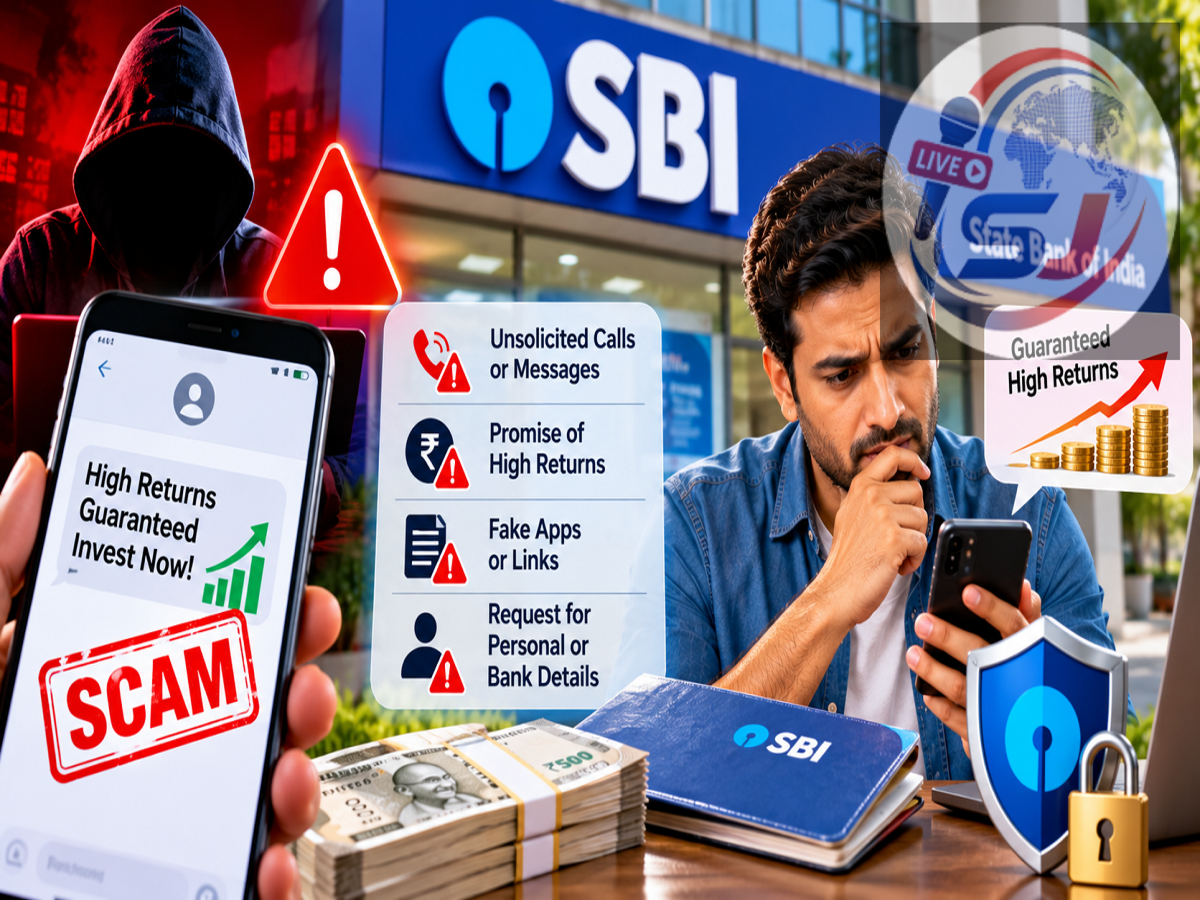
SBI Online Investment Scam Alert: State Bank of India (SBI) has issued an important warning for investors and bank customers about fraudulent investment schemes promising unusually high returns. If you receive a WhatsApp message, social media advertisement, or email claiming that you can earn guaranteed returns of 30% every month, you should be extremely cautious.
Cybercriminals are increasingly using fake investment websites, misleading advertisements, fabricated customer reviews, and fraudulent mobile applications to attract unsuspecting investors. These schemes often promise quick profits with little or no risk, encouraging people to transfer their savings without properly verifying the investment opportunity.
On October 12, 2026, SBI shared a cybersecurity awareness message on social media platform X, highlighting the risks associated with suspicious investment offers. The advisory was part of the bank's National Cyber Security Month Special Campaign 6.0.
The bank encouraged customers to identify warning signs and verify financial offers before transferring money.
Why Has SBI Issued a Warning About Investment Fraud?
Online financial scams have become increasingly sophisticated as fraudsters use social media platforms and messaging applications to reach potential victims.
According to SBI's awareness message, investment offers promising extraordinary monthly profits should be treated with suspicion.
For example, a scheme claiming to deliver a guaranteed 30% monthly return may appear attractive to someone looking to grow their savings quickly.
However, legitimate market-linked investments involve financial risks, and exceptionally high guaranteed returns are a major warning sign.
Fraudsters may use such promises to convince people that they have discovered an exclusive investment opportunity.
Once an individual transfers money, the scammers may disappear, block communication, or demand additional payments before supposedly releasing the investment proceeds.
SBI's warning emphasizes the importance of checking an investment platform's authenticity rather than relying on promotional claims.
How Do Fake Online Investment Schemes Work?
Cybercriminals use several methods to make fraudulent investment opportunities appear trustworthy.
Some create professional-looking websites that resemble legitimate financial service platforms. Others develop fake trading applications displaying fabricated profits and account balances.
Scammers may also create WhatsApp or Telegram groups where participants share screenshots claiming they have earned substantial returns.
These messages can be designed to create the impression that many people are successfully investing through the same platform.
In certain cases, fraudsters initially show fictitious profits or permit small withdrawals to gain the victim's confidence.
They may then encourage the investor to deposit larger amounts.
When the victim attempts to withdraw the money, the platform may demand additional payments described as taxes, verification fees, or processing charges.
These tactics can result in significant financial losses.
SBI Highlights Four Major Warning Signs of Investment Scams
1. Promises of Guaranteed Returns Without Risk
One of the clearest warning signs is an investment opportunity that guarantees exceptionally high profits.
Fraudulent platforms may advertise returns of 20%, 30%, or even more every month while claiming that investors cannot lose money.
Such promises should raise immediate concerns.
Returns from equities, mutual funds, and other market-linked investments are not guaranteed, and their values can fluctuate.
Any platform claiming that substantial profits are certain should be independently verified before money is invested.
2. Pressure to Invest Immediately
Scammers frequently create artificial urgency to prevent potential victims from examining the offer carefully.
They may use messages such as:
-
"Invest today before registration closes."
-
"Only a few investment slots are available."
-
"Transfer money within the next hour."
-
"This guaranteed-profit opportunity ends tonight."
These statements are intended to push people into making quick financial decisions.
A legitimate investment opportunity should provide sufficient information about its terms, risks, and regulatory status.
Investors should avoid transferring money simply because someone claims an offer will disappear within a few hours.
3. Fake Reviews and Misleading Social Media Promotions
Fraudsters often rely on fabricated testimonials and manipulated screenshots to build credibility.
An unknown influencer may promote a trading application while displaying screenshots of unusually large profits.
Similarly, fake customer reviews may claim that people have doubled or tripled their savings within a short period.
However, screenshots and online testimonials are not reliable proof that an investment platform is legitimate.
Some fraudsters may even misuse the names or photographs of well-known personalities to make their schemes appear trustworthy.
Investors should verify claims through official sources instead of depending on promotional videos, anonymous messages, or social media comments.
4. Suspicious Links and Requests for Sensitive Banking Information
Another major warning sign is an investment platform asking customers to share confidential banking information through unfamiliar websites or messaging applications.
Fraudsters may request details such as account passwords, OTPs, card PINs, or internet banking credentials.
They may also send links to fake websites designed to collect personal and financial information.
SBI advises customers to remain cautious when dealing with unknown links and suspicious financial requests.
Never share OTPs, UPI PINs, banking passwords, or card security details with anyone claiming to offer an investment opportunity.
Legitimate financial institutions do not require customers to disclose these confidential credentials to receive investment returns.
How Can Investors Verify Whether an Investment Platform Is Genuine?
Before investing money through an unfamiliar company, website, or mobile application, consumers should check its regulatory status and business credentials.
For securities-related services, investors can verify whether an investment adviser or intermediary is registered with the Securities and Exchange Board of India (SEBI), where registration is required.
However, registration alone does not guarantee that an investment will be profitable or free from risk.
Investors should also examine the platform's official website, business details, terms and conditions, and investment disclosures.
It is particularly important to verify the identity of the person or organization receiving the funds.
Requests to transfer investment money into unrelated personal bank accounts, suspicious UPI IDs, or cryptocurrency wallets should be treated cautiously.
Consumers should avoid downloading investment applications through links received from unknown contacts.
Even when an application appears in an app store, its authenticity and regulatory status should be independently checked.
What Should You Do If You Have Already Transferred Money to Scammers?
If you suspect that you have become a victim of an online investment scam, immediate action is important.
Contact your bank or payment service provider as soon as possible and explain the suspected fraudulent transaction.
In India, victims of cyber-enabled financial fraud can call the national cybercrime helpline at 1930.
Complaints can also be submitted through the official National Cyber Crime Reporting Portal at cybercrime.gov.in.
When filing a complaint, keep transaction details, payment receipts, screenshots, phone numbers, website addresses, and relevant messages available.
These records may assist banks and investigating authorities in tracing the transaction.
Reporting a fraudulent transfer quickly may improve the chances of preventing further movement of funds.
However, recovery is not guaranteed and depends on the circumstances of the transaction and the actions taken by the relevant institutions.
Why Are Unrealistic Monthly Returns Dangerous?
Promises of extremely high monthly returns can mislead investors about the actual risks involved.
Consider a hypothetical scheme claiming to provide 30% returns every month.
If such returns were genuinely earned and reinvested consistently, the investment would grow at an extraordinary rate over a year.
This illustrates how unrealistic such claims can be, particularly when promoters simultaneously promise complete safety.
Investors should remember that financial markets do not provide guaranteed high returns simply because a website or promotional message claims otherwise.
A credible investment opportunity should clearly explain its business model, potential risks, charges, and applicable regulations.
SBI's Important Message for Bank Customers
SBI's October 2026 cybersecurity awareness campaign highlights the importance of financial caution in an increasingly digital environment.
The bank's warning focuses on four common characteristics of suspicious investment schemes: unrealistic guaranteed profits, pressure to invest immediately, fabricated endorsements, and requests for confidential financial information.
Customers should independently verify investment opportunities and avoid making decisions based on fear of missing out.
Even a professional-looking website or a convincing social media advertisement cannot establish that a financial platform is genuine.
Conclusion
SBI's latest investment fraud advisory serves as an important reminder that promises of extraordinary profits can sometimes conceal serious financial risks.
Cybercriminals may use WhatsApp messages, fake investment applications, fraudulent websites, and misleading testimonials to convince people to transfer their savings.
If an investment scheme promises guaranteed returns of 30% every month, consider it a major warning sign and verify its authenticity before taking any action.
Consumers should protect their banking credentials, avoid suspicious payment requests, and report suspected financial fraud immediately through official channels.
Disclaimer: This article is intended for public awareness and financial education. Investment products involve varying levels of risk. Readers should verify the credentials of financial service providers and seek professional advice when necessary. No investment returns are guaranteed unless explicitly supported by the terms of a legitimate financial product.