
RBI Repo Rate Hike: Will Petrol, Diesel and Grocery Prices Fall? Here's How It Affects You
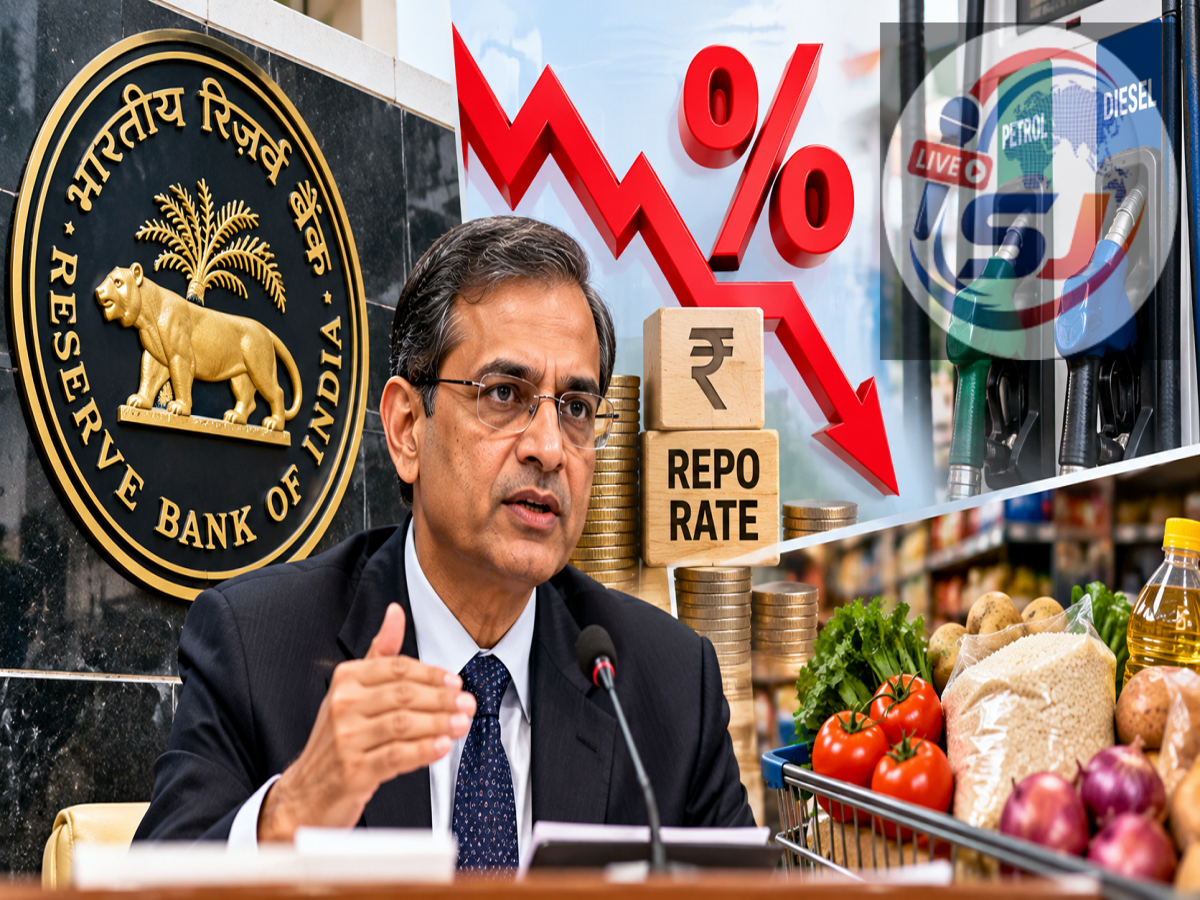
RBI Repo Rate Hike 2026: The Reserve Bank of India (RBI) has increased the policy repo rate by 25 basis points, from 5.25% to 5.50%, putting the focus back on inflation, borrowing costs and household budgets.
The rate increase comes at a time when higher crude oil prices and pressure on the Indian rupee have added to inflation concerns. A higher repo rate is one of the tools available to the RBI to restrain demand and prevent inflationary pressures from becoming more persistent.
But does a higher repo rate mean petrol, diesel and grocery prices will now become cheaper?
The answer is not that simple. A repo-rate increase can help moderate inflation over time, but it does not directly determine fuel or food prices. For borrowers, meanwhile, the impact may be more immediate as some floating-rate loans could become more expensive depending on their benchmark and reset schedule.
RBI Raises Repo Rate to 5.50%
The RBI on Wednesday raised the policy repo rate by 0.25 percentage point, taking it from 5.25% to 5.50%.
The repo rate is the rate at which the RBI lends short-term funds to commercial banks against eligible securities.
When the central bank raises this rate, borrowing from the RBI becomes more expensive for banks. Depending on the type of loan and its benchmark, banks may subsequently pass some of this increase on to borrowers.
As a result, interest rates on certain home loans, car loans, personal loans and other floating-rate credit products could rise.
How Does a Repo Rate Hike Help Control Inflation?
The basic objective of raising interest rates is to make borrowing more expensive and reduce excessive demand in the economy.
Suppose a family is planning to buy a house, car or another expensive product through a loan. Higher interest rates can increase the cost of financing that purchase, prompting some consumers to postpone spending.
Businesses may also reconsider borrowing for new investments if financing becomes more expensive.
If borrowing and spending slow, demand in parts of the economy can cool. When demand pressure falls, businesses may find it more difficult to keep increasing prices rapidly.
This is how higher interest rates can contribute to controlling inflation.
However, monetary policy generally works with a lag. A repo-rate increase does not mean retail inflation or everyday prices will decline immediately.
Will Petrol and Diesel Become Cheaper After the Repo Rate Hike?
There is no direct formula connecting the repo rate with petrol and diesel prices.
A 25-basis-point increase in the repo rate does not automatically translate into a reduction in fuel prices.
Retail petrol and diesel prices depend on several factors, including international crude oil and product prices, the rupee-dollar exchange rate, taxes, refining and marketing economics, transportation costs and pricing decisions.
There can, however, be an indirect connection through the exchange rate and inflation environment.
Higher domestic interest rates can, under some circumstances, make rupee-denominated financial assets relatively more attractive and support capital flows. If this helps reduce pressure on the rupee, India's imported commodities could become relatively less expensive than they would be under a weaker currency.
But exchange rates are influenced by many factors, including global risk sentiment, foreign capital flows, crude oil prices, trade conditions and monetary policy in major economies.
Therefore, a repo-rate hike alone cannot guarantee a stronger rupee.
Why the Rupee Matters for Fuel Prices
India imports a large proportion of the crude oil it consumes. International crude oil transactions are largely denominated in US dollars.
Consider a simplified example. If crude oil prices remain unchanged in dollars but the rupee weakens significantly against the dollar, Indian importers have to spend more rupees to purchase the same amount of crude.
If the rupee strengthens, the opposite effect can occur.
A stronger currency can therefore reduce some of the pressure associated with imported oil costs.
If import costs decline, oil marketing companies may get more room on margins. But whether this ultimately leads to lower petrol and diesel prices for consumers depends on several additional factors.
So consumers should not assume that petrol and diesel will become cheaper simply because the RBI has increased the repo rate.
What About the US Federal Reserve?
Interest-rate decisions in the United States can also influence emerging markets, including India.
The supplied report states that the US Federal Reserve raised rates by 25 basis points in September 2026, taking its policy range to 3.75%-4.00%, while the RBI's latest move has taken India's repo rate to 5.50%.
Interest-rate differentials can influence international investment decisions, but investors do not base their decisions solely on the difference between headline policy rates.
Currency expectations, economic growth, market valuations, inflation, risk appetite and expected returns also matter.
Therefore, it would be too simplistic to conclude that a particular interest-rate gap automatically prevents foreign investors from selling Indian assets.
Will Grocery and Ration Prices Fall?
Here again, the effect is mostly indirect.
Higher interest rates can reduce demand across the economy and help control broader inflation. But the prices of essential food items depend heavily on supply-side conditions.
Vegetable, cereal, pulses and other food prices can be affected by rainfall, crop production, storage, transportation, supply disruptions, imports and exports, government policies and seasonal demand.
This means a repo-rate increase cannot directly make vegetables, flour, rice, pulses or other household essentials cheaper.
For example, if the supply of a particular vegetable falls sharply because of poor weather, its price may rise even when interest rates are high.
On the other hand, when supply is adequate and overall demand pressures ease, inflation in some categories may moderate.
The more accurate conclusion is that a repo-rate increase can help contain overall inflationary pressure over time, but it cannot guarantee an immediate fall in grocery prices.
Home Loan Borrowers Could Feel the Impact
For many households, the clearest impact of the RBI's decision may come through loans.
Borrowers with floating-rate loans linked to an external benchmark could see their interest rate rise when the lender passes on the increase and the applicable reset takes place.
Depending on the lender and loan structure, this could result in a higher EMI, a longer repayment tenure, or a combination of the two.
The exact impact will vary from borrower to borrower.
A fixed-rate borrower may not see an immediate change simply because the repo rate has increased.
Depositors Could Benefit
The impact is not entirely negative for households.
A higher interest-rate environment can create scope for banks to offer better returns on some fixed deposits and other interest-bearing products.
However, deposit rates do not automatically rise by exactly the same 25 basis points as the repo rate.
Each bank decides its deposit rates based on liquidity requirements, funding costs, maturity periods and business strategy.
Savers should therefore compare the latest rates instead of assuming that every FD will immediately offer a higher return.
Repo Rate Hike: What Changes for You?
| Area | Possible Impact of Repo Rate Hike |
|---|---|
| Home Loan | Floating rates/EMIs or tenure may rise after applicable reset |
| Car Loan | New and some floating-rate loans may become costlier |
| Personal Loan | Borrowing costs may remain high or increase |
| Fixed Deposits | Banks may have room to offer higher rates |
| Inflation | Demand-side inflation may moderate over time |
| Petrol & Diesel | No automatic price cut; impact is indirect |
| Grocery Prices | No guaranteed decline; supply factors remain crucial |
| Rupee | Higher rates can provide some support, but many other factors matter |
Bottom Line
The RBI's decision to increase the repo rate from 5.25% to 5.50% is aimed at managing inflationary pressures and maintaining monetary stability.
For ordinary consumers, however, it is important to distinguish between the direct and indirect effects of the decision.
Petrol and diesel will not automatically become cheaper because the repo rate has increased. Grocery and ration prices are also unlikely to fall solely because of the RBI's move.
The rate hike can help cool demand and control broader inflation over time. It may also influence the rupee and imported inflation indirectly, but crude oil prices, food supplies, taxes, exchange rates and government policies remain major determinants of what consumers ultimately pay.
Borrowers may feel the effect sooner through higher floating loan rates, while depositors could benefit if banks raise deposit rates.
In short, the repo-rate hike is designed to control inflation at the economy-wide level—it is not a direct price-cut mechanism for petrol, diesel or household groceries.