
RBI Raises Repo Rate by 25 Bps to 5.50%: Home, Car and Personal Loans Could Get Costlier
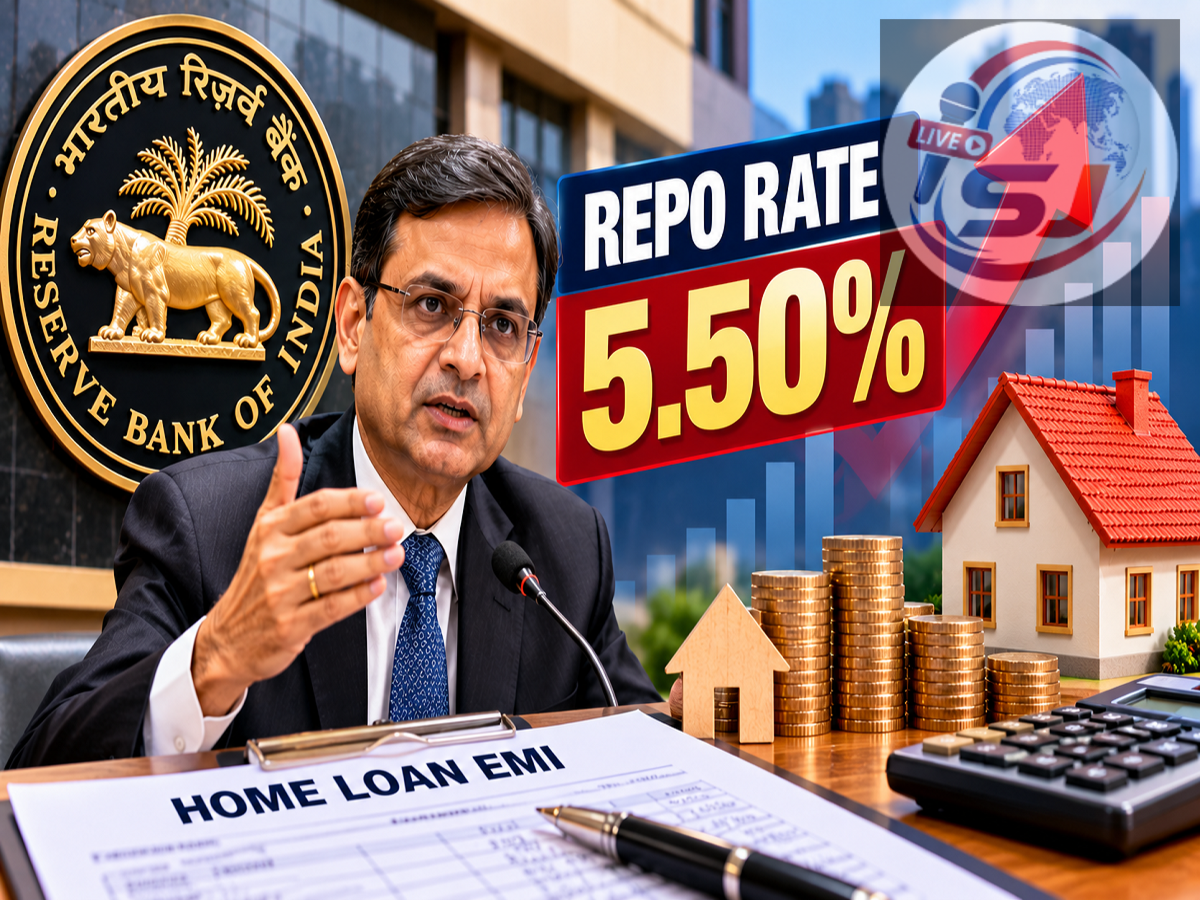
RBI Repo Rate Hike: Borrowers may face higher loan costs after the Reserve Bank of India (RBI) announced an increase in the key policy repo rate on Wednesday, October 7, 2026. The central bank has raised the repo rate by 25 basis points, taking it from 5.25% to 5.50%.
The decision is significant for millions of borrowers because changes in the repo rate can influence interest rates charged by banks and other lenders. If the latest increase is passed on, floating-rate home loans and other benchmark-linked borrowing could become more expensive.
New borrowers looking for home loans, car loans or personal loans could also face higher interest rates if lenders revise their loan pricing.
RBI Increases Repo Rate by 25 Basis Points
The RBI's Monetary Policy Committee (MPC) decided to increase the repo rate by 25 basis points.
One basis point is equal to 0.01 percentage point. Therefore, a 25-basis-point increase translates into a rise of 0.25 percentage point.
Following the latest decision:
Old repo rate: 5.25%
Increase: 25 basis points
New repo rate: 5.50%
The move marks the first increase in the policy repo rate since the previous hike cited in reports in February 2023, making the October 2026 decision an important change in the interest-rate cycle.
Why Does the Repo Rate Matter to Borrowers?
The repo rate is the rate at which the RBI provides short-term funds to banks against eligible securities.
When the repo rate increases, borrowing conditions in the banking system can become tighter. Banks may subsequently increase lending rates depending on their funding costs, benchmarks and pricing policies.
For consumers, this can translate into higher interest costs on certain types of loans.
The impact is particularly relevant for floating-rate loans linked to external benchmarks, as changes in the applicable benchmark can eventually be reflected in the interest rate charged to customers.
However, an RBI rate hike does not necessarily increase every borrower's EMI immediately.
Will Home Loans Become More Expensive?
Floating-rate home loan borrowers could see an impact if their lender revises the applicable lending rate following the RBI decision.
Suppose a borrower's loan rate increases by the full 25 basis points. In that situation, the lender could increase the EMI, extend the repayment tenure or use a combination of both, depending on the loan agreement and applicable rules.
The exact impact will vary according to the outstanding principal, existing interest rate, remaining tenure and loan reset date.
For new home loan customers, lenders could also revise advertised rates if funding costs and benchmark rates move higher.
Car Loan Rates Could Also Rise
The impact may extend beyond housing loans.
Consumers planning to purchase a vehicle through financing could find car loans more expensive if banks and non-banking financial companies revise their lending rates.
However, many vehicle loans are offered at fixed interest rates. In such cases, an existing borrower's rate may not automatically change merely because the RBI has increased the repo rate.
New loan offers, on the other hand, could be priced differently following changes in market interest rates.
Borrowers should therefore check whether a loan is fixed-rate or floating-rate before assessing the impact of the RBI's decision.
What About Personal Loans?
Personal loans are generally unsecured, which means borrowers typically pay a higher interest rate compared with secured products such as home loans.
The rates offered on personal loans depend on several factors, including the lender's policies, the borrower's credit profile, income, existing debt and prevailing market conditions.
If lenders revise their pricing after the repo-rate hike, new personal loan customers could face higher borrowing costs.
Existing fixed-rate personal loans, however, would generally continue according to the agreed loan terms unless the contract provides otherwise.
Will Your EMI Increase Immediately?
Not necessarily.
For floating-rate borrowers, the applicable lending rate is generally reviewed according to a defined reset schedule.
That means a repo-rate change announced today may not necessarily appear in a borrower's EMI tomorrow.
The impact could become visible when the lender reaches the next applicable reset date.
Borrowers should check their loan statement or agreement to identify the benchmark, spread and reset frequency.
Higher Rate Can Mean EMI Hike or Longer Tenure
An increase in a home loan interest rate can affect borrowers in more than one way.
One possibility is a higher monthly EMI.
Another is an extension of the loan tenure while the EMI remains relatively stable. In some cases, both the EMI and tenure may be adjusted.
While extending the tenure can reduce the immediate pressure on the monthly household budget, it can also increase the total interest paid over the remaining life of the loan.
Borrowers should therefore evaluate the total repayment cost rather than looking only at the monthly EMI.
Fixed-Rate Borrowers May See Limited Immediate Impact
The RBI's decision is particularly important for borrowers with floating or benchmark-linked loans.
Those who already have genuinely fixed-rate loans may not see an immediate change in their contracted interest rate.
However, prospective borrowers could encounter revised rates on newly issued fixed-rate loans as lenders adjust pricing according to prevailing market conditions.
Loan contracts can differ significantly, so customers should check their own terms instead of assuming the same impact applies to everyone.
What Should Borrowers Do Now?
Existing borrowers should review their current interest rate, remaining loan tenure, outstanding principal and next reset date.
They should also watch for notifications from their bank or lender regarding any change in the applicable lending rate.
Home loan borrowers who have sufficient surplus funds may evaluate whether partial prepayment could reduce their interest burden. However, such a decision should take into account liquidity needs, emergency savings and other financial commitments.
Borrowers considering a new loan should compare the effective interest rate, processing fees, loan tenure and total repayment cost across lenders rather than focusing only on the advertised EMI.
RBI Rate Hike Puts Borrowing Costs Back in Focus
The increase in the repo rate from 5.25% to 5.50% marks an important shift for borrowers after a long gap between rate hikes.
The biggest concern for households will be whether banks and other financial institutions pass the higher rate on to customers.
If that happens, floating-rate home loan borrowers could face higher EMIs or longer repayment periods, while new car and personal loans may also become more expensive.
The impact will not necessarily be identical or immediate for every customer. Borrowers should check their individual loan benchmark, interest-rate structure and reset schedule to determine exactly how the RBI's latest 25-basis-point repo-rate hike affects them.