
RBI MPC Meeting Begins: Repo Rate Decision on October 7
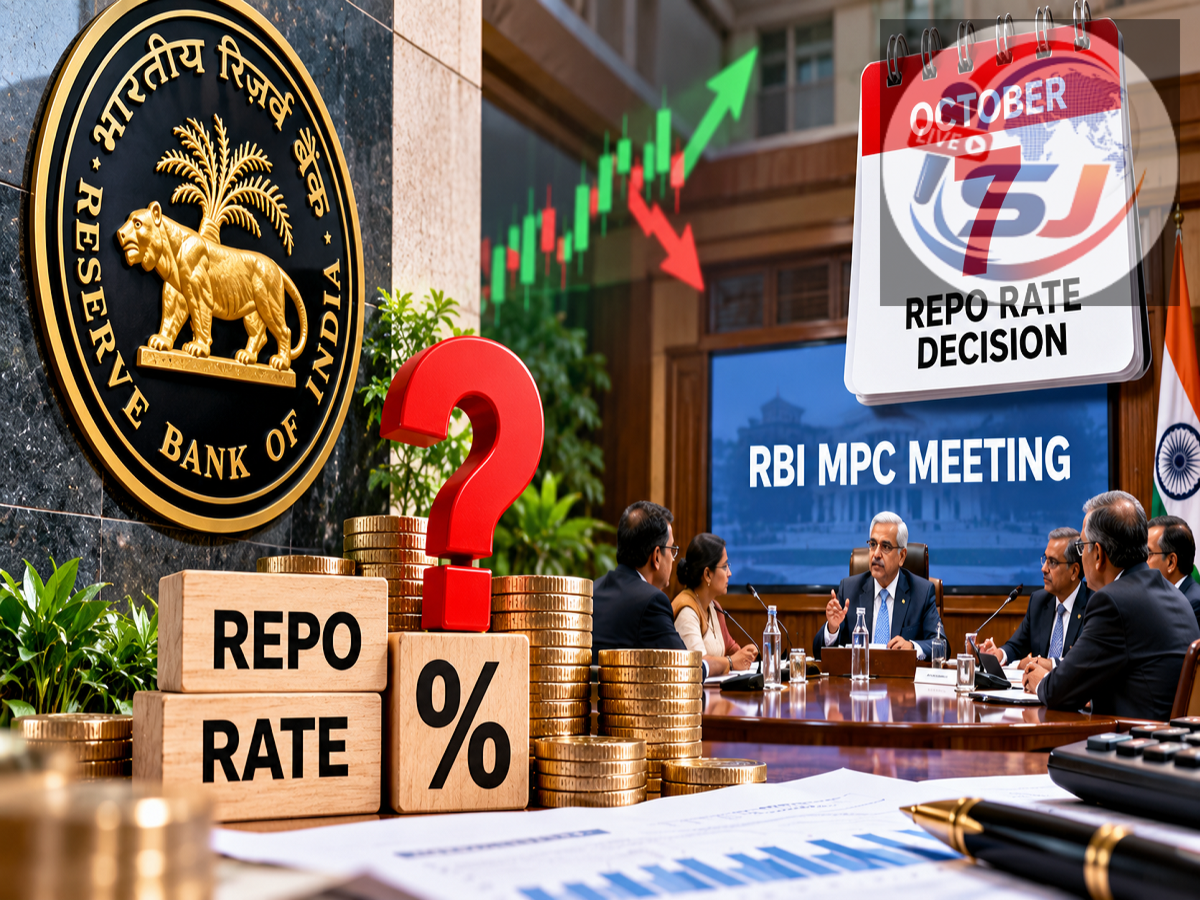
The Reserve Bank of India’s Monetary Policy Committee (MPC) begins its three-day meeting on October 5, 2026, with borrowers, banks and investors closely watching the outcome. The central bank is scheduled to announce its monetary policy decision on October 7.
One of the biggest questions is whether the RBI will increase the repo rate. According to the expectations cited in the report, some economists see the possibility of a 25-basis-point, or 0.25 percentage point, increase.
If such an increase is announced, the repo rate would move from the current cited level of 5.25% to 5.50%.
However, borrowers should remember that a rate increase has not yet been announced. The final decision will come from the MPC after its deliberations.
Will RBI Increase the Repo Rate?
The possibility of a repo-rate increase has come into focus because of inflation concerns, higher crude-oil prices and pressure on the Indian rupee.
According to the report, a 25-basis-point hike is being discussed as a possible outcome of the October policy meeting.
If RBI raises the repo rate to 5.50%, the report notes that it would be the first increase in the policy rate since February 2023.
But the MPC has several options. It can raise the repo rate, leave it unchanged or take another policy approach depending on its assessment of inflation, economic growth, liquidity and financial conditions.
Therefore, any 5.50% figure should currently be treated as a forecast rather than a confirmed new rate.
Inflation Is an Important Factor
Inflation is likely to be one of the major considerations before the MPC.
According to the figures cited in the report, India's retail inflation, measured by the Consumer Price Index (CPI), increased to 4.82% in August 2026, compared with 4.45% in July.
This was reportedly the third consecutive month in which inflation remained above RBI's medium-term target of 4%.
At the same time, inflation remained within the central bank's tolerance band of 2% to 6%.
The MPC will therefore have to consider whether current inflationary pressure requires a tighter monetary policy while also taking economic growth into account.
Crude Oil Prices Add Another Challenge
Higher international crude-oil prices are another factor being closely watched.
The report cites crude prices above $100 per barrel amid geopolitical tensions in West Asia.
India imports a significant proportion of its crude-oil requirements, making the economy sensitive to sustained increases in global oil prices.
Expensive crude can affect the economy through several channels.
If fuel costs increase, transportation and logistics expenses can also rise. Businesses may eventually pass part of those additional costs to consumers, potentially contributing to broader inflationary pressure.
Higher crude prices can also increase India's import bill and create additional pressure on the rupee.
Global Interest Rates Are Also in Focus
The policy decisions of major global central banks can influence financial conditions in India as well.
When global interest rates remain high or rise further, international investors may reassess where they allocate capital. Currency markets and capital flows can consequently become more volatile.
According to the report, expectations of tighter monetary policy internationally are among the factors being considered ahead of the RBI meeting.
However, the RBI does not mechanically follow the interest-rate decisions of foreign central banks. The MPC's mandate requires it to consider India's domestic inflation and growth conditions while making its policy decision.
What Happens If RBI Raises the Repo Rate?
The repo rate is the rate at which the Reserve Bank lends short-term funds to banks against eligible securities under the applicable framework.
Changes in the repo rate can influence borrowing costs across the financial system.
If the RBI increases the repo rate, banks may face higher marginal funding costs in some circumstances. This can eventually influence interest rates offered on loans and deposits.
The effect, however, is not necessarily immediate or identical across all banks and borrowers.
Transmission depends on the type of loan, its benchmark, reset date and the individual bank's pricing decisions.
Could Your Home Loan EMI Increase?
For borrowers, this is one of the most important questions surrounding the October 7 decision.
If the repo rate rises by 25 basis points, some floating-rate loans linked to an external benchmark could eventually become more expensive after the applicable reset.
Banks can respond differently depending on the loan structure.
For some borrowers, the lender may increase the monthly EMI. In other cases, the loan tenure could become longer, or there could be a combination of changes depending on the terms of the loan.
Fixed-rate borrowers may not experience the same immediate impact because their interest rate is governed by the terms of their loan agreement.
Therefore, a repo-rate increase does not mean every borrower's EMI will automatically rise on October 7 itself.
How Higher Interest Rates Help Control Inflation
Central banks use interest rates as one of their main tools for managing inflation.
When borrowing becomes more expensive, households may become less willing to take loans for major purchases. Businesses may also reconsider borrowing for expansion and investment.
This can reduce the pace at which money and credit flow through the economy.
Lower demand can eventually reduce some of the pressure on prices, helping the central bank bring inflation closer to its target.
The process, however, takes time. An increase in the repo rate does not immediately reduce the price of everyday goods.
What Could Happen to FD Interest Rates?
A higher policy rate can sometimes benefit depositors.
If banking-system interest rates move upward after a repo-rate increase, banks may revise interest rates on fixed deposits and other savings products.
But an RBI rate hike does not guarantee that every bank will immediately increase FD rates by the same amount.
Deposit rates depend on factors such as a bank's funding requirements, liquidity position, deposit maturity and competitive strategy.
Savers should therefore compare actual FD rates rather than assuming that a 25-basis-point repo increase will result in an identical increase in their deposit returns.
Borrowers Should Watch October 7
The October monetary policy decision will be important for home-loan, car-loan and business-loan borrowers as well as depositors and financial markets.
For now, the key figures are straightforward:
Current cited repo rate: 5.25%
Possible increase: 0.25 percentage point or 25 basis points
Possible rate after a hike: 5.50%
MPC meeting: October 5-7, 2026
Policy decision: October 7, 2026
The most important distinction is that 5.50% is currently only a possible outcome based on expectations cited in the report.
Borrowers should wait for the RBI's official monetary policy announcement on October 7 before making decisions based on an assumed rate increase.
If the repo rate is raised, the next thing to watch will be how quickly individual banks transmit the change to lending and deposit rates—and what that ultimately means for EMIs.
Disclaimer: The possibility of a 25-basis-point repo-rate increase discussed above is based on expectations cited in the supplied report and is not a confirmed RBI decision. Actual loan EMIs and deposit rates depend on individual banks, loan benchmarks, reset periods and product terms.