
RBI May Launch Plastic ₹10 and ₹20 Notes From April 1, 2027: Check Their Features and Benefits
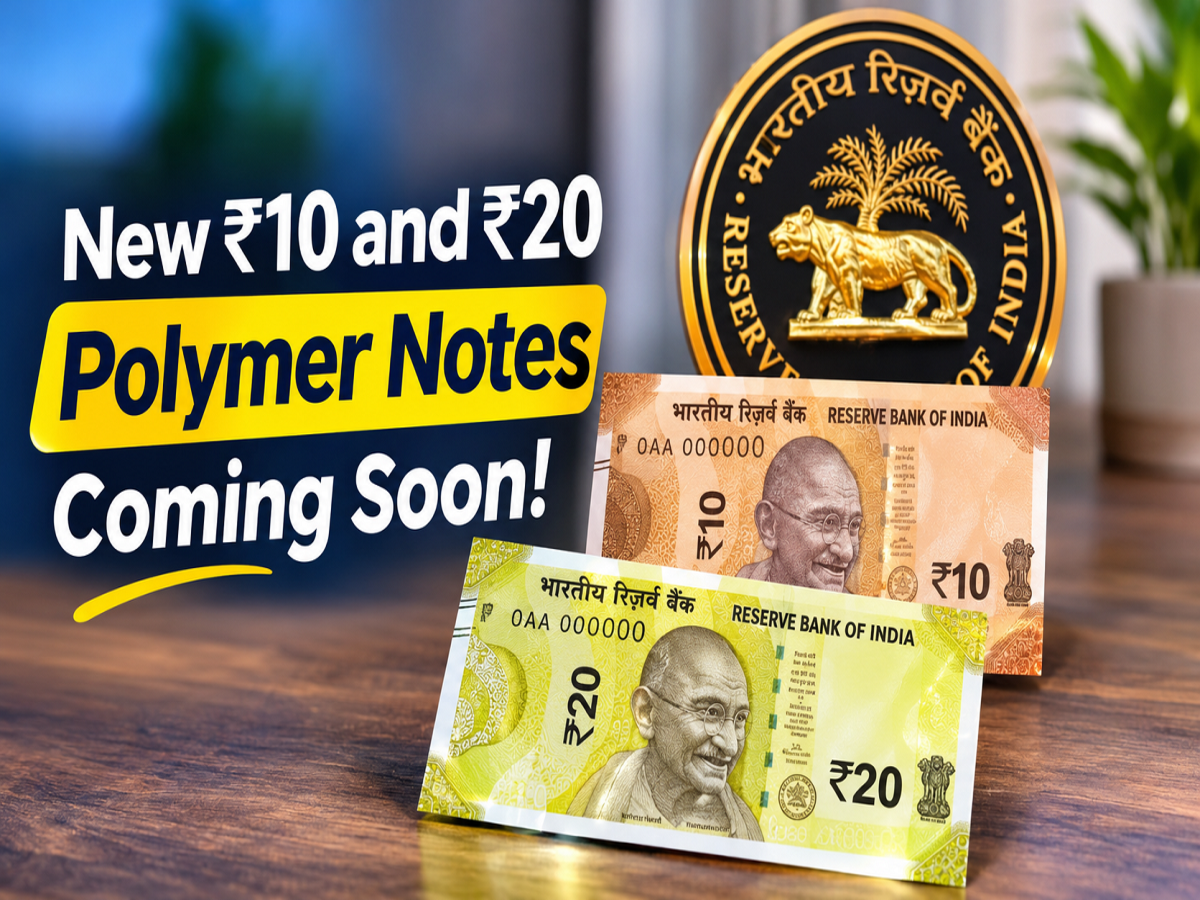
RBI Plastic Currency Notes 2027: India could soon witness an important change in the way its currency notes are manufactured. The Reserve Bank of India (RBI) is reportedly preparing to introduce polymer-based ₹10 and ₹20 banknotes from April 1, 2027, as part of a pilot project aimed at improving currency durability and reducing long-term costs.
Unlike traditional paper-based currency, the proposed polymer notes are expected to last significantly longer and withstand everyday wear and tear more effectively.
According to a Moneycontrol report citing banking industry sources, the central bank plans to retain the existing dimensions of ₹10 and ₹20 notes. This decision could help banks avoid expensive changes to ATM machines and other currency-handling equipment.
However, the proposed April 1 launch remains a reported target rather than a formally confirmed release date.
RBI Plans to Introduce Plastic Currency Notes in India
The Reserve Bank of India is reportedly moving forward with a pilot programme to test polymer banknotes in the Indian currency system.
The initial phase is expected to focus on two commonly used denominations: ₹10 and ₹20.
These notes will be manufactured using polymer material instead of the conventional paper-based substrate used for Indian currency.
Polymer banknotes are often described as plastic currency because they are produced using a specialised synthetic material.
Such notes are already used in several countries, where they are valued for their durability and resistance to moisture.
India's proposed pilot programme will help assess whether polymer currency is suitable for the country's diverse climatic conditions and extensive cash-handling network.
When Will RBI Release the New ₹10 and ₹20 Plastic Notes?
According to the report, the RBI is considering April 1, 2027, as the expected date for introducing the new polymer banknotes.
The initial distribution would take place under a pilot project rather than an immediate nationwide replacement of existing currency.
This means the new notes may initially be available only through selected banking channels or locations, depending on the final implementation plan.
The RBI has not been reported as issuing a final public confirmation of the exact launch date.
Therefore, customers should wait for an official notification before treating April 1 as a confirmed date.
New Plastic Notes Will Have the Same Size as Existing Currency
One of the most important features of the proposed polymer notes is their expected size.
The new ₹10 and ₹20 notes will reportedly retain the same dimensions as the existing notes of these denominations.
This decision has been taken to avoid unnecessary expenditure on modifying banking equipment.
When currency notes are introduced in different sizes, banks may need to adjust ATM machines, cash-processing systems and other equipment.
By maintaining the existing dimensions, the RBI could make it easier for banks to introduce the new notes without significant infrastructure changes.
The proposed approach is particularly relevant because the project is being introduced on a trial basis.
Banks Could Save Crores on ATM Modifications
The decision to retain the existing note dimensions could result in substantial savings for banks.
According to banking officials quoted in the report, introducing polymer currency in familiar sizes would reduce the need for expensive ATM recalibration.
One senior official from a public sector bank reportedly explained that maintaining the current dimensions would help avoid unnecessary expenditure during the pilot phase.
Another official estimated that a bank operating approximately 8,500 ATMs could save around ₹21.25 crore by avoiding equipment modifications.
These figures are estimates provided by banking sources and should not be interpreted as confirmed savings across the entire banking system.
Previous Currency Changes Required Expensive ATM Upgrades
India's banking industry has previously faced significant expenses when new currency notes were introduced with different dimensions.
According to the report, the introduction of redesigned ₹100 and ₹200 banknotes required adjustments to approximately 2.4 lakh ATM machines.
The total modification expenditure was estimated at around ₹100 crore.
Banks had to make technical changes so that ATM machines could properly identify, process and dispense the redesigned notes.
The proposed polymer currency programme aims to avoid repeating such expenses during its initial implementation.
Retaining the existing note dimensions could also make distribution through bank counters and compatible cash-handling equipment more convenient.
Plastic Currency Notes Could Last Up to Four Times Longer
Another major advantage of polymer currency is its expected lifespan.
According to the source report, RBI Governor Sanjay Malhotra stated in August 2026 that polymer banknotes could last approximately two to four times longer than conventional paper-based notes.
Traditional banknotes gradually deteriorate because of repeated folding, handling, moisture exposure and everyday use.
Polymer notes are generally more resistant to several forms of physical damage.
A longer lifespan could reduce the frequency with which damaged notes need to be withdrawn and replaced.
Over time, this may help lower currency replacement and handling costs.
However, the actual durability of the proposed Indian polymer notes will need to be assessed during the pilot programme.
What Makes Polymer Banknotes Different From Paper Notes?
Polymer banknotes are manufactured using specialised synthetic materials designed for currency production.
They differ from conventional banknotes in several important ways.
| Feature |
Conventional Banknotes |
Polymer Banknotes |
|---|---|---|
| Material |
Paper-based currency substrate |
Specialised polymer |
| Durability |
More vulnerable to wear |
Generally longer-lasting |
| Moisture resistance |
Can deteriorate with moisture |
More resistant to moisture |
| Lifespan |
Relatively shorter |
Potentially 2–4 times longer |
| Production |
Established printing process |
Specialised polymer printing process |
The comparison reflects general characteristics of polymer currency. The final features of India's proposed notes will depend on RBI specifications.
RBI Wants to Test Plastic Notes in Indian Weather Conditions
India experiences a wide variety of climatic conditions, ranging from extreme summer temperatures to heavy monsoon rainfall and high humidity.
These conditions can affect the durability and handling of currency notes.
The RBI's proposed pilot programme is expected to examine how polymer notes perform in different environments.
The central bank may assess factors such as physical durability, ease of handling, public acceptance and compatibility with banking equipment.
Testing will also help determine whether polymer currency can be used efficiently across India's large cash distribution network.
The findings could influence future decisions about expanding polymer banknotes to additional denominations.
Government Has Approved Printing of Polymer Notes
According to the report, the government has already approved the printing of one billion polymer banknotes each in the ₹10 and ₹20 denominations.
This represents a significant proposed volume for the initial currency programme.
However, approval for printing does not necessarily mean that the entire quantity will be released into circulation immediately.
The actual production and distribution schedule will depend on the RBI's implementation decisions and the results of the pilot project.
RBI Subsidiary Receives Bids for Polymer Currency Project
The report also states that Bharatiya Reserve Bank Note Mudran Private Limited (BRBNMPL), an RBI subsidiary responsible for currency printing, has received six bids related to the polymer banknote initiative.
Among the reported participants is polymer materials company UFlex, which has submitted a bid in partnership with US-based Spectra Systems.
The bidding process is an important step in identifying suitable technology and manufacturing arrangements.
However, the report does not establish which company will ultimately receive the contract.
Final decisions regarding procurement, production and technical specifications will depend on the relevant evaluation and approval procedures.
Will Existing ₹10 and ₹20 Notes Become Invalid?
There is no indication in the supplied report that existing ₹10 and ₹20 banknotes will lose their legal tender status because of the proposed polymer currency pilot.
Introducing a new type of banknote does not automatically mean that older notes must be withdrawn.
If polymer notes are introduced, they could circulate alongside existing banknotes, subject to RBI's official directions.
Customers should therefore avoid believing unverified messages suggesting that current ₹10 and ₹20 notes will suddenly become invalid.
Any change in legal tender status would require an official announcement from the appropriate authorities.
What Should People Expect From the New Plastic Notes?
For ordinary consumers, the proposed polymer currency could offer a more durable alternative to existing low-denomination banknotes.
The notes may be less vulnerable to everyday wear, making them suitable for frequent cash transactions.
Shopkeepers, small businesses and people who regularly handle cash could benefit from notes that remain usable for longer periods.
However, the appearance, security features and exact design of the proposed Indian polymer notes have not been established in the supplied report.
Customers should wait for official RBI images and specifications rather than relying on unofficial designs circulating online.
Final Words
The RBI's reported plan to introduce ₹10 and ₹20 polymer banknotes from April 1, 2027, could mark an important development in India's currency management system.
The proposed notes are expected to retain their existing dimensions, potentially reducing ATM modification costs for banks.
Their longer lifespan could also help reduce currency replacement expenses while offering greater durability during everyday use.
For now, the project remains a reported pilot initiative, and the final launch schedule, design and distribution arrangements will depend on official RBI announcements.