
RBI Currency Alert 2026: Fake Circular Claims ₹10, ₹20 and ₹50 Note Shortage, RBI Issues Clarification
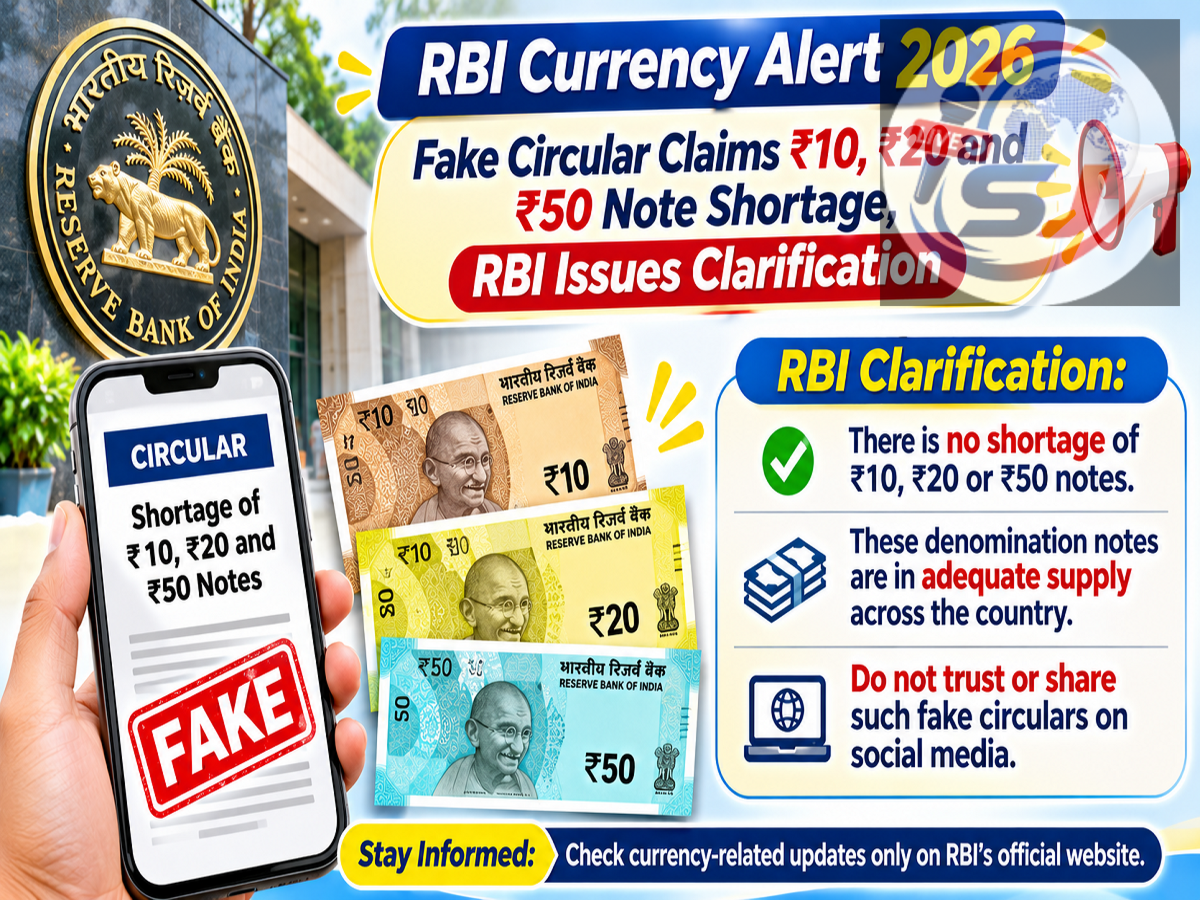
RBI Currency Note Update 2026: The Reserve Bank of India (RBI) has issued an important clarification regarding a misleading circular circulating in its name. The forged document claims that India could face a shortage of ₹10, ₹20 and ₹50 currency notes during the upcoming festive season.
The central bank has categorically rejected the claim, stating that sufficient currency notes of all denominations, including smaller denominations, are available in its vaults and currency chests.
According to the RBI's statement, certain individuals have been fraudulently using the central bank's name and logo to circulate a fake circular purportedly signed by the RBI Governor.
The RBI has advised citizens not to believe such misleading information and to rely only on announcements published through its official communication channels.
What Is the Latest RBI Currency Note Warning?
The RBI has drawn attention to a forged circular claiming that lower-denomination currency notes may become scarce during the festive season.
The document reportedly uses the RBI's official identity and falsely presents itself as a communication signed by the central bank's Governor.
The denominations mentioned in the misleading circular include:
-
₹10 currency notes
-
₹20 currency notes
-
₹50 currency notes
The central bank has clarified that the information contained in the document is misleading.
There is no basis in the supplied RBI clarification for concluding that a nationwide shortage of these denominations is expected.
RBI Confirms Sufficient Currency Notes Are Available
The most important part of the RBI's clarification concerns the availability of currency.
The central bank has stated that sufficient notes of all denominations are available in its vaults and currency chests.
This includes the smaller denominations mentioned in the forged circular.
RBI's Clarification
The reported shortage of ₹10, ₹20 and ₹50 notes is based on a forged circular. RBI says sufficient notes of all denominations are available.
₹10
No shortage announced
₹20
No shortage announced
₹50
No shortage announced
The statement is intended to address concerns that may have arisen among members of the public after the forged document circulated.
However, sufficient national currency stocks do not necessarily mean that every individual bank branch or ATM will have every denomination available at all times.
Local availability can depend on distribution and operational arrangements.
What Did the Fake RBI Circular Claim?
According to the central bank, the forged circular suggested that lower-denomination currency notes could become scarce during the upcoming festival season.
Such claims can create unnecessary concern among consumers, shopkeepers and businesses that rely on cash transactions.
Smaller notes are frequently used for everyday purchases, local transport, small retail payments and other low-value transactions.
A misleading claim about their availability may therefore attract attention, particularly during periods of increased consumer spending.
The RBI has clarified that the circulating document is not an authentic communication from the central bank.
Fake Circular Uses RBI Governor's Name and Signature
One of the concerning aspects of the incident is the reported misuse of the RBI's official identity.
The central bank says the forged circular was circulated using its name and logo and was purportedly signed by the RBI Governor.
Documents carrying official-looking letterheads, signatures or logos can appear credible to readers who do not verify their origin.
However, the presence of a government institution's logo or a senior official's name does not establish that a document is genuine.
Citizens should verify such announcements through the issuing authority's official website.
Are ₹10, ₹20 and ₹50 Notes Being Withdrawn?
The RBI's clarification does not announce the withdrawal of ₹10, ₹20 or ₹50 notes.
It addresses a false claim about a possible shortage of these denominations.
A shortage claim and a currency withdrawal announcement are different matters.
The supplied RBI statement provides no basis for suggesting that these notes have been discontinued or that citizens must exchange them.
People should avoid confusing the forged circular with an official currency policy announcement.
Why Are Smaller Currency Notes Important?
Lower-denomination banknotes play an important role in India's cash-based transactions.
They are commonly used for small purchases and payments where larger denominations may be inconvenient.
During festive periods, demand for cash can vary because of shopping, travel and other economic activities.
However, seasonal changes in cash demand should not be confused with a confirmed currency shortage.
The RBI's clarification specifically states that sufficient currency stocks are available.
How to Check Whether an RBI Circular Is Genuine
Citizens can verify banking and currency-related announcements through the Reserve Bank of India's official website.
Reserve Bank of India
rbi.org.in
Visit Official RBI Website
Before believing a message about currency availability, citizens should check whether the announcement appears in the RBI's official press releases, notifications or other authorised publications.
They should also verify the date, document number and issuing department where relevant.
A forwarded image, PDF or social media message should not be treated as authentic merely because it appears to contain an official signature.
What Should You Do If You Receive the Fake Circular?
If someone receives a message claiming that ₹10, ₹20 or ₹50 notes will soon become unavailable, they should avoid forwarding it without verification.
The following precautions can help:
-
Check the claim against official RBI announcements.
-
Avoid sharing unverified circulars through WhatsApp or social media.
-
Do not make unnecessary cash withdrawals based on rumours.
-
Be cautious about documents using official logos without a verifiable source.
-
Inform others that the RBI has clarified the currency availability position.
These steps can help prevent misleading information from spreading further.
Can Fake Currency News Lead to Financial Fraud?
Misleading financial announcements can sometimes be used to create panic or encourage people to take unnecessary actions.
For example, fraudsters may use fake government documents to persuade individuals to visit suspicious websites, share personal information or transfer money.
The supplied RBI statement concerns a forged currency-shortage circular and does not establish that any specific financial fraud has occurred in connection with it.
Nevertheless, citizens should remain cautious if an unknown person uses such a document to request banking details, OTPs or payments.
Should People Exchange Their ₹10, ₹20 or ₹50 Notes?
There is no instruction in the supplied RBI clarification requiring citizens to exchange these denominations.
The central bank has stated that sufficient notes are available.
Therefore, people should not rush to exchange or withdraw cash solely because of the forged circular.
Any genuine change in the legal status, availability or exchange arrangements for currency notes would need to be communicated through authorised RBI channels.
Conclusion
The Reserve Bank of India has rejected a forged circular claiming that ₹10, ₹20 and ₹50 currency notes could become scarce during the upcoming festive season.
The central bank has confirmed that sufficient currency notes of all denominations are available in its vaults and currency chests.
The RBI has also warned that its name, logo and the Governor's purported signature have been misused in the misleading document.
Citizens are advised to ignore unverified currency-shortage rumours and rely on official RBI publications for accurate banking and currency information.
Source Credit: Reserve Bank of India — official clarification on the forged circular concerning lower-denomination currency notes; RBI Official Website. Article independently rewritten and expanded from the supplied RBI statement.