
Ration Card Update 2026: e-PoS Machines Make Ration Distribution Digital, Know How the System Works
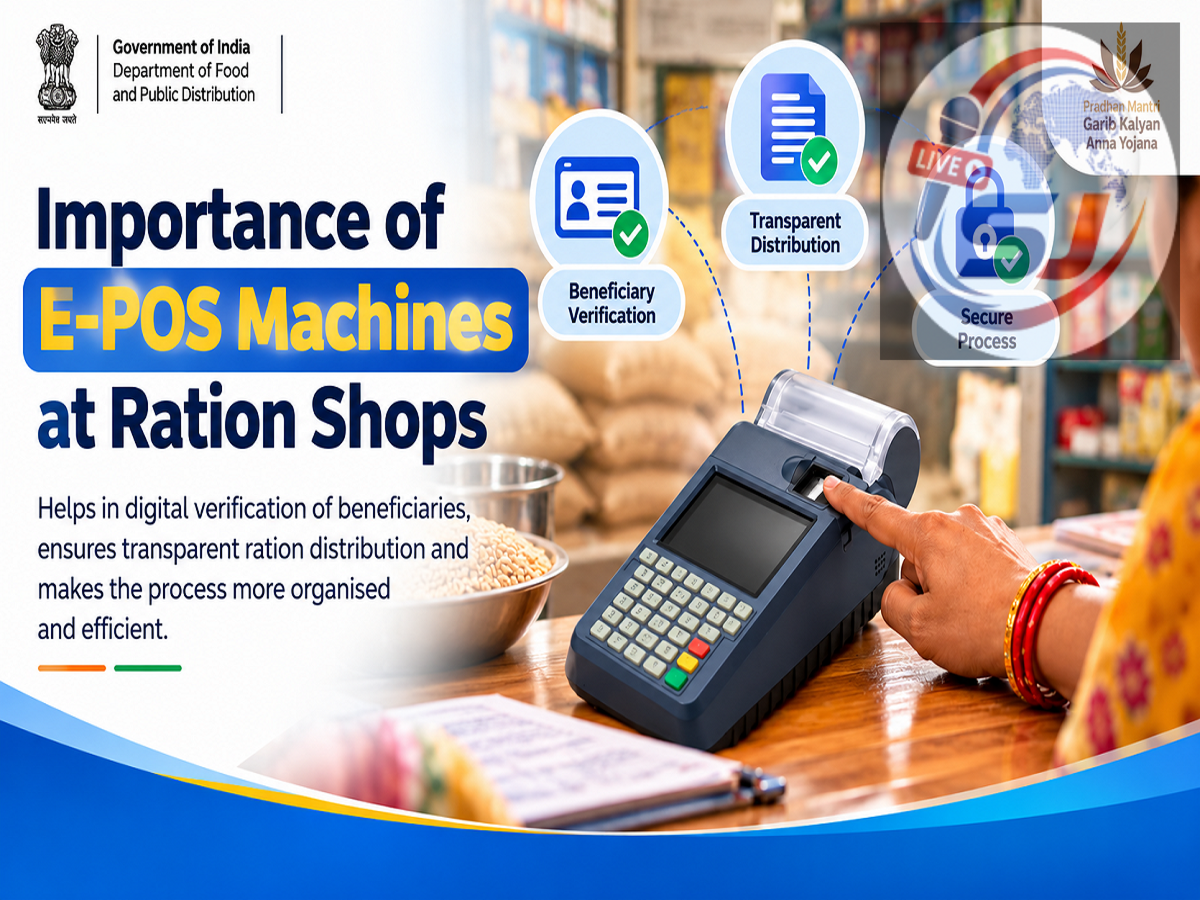
Ration Distribution Update 2026: The government is using digital technology to make the Public Distribution System (PDS) more transparent and organised. Electronic Point of Sale (e-PoS) machines installed at Fair Price Shops help record ration distribution transactions digitally, making it easier to maintain information about foodgrain distribution to eligible beneficiaries.
The Department of Food and Public Distribution (DFPD) has highlighted the role of e-PoS technology in improving the management of ration distribution records.
Under the digital system, transactions conducted through supported e-PoS devices are recorded electronically, reducing dependence on traditional paper-based registers.
The initiative is intended to strengthen record management, support accountability and improve the monitoring of subsidised and free foodgrain distribution under government welfare schemes.
What Is an e-PoS Machine in Ration Distribution?
An electronic Point of Sale machine is a digital device used at Fair Price Shops to record ration transactions.
These machines are connected to the relevant Public Distribution System infrastructure and help maintain information about foodgrain distribution.
When an eligible beneficiary visits a ration shop, the dealer uses the e-PoS system to access the relevant ration card details and process the transaction.
Depending on the state's system and applicable procedures, beneficiary verification may involve Aadhaar-based authentication or another authorised method.
Once the transaction is completed, the distribution information can be recorded electronically.
This helps create a digital record of the quantity of foodgrains distributed and other relevant transaction details.
How Does the e-PoS Ration Distribution System Work?
The general process at an e-PoS-enabled Fair Price Shop involves several steps.
-
An eligible beneficiary visits the authorised ration shop.
-
The ration dealer accesses the relevant ration card information through the e-PoS device.
-
Beneficiary verification is completed using the applicable method.
-
The system displays the available ration entitlement.
-
The dealer provides the eligible quantity of foodgrains.
-
The transaction is recorded digitally through the e-PoS system.
The exact procedure may differ depending on the state, network connectivity and applicable distribution rules.
What Information Is Recorded Through e-PoS Machines?
The digital system can help maintain records of various ration distribution activities.
| Information |
Purpose |
|---|---|
| Ration card details |
Identifies the relevant beneficiary household |
| Transaction date |
Records when foodgrains were distributed |
| Foodgrain quantity |
Shows the quantity issued |
| Commodity details |
Records the type of foodgrains supplied |
| Authentication status |
Reflects the applicable verification result |
| Fair Price Shop details |
Identifies the distributing shop |
| Transaction record |
Supports monitoring and reconciliation |
The information available may vary according to the software and state-level PDS arrangements.
Why Are e-PoS Machines Important for Ration Card Holders?
Digital transaction records can help make the ration distribution process more systematic.
Under traditional manual systems, information was often entered in registers, which could make monitoring and verification more difficult.
Electronic records can improve the availability of transaction data and help authorities review distribution activities.
For beneficiaries, the system can provide a more structured process for recording the ration they receive.
However, digitalisation alone does not guarantee that every beneficiary will receive the correct entitlement. Effective monitoring, functioning equipment and accessible grievance mechanisms remain important.
How Does e-PoS Support Free Ration Distribution?
The National Food Security Act (NFSA) provides foodgrain entitlements to eligible households under specified categories.
Under the Pradhan Mantri Garib Kalyan Anna Yojana arrangements, eligible NFSA beneficiaries receive free foodgrains according to applicable government provisions.
The standard entitlements include:
| Beneficiary Category |
Foodgrain Entitlement |
|---|---|
| Priority Household (PHH) |
5 kg per person per month |
| Antyodaya Anna Yojana (AAY) |
35 kg per household per month |
These entitlements apply to eligible beneficiaries under the respective categories.
State-specific arrangements or additional benefits may differ.
e-PoS machines help record distribution transactions against the applicable ration card entitlements.
Can Ration Be Collected From Another State?
The One Nation One Ration Card (ONORC) initiative supports portability of eligible NFSA ration entitlements across participating Fair Price Shops.
This facility is particularly useful for migrant workers and families living away from their home states.
The e-PoS infrastructure plays an important role in supporting portability transactions.
Eligible beneficiaries can use the applicable authentication process to access their entitled foodgrains at participating shops.
However, the exact transaction procedure depends on the operational arrangements and available verification methods.
What Happens if an e-PoS Machine Stops Working?
Technical problems can sometimes interrupt digital ration distribution.
These may include poor internet connectivity, device malfunction or authentication difficulties.
Beneficiaries should contact the ration dealer or the relevant food and civil supplies authority if they face such problems.
Government guidelines provide for applicable alternative procedures in certain situations, and eligible beneficiaries should not be denied their entitlements solely because biometric authentication fails.
The appropriate procedure should be confirmed with the relevant state authority.
How Can Beneficiaries Check Their Ration Card Details?
Ration card holders can access information through their respective state food department portals and authorised digital services.
They may also use the official National Food Security Portal to find relevant information and state-specific links.
The Department of Food and Public Distribution website provides additional information about foodgrain distribution policies and programmes.
Beneficiaries should use official sources when checking entitlements, ration card status or distribution-related information.
What Are the Benefits of Digital Ration Distribution?
The use of e-PoS machines can support several improvements in the distribution system.
Digital records make it easier to review transaction information and reconcile foodgrain distribution data.
They can also help authorities identify inconsistencies that may require further investigation.
Electronic systems reduce dependence on manual recordkeeping and support the broader objective of improving administrative efficiency.
For ration card holders, accurate digital records can provide greater visibility into the distribution process.
Nevertheless, strong grievance redressal, reliable connectivity and proper implementation are essential to ensure that technology works effectively for all beneficiaries.
Ration Distribution 2026: Important Information for Beneficiaries
Ration card holders should know their entitlement category and the quantity of foodgrains they are eligible to receive.
They should also check the quantity actually provided by the Fair Price Shop.
If there is a discrepancy between the entitled and distributed quantity, beneficiaries can raise the issue with the relevant state food department or authorised grievance authority.
They should avoid sharing OTPs or personal information with unknown individuals claiming to offer additional ration benefits.
Conclusion
The introduction of e-PoS machines has helped modernise ration distribution by enabling electronic recording of transactions at Fair Price Shops.
The technology supports more organised record management, improved monitoring and digital administration of foodgrain distribution.
For ration card holders, the key benefit is a digitally recorded distribution process that can support greater transparency and accountability.
Beneficiaries should continue to verify their foodgrain entitlements and report any irregularities through official channels.
Editorial note: This article expands on the supplied Department of Food and Public Distribution awareness message. e-PoS procedures, verification methods and grievance channels may differ by state. The message does not announce a new ration entitlement or a change in existing foodgrain quantities.