
Ration Card Rules 2026: Know How Much Free Foodgrain Your Family Is Entitled to Receive Every Month
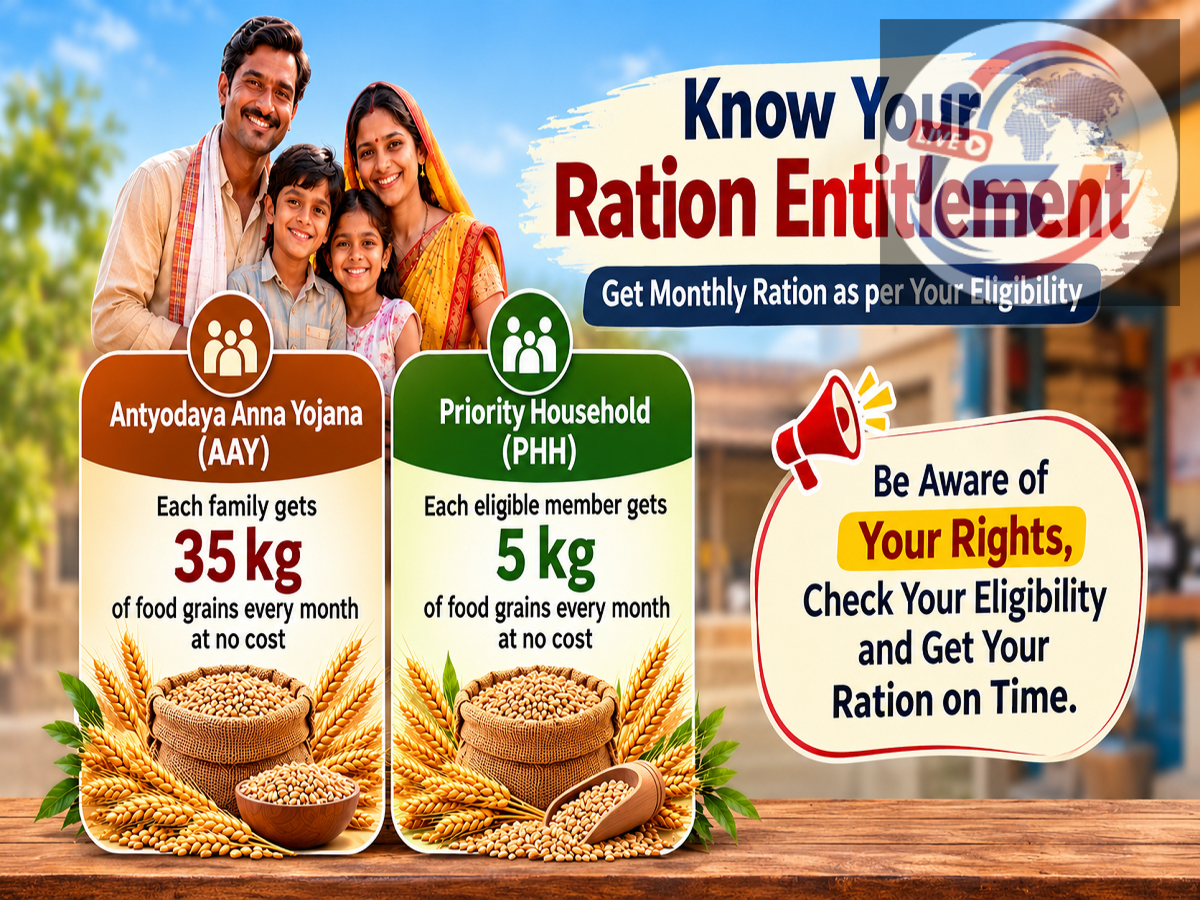
Ration Card Update 2026: Millions of families across India depend on the Public Distribution System (PDS) to meet their monthly food requirements. However, many beneficiaries may not know exactly how much foodgrain they are entitled to receive under government schemes. Understanding these entitlements is important because it helps households collect their full allocation and identify possible irregularities at fair price shops.
The Department of Food and Public Distribution, Government of India, has shared an awareness message encouraging ration cardholders to understand their eligibility-based foodgrain entitlements. The department has also urged people to share accurate information with others so that eligible families can better understand their rights.
The message highlights an important question: Do you know how much ration your household should receive every month according to its eligibility?
How Much Free Ration Can Beneficiaries Receive in 2026?
Under the National Food Security Act (NFSA), eligible households are generally covered under two major categories: Priority Households (PHH) and Antyodaya Anna Yojana (AAY).
The amount of foodgrain distributed depends on the category under which a household is registered.
| Ration Card Category |
Monthly Foodgrain Entitlement |
|---|---|
| Priority Household (PHH) |
5 kg per eligible person |
| Antyodaya Anna Yojana (AAY) |
35 kg per eligible household |
For example, a Priority Household with four eligible members can receive 20 kg of foodgrain every month. Similarly, a family with five eligible members can receive 25 kg monthly.
For AAY beneficiaries, the entitlement is fixed at 35 kg per household each month, irrespective of the number of family members.
These are central NFSA entitlements. Additional state-level benefits, where applicable, may vary.
Is Ration Available Free of Cost?
The central government provides foodgrains free of cost to eligible NFSA beneficiaries under the Pradhan Mantri Garib Kalyan Anna Yojana (PMGKAY).
The government extended the free-foodgrain arrangement for five years beginning January 1, 2024, covering the period through December 2028.
This means eligible beneficiaries do not have to pay for their central NFSA foodgrain entitlement during this period.
However, the type of grain supplied, such as rice, wheat or other eligible foodgrains, depends on the applicable allocation and distribution arrangements.
How Can Ration Cardholders Check Their Monthly Entitlement?
Beneficiaries can check their ration card details and monthly foodgrain allocation through official government platforms.
The Mera Ration 2.0 mobile application provides several useful services, including information about ration cardholders, monthly foodgrain entitlements, previous transactions and nearby fair price shops.
According to official information, the application allows beneficiaries to view the quantity and type of foodgrain they are eligible to receive.
National Food Security Act+1
To check ration details, beneficiaries can follow these steps:
-
Visit the official National Food Security Portal at nfsa.gov.in.
-
Open the section containing ration card information for different states and Union Territories.
-
Select the relevant state.
-
Follow the instructions on the state government's ration card portal.
-
Check the household's registered members, ration card category and available entitlement information.
Beneficiaries can also use the Mera Ration 2.0 application to access their foodgrain entitlement details.
What Should You Do If the Ration Dealer Provides Less Foodgrain?
Sometimes, beneficiaries may face problems such as receiving less foodgrain than their entitlement, poor-quality grain or difficulties collecting their monthly allocation.
In such situations, ration cardholders can raise complaints through the appropriate government grievance redressal mechanism.
The NFSA provides for grievance redressal arrangements at district and state levels. Beneficiaries can approach the relevant food and civil supplies department or designated grievance officer.
The official NFSA portal also provides links to state grievance systems and facilities for submitting feedback about ration distribution.
Beneficiaries should retain available transaction receipts or distribution records when reporting discrepancies.
Can Beneficiaries Collect Ration Outside Their Home State?
Another important facility is the One Nation One Ration Card (ONORC) system.
This arrangement enables eligible NFSA beneficiaries to access their foodgrain entitlements from participating fair price shops across India, subject to applicable authentication requirements.
The facility is particularly useful for migrant workers and families living away from their registered home districts or states.
Beneficiaries can use their existing eligible ration cards instead of applying for separate cards solely because they have moved to another state.
Why Is It Important to Know Your Ration Card Rights?
Awareness of ration entitlements helps beneficiaries understand the quantity of foodgrain they should receive and whether the distribution matches their eligibility.
The Department of Food and Public Distribution's awareness message encourages citizens to learn about their rights and share reliable information with others.
Ration cardholders should regularly verify their household details, check their monthly allocations and report any unexplained shortage.
Important Reminder: Eligible PHH beneficiaries are entitled to 5 kg of foodgrain per person monthly, while AAY households receive 35 kg per family monthly. These central entitlements are provided free under the current PMGKAY arrangement.
For accurate information, citizens should rely on official government websites and verified departmental announcements rather than unconfirmed social media messages.
Source Credit: Department of Food & Public Distribution, Government of India — Official awareness post; National Food Security Portal (nfsa.gov.in); Department of Food & Public Distribution (dfpd.gov.in).