
Rajasthan MAA Yojana New Rule: Hospitals Told to Upload ICU Patient and Doctor Photos Every 8 Hours
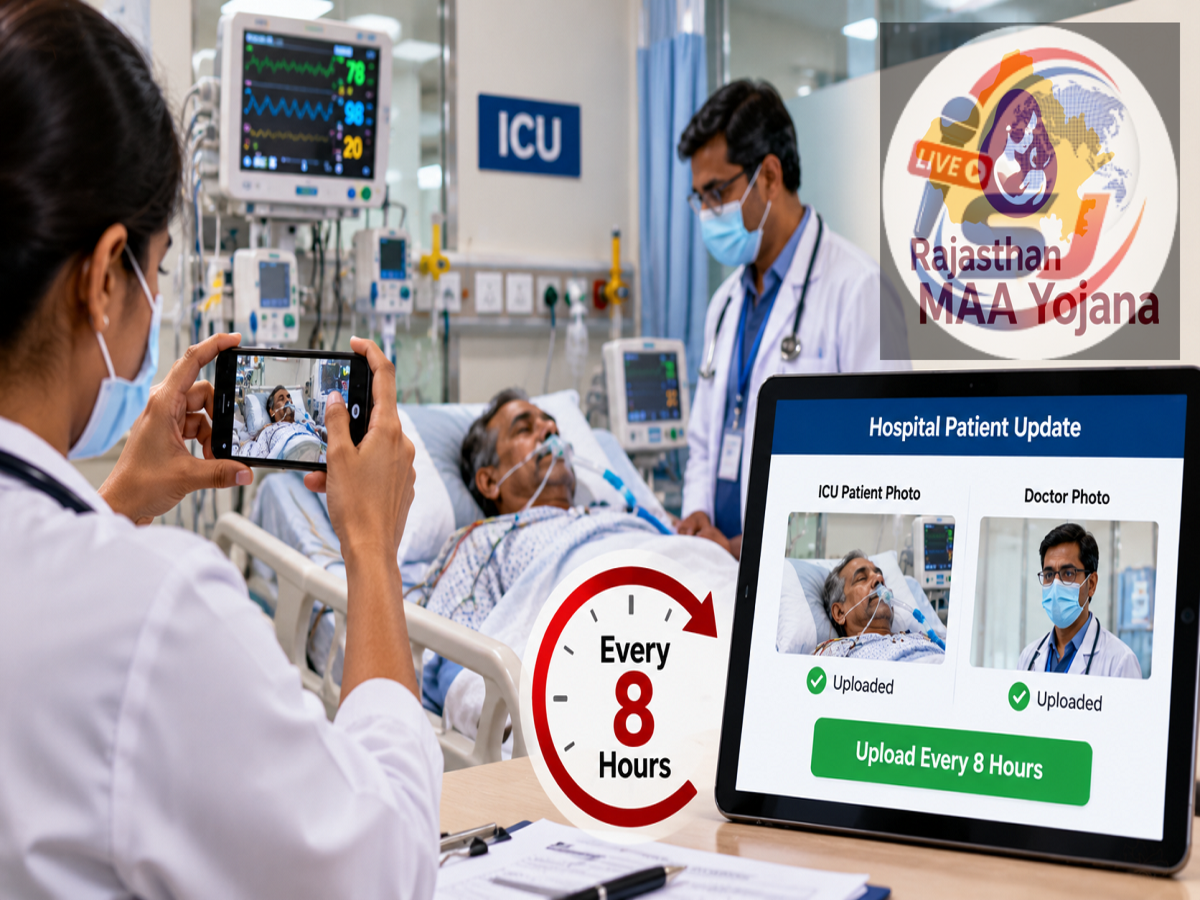
Rajasthan MAA Yojana Update 2026: Private hospitals participating in Rajasthan's Mukhyamantri Ayushman Arogya (MAA) Yojana have been directed to upload geo-tagged photographs of certain patients and their treating doctors to the scheme's online portal every eight hours.
According to a report published on September 29, 2026, the Rajasthan State Health Assurance Agency issued instructions to introduce the monitoring requirement from September 30.
The directive covers patients receiving treatment in intensive care units (ICUs) and certain day-care facilities under the state-supported healthcare scheme.
However, the decision has triggered opposition from private hospitals and medical professionals, who argue that the requirement could create unnecessary administrative pressure and interfere with patient care.
The Rajasthan Private Hospitals and Nursing Homes Society has reportedly raised objections and warned that it may approach the court if the instructions are not withdrawn.
Here is a detailed explanation of the proposed monitoring system, the patients covered and why healthcare professionals are opposing the directive.
Rajasthan MAA Yojana: What Is the New Eight-Hour Photo Rule?
Under the reported directive, private hospitals empanelled with the Mukhyamantri Ayushman Arogya Yojana must upload photographs of ICU patients along with their treating doctors at eight-hour intervals.
These photographs must be geo-tagged and submitted through the MAA Yojana portal.
Geo-tagging attaches location information to an image, helping authorities verify where the photograph was taken.
The order reportedly requires the patient's hospital bed and the medical monitoring equipment positioned nearby to be clearly visible.
The monitor should display relevant clinical parameters, including pulse rate, oxygen saturation and other patient-monitoring information.
The requirement is also linked to transaction IDs generated by private hospitals for treatment under the scheme.
According to the report, the new system is intended to strengthen verification of hospital treatment records.
However, the exact administrative purpose, implementation safeguards and penalties for non-compliance were not fully detailed in the supplied report.
What Information Must Hospitals Upload?
The reported requirements involve several specific elements.
| Requirement |
Details |
|---|---|
| Patients covered |
ICU patients and specified day-care patients |
| Upload frequency |
Every eight hours for ICU monitoring |
| Photograph |
Patient and treating doctor |
| Hospital equipment |
Bed and monitoring equipment should be visible |
| Medical parameters |
Pulse rate, oxygen saturation and other displayed readings |
| Location verification |
Geo-tagged photograph |
| Upload destination |
MAA Yojana online portal |
| Reported implementation date |
September 30, 2026 |
These details are based on the September 29 media report. The latest implementation status and any subsequent modifications have not been independently verified.
The requirement represents a significant change in how private hospitals may need to document treatment provided under the state health scheme.
For ICU patients, where medical conditions can change rapidly, hospitals may need to incorporate the photo submission process into existing clinical workflows.
Which Patients Are Covered Under the New Rule?
The directive is not limited to patients admitted to intensive care units.
According to the report, certain categories of day-care patients are also covered.
These include patients undergoing radiotherapy for cancer, individuals receiving dialysis for kidney-related conditions and patients receiving specified neurological day-care treatments.
Day-care procedures generally involve medical treatment that does not require a conventional overnight hospital stay.
Under the reported instructions, hospitals must upload geo-tagged photographs of these patients with their treating doctors.
However, the supplied report does not clearly establish whether the same eight-hour interval applies to every day-care procedure.
Hospitals would need to consult the official order for category-specific requirements.
Why Has Rajasthan Introduced Geo-Tagged Photo Monitoring?
The reported measure appears intended to strengthen treatment verification under the MAA Yojana.
Government-supported health schemes rely on accurate hospital records to determine whether services have been provided and whether claims meet the applicable requirements.
Photographic documentation and location verification can help authorities review treatment-related information.
The use of geo-tagged images may also make it easier to establish whether a photograph was taken at the registered healthcare facility.
However, the supplied report does not include a detailed official explanation of the evidence supporting the eight-hour interval or why photographs of treating doctors are necessary at that frequency.
It also does not explain how the state intends to protect sensitive patient images and medical information uploaded to the portal.
These questions are particularly important because ICU photographs may contain identifiable patients and confidential health information.
Private Hospitals Oppose the New MAA Yojana Directive
The reported instructions have faced criticism from representatives of Rajasthan's private healthcare sector.
Dr Vijay Kapoor, president of the private hospitals and doctors' association cited in the report, described the requirement as impractical.
He argued that asking senior doctors to appear in photographs with admitted patients every eight hours would create an unreasonable expectation of continuous availability.
According to Kapoor, the system could effectively require doctors to demonstrate their physical presence throughout the day and night.
The association has questioned whether this is a practical way to monitor treatment quality and professional accountability.
Doctors already work within hospital duty schedules, and patient care may involve different members of a medical team at different times.
The association believes that a rigid photographic requirement could place additional pressure on medical professionals.
Doctors Raise Concerns About Working Hours
One of the main objections concerns the potential impact on doctors' working conditions.
Kapoor reportedly pointed out that courts and human rights organisations have previously expressed concerns about excessive working hours among medical professionals, particularly resident doctors.
He argued that requiring repeated photographic verification could add to existing workloads.
The association maintains that ensuring proper treatment and professional accountability is essential.
However, it questions whether mandatory photographs at fixed intervals are an appropriate method of achieving those goals.
From the doctors' perspective, treatment monitoring should not create administrative requirements that interfere with clinical responsibilities.
The report does not clarify whether the same treating doctor must appear in every photograph or whether an on-duty doctor may fulfil the requirement.
That distinction could be important for hospitals operating around-the-clock shift systems.
What Could the Rule Mean for ICU Patients?
For patients, the reported directive raises questions about privacy, dignity and the practical management of treatment.
ICU patients are often critically ill and may be unconscious or unable to provide consent for routine photographs.
Repeatedly photographing patients could therefore require clear rules governing consent, authorised access and secure storage.
Photographs showing bedside monitors may also reveal sensitive medical information.
Hospitals would need to ensure that any images are handled in accordance with applicable privacy and data-protection obligations.
Another consideration is whether the photo-upload requirement could interrupt treatment or create additional tasks for healthcare staff.
At the same time, accurate documentation can help authorities verify services funded under public healthcare schemes.
The challenge is to ensure that administrative monitoring does not compromise patient welfare.
Will Rajasthan's Private Hospitals Challenge the Order in Court?
According to the September 29 report, the association has indicated that it may take legal action against the directive.
Dr Vijay Kapoor reportedly said the organisation would first submit a formal representation to the relevant government authorities.
The association planned to request withdrawal of the instructions and allow approximately one week for a response.
If the authorities did not take satisfactory action within that period, the association said it could file a writ petition before the appropriate court.
However, this was a statement of intended action at the time of the report.
The supplied information does not establish whether a petition was subsequently filed, whether a court issued any directions or whether the state government modified the requirement.
What Is Mukhyamantri Ayushman Arogya Yojana?
Mukhyamantri Ayushman Arogya Yojana is Rajasthan's state-supported health assurance programme intended to improve access to medical treatment for eligible beneficiaries.
The scheme provides cashless treatment for covered medical services at empanelled healthcare facilities, subject to its eligibility conditions and approved treatment packages.
Both government and participating private hospitals play an important role in delivering services under the programme.
The system involves treatment authorisation, documentation and claim verification.
For private hospitals, compliance with scheme rules is important for processing treatment claims and maintaining empanelment.
Changes to reporting requirements can therefore affect hospital administration as well as the patient experience.
Is the Eight-Hour Photo Rule Currently in Effect?
The media report states that the Rajasthan State Health Assurance Agency directed implementation from September 30, 2026.
However, the report was published before the stated implementation date.
As of October 8, the supplied information does not confirm whether the order has been implemented without changes, suspended, amended or challenged in court.
Hospitals and beneficiaries should therefore consult the latest official circulars issued by the Rajasthan State Health Assurance Agency.
The reported effective date should not be confused with independent confirmation of the rule's present operational status.
Rajasthan MAA Yojana Update: What Happens Next?
The reported directive has brought attention to the balance between healthcare accountability and the practical realities of hospital operations.
The state health agency has sought additional documentation involving ICU and specified day-care patients.
Private hospital representatives, meanwhile, have argued that the system could create unnecessary pressure on doctors and affect hospital workflows.
The association has also raised the possibility of legal proceedings if the government does not reconsider the instructions.
Further clarification may be needed on patient consent, medical data protection, doctor availability, reporting frequency and the consequences of failing to upload photographs.
The key takeaway: Rajasthan's MAA Yojana introduced a reported requirement for private hospitals to upload geo-tagged photographs of ICU patients and treating doctors every eight hours from September 30, 2026. The measure has faced opposition from private healthcare representatives, and its current implementation status requires confirmation from official authorities.
Disclaimer: This article is based on the supplied September 29, 2026 media report. Any subsequent government amendments, implementation decisions or court proceedings have not been independently verified.