PMMVY Scheme: Eligible Mothers Can Get ₹5,000 for First Child and ₹6,000 for Second Girl Child, Know How to Apply
Pregnancy and childbirth can bring additional financial pressure on families, particularly when a woman needs more rest, nutritious food, regular health check-ups and medical care. To provide maternity support to eligible women, the government operates the Pradhan Mantri Matru Vandana Yojana (PMMVY).
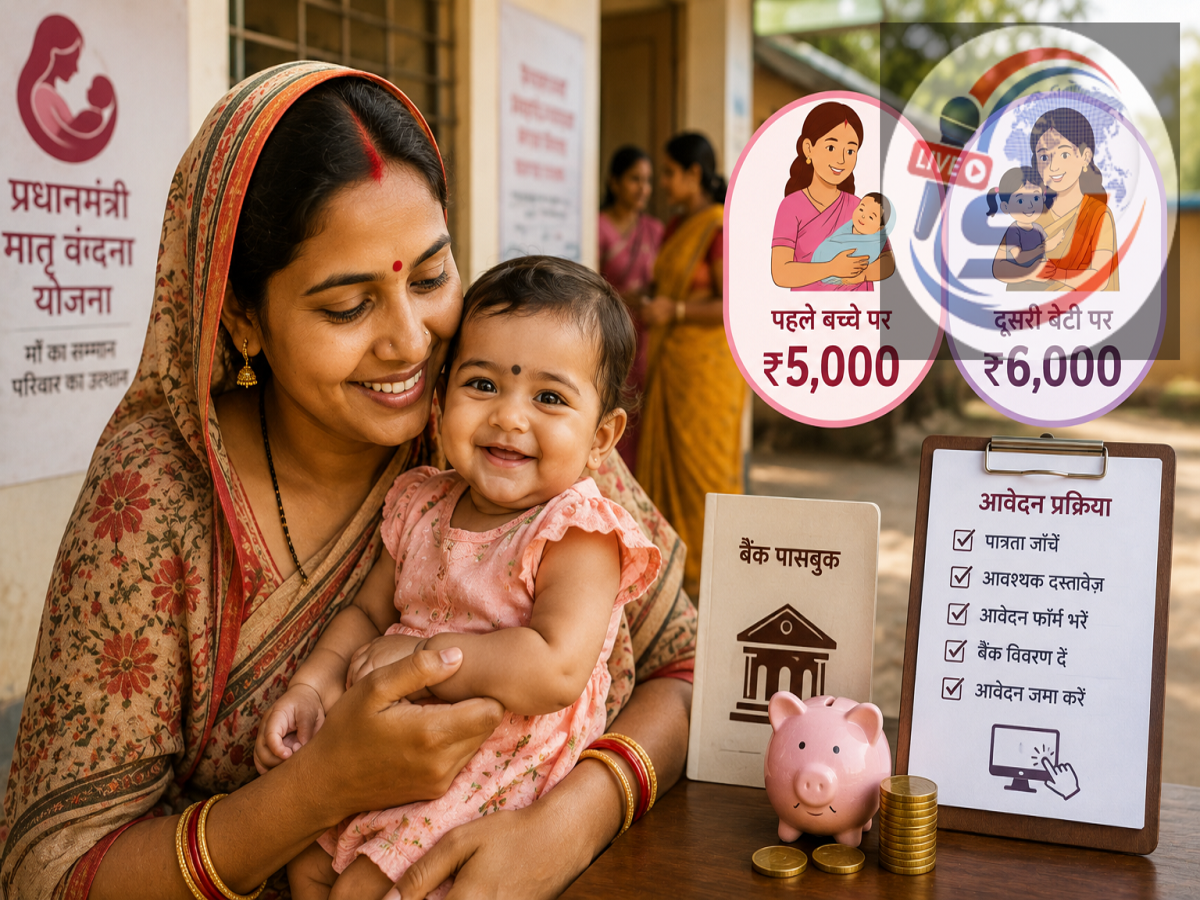
Under the current framework, eligible beneficiaries can receive ₹5,000 for the first child, subject to fulfilling the prescribed conditions. Under the expanded provisions of PMMVY 2.0, financial assistance of ₹6,000 is also available for an eligible second child when the second child is a girl.
The benefit is transferred directly to the beneficiary through the Direct Benefit Transfer (DBT) mechanism, subject to successful registration, eligibility verification and fulfilment of the required conditions.
However, the benefit is not automatically available to every pregnant woman. Applicants should understand the eligibility criteria, instalment conditions and registration process before applying.
What Is Pradhan Mantri Matru Vandana Yojana?
PMMVY is a maternity benefit programme that has been implemented across the country since January 1, 2017.
The scheme seeks to provide financial support during pregnancy and after childbirth while encouraging eligible beneficiaries to access appropriate maternal and child healthcare services.
Pregnancy can affect a woman's ability to continue regular work, especially in occupations involving physical labour. At the same time, expenses related to nutrition and healthcare can increase.
PMMVY is intended to provide partial financial support during this period rather than function as a complete replacement for income or maternity wages.
How Much Money Is Available Under PMMVY?
Under the current provisions, an eligible beneficiary can receive ₹5,000 for the first child.
The assistance is released in two instalments, subject to fulfilment of specified conditions.
The first instalment is ₹3,000, while the second instalment is ₹2,000.
For an eligible second child who is a girl, PMMVY 2.0 provides a maternity benefit of ₹6,000, subject to the prescribed conditions.
This additional provision is intended to support maternal health while also promoting a positive approach towards the girl child.
When Is the First ₹3,000 Instalment Paid?
For the first child, the initial instalment of ₹3,000 is linked to pregnancy registration and the prescribed antenatal care requirements.
The beneficiary must fulfil the conditions specified under the scheme and provide the necessary records.
Registering the pregnancy at the appropriate time is therefore important. Delaying registration or required health-related procedures can create difficulties when the beneficiary later seeks payment.
Applicants should remain in contact with their Anganwadi or healthcare worker so that required records are properly maintained.
How Do You Get the Remaining ₹2,000?
The second instalment of ₹2,000 is linked to conditions that apply after the birth of the child.
These include registration of the child's birth and completion of the prescribed initial vaccination requirements, including the applicable vaccination cycle up to 14 weeks, according to the scheme conditions.
Once the requirements are fulfilled and the information is successfully verified, the second instalment can be processed for the eligible beneficiary.
Together, the two instalments provide a total maternity benefit of ₹5,000 for the first child.
How Does the ₹6,000 Benefit for a Second Girl Child Work?
One of the significant changes under PMMVY 2.0 is the extension of financial assistance to the second child when that child is a girl.
An eligible beneficiary can receive ₹6,000 for the second girl child, subject to the conditions laid down under the scheme.
The benefit is provided as a single instalment after the required pregnancy-related conditions, birth registration and prescribed vaccination requirements are fulfilled.
Families should note that the provision specifically concerns an eligible second child who is a girl. It should not be interpreted as a ₹6,000 benefit automatically available for every second pregnancy.
Who Can Claim Benefits Under PMMVY?
PMMVY focuses on eligible women belonging to specified socially and economically disadvantaged categories.
Depending on the applicable guidelines, eligible categories can include women belonging to Scheduled Castes and Scheduled Tribes, women with disabilities and beneficiaries holding eligible ration or welfare cards.
Women covered under schemes or databases such as Ayushman Bharat-PMJAY, e-Shram, PM-KISAN and MGNREGA may also qualify where they meet the prescribed PMMVY conditions.
Women from families meeting the specified income criterion, including an annual family income below ₹8 lakh, may also fall within the eligible categories under the applicable guidelines.
Possessing one of these documents or falling into a particular category does not remove the need to fulfil the remaining PMMVY conditions.
Who May Not Be Eligible?
PMMVY is not intended to duplicate maternity benefits already being received through certain employment arrangements.
Women who are in regular employment with the Central Government, state governments or Public Sector Undertakings, or who are receiving similar maternity benefits under applicable law or employment rules, may not qualify under PMMVY.
Eligibility should therefore be checked according to the applicant's individual circumstances rather than assuming that pregnancy alone qualifies someone for payment.
How to Apply for PMMVY Online
Eligible women can use the official PMMVY portal to access the registration system.
The online system provides a self-registration facility, allowing eligible beneficiaries to initiate the process digitally.
Applicants should provide accurate personal information, pregnancy-related details and other information requested by the portal.
Entering the correct mobile number is particularly important because it may be used for communication and verification during the application process.
You Can Also Get Help From Anganwadi or ASHA Workers
Women who are not comfortable completing the online process themselves can seek assistance through the local support network.
An Anganwadi Worker or ASHA worker can help eligible women understand the registration requirements and complete the necessary formalities.
This can be particularly useful in rural areas or for beneficiaries who may have difficulty accessing the online system.
It is advisable to contact the relevant worker early in the pregnancy rather than waiting until after childbirth to begin checking eligibility and documentation.
Keep Aadhaar and Bank Details Correct
Accurate banking and identity information is important because the financial assistance is transferred through DBT.
Applicants should ensure that their name and other information are correctly recorded and that the bank or post-office account details submitted with the application are valid.
Where Aadhaar-based payment requirements apply, beneficiaries should ensure that the necessary Aadhaar seeding and related banking formalities have been completed.
Even a small mismatch in information can potentially delay verification or payment, so applicants should review the details carefully.
Why Pregnancy Registration and ANC Check-Ups Matter
A common misconception is that simply submitting an application guarantees the ₹5,000 benefit.
It does not.
Payment is linked to both eligibility and fulfilment of prescribed maternal and child health conditions.
Timely pregnancy registration and antenatal check-ups are therefore important not only for healthcare but also for satisfying the relevant scheme requirements.
Similarly, after childbirth, parents should ensure that birth registration and the prescribed vaccination schedule are completed on time.
PMMVY Is More Than a Cash Benefit
The objective of PMMVY goes beyond transferring money into a beneficiary's account.
The programme is intended to encourage appropriate care during pregnancy, promote maternal and child nutrition and provide some financial relief at a time when the mother's ability to work may be affected.
For an eligible family, the support can help with some of the additional expenses associated with pregnancy and early childcare.
The scheme also encourages beneficiaries to stay connected with formal healthcare and maternal support systems.
Check Eligibility Early to Avoid Delays
Families expecting a child should avoid waiting until the final stages of pregnancy to learn about PMMVY.
An eligible woman can receive ₹5,000 for the first child in two instalments, while the current framework also provides ₹6,000 for an eligible second child when the child is a girl.
However, both benefits depend on prescribed eligibility and health-related conditions.
Women who believe they qualify should check the requirements through the official PMMVY portal or contact their local Anganwadi or ASHA worker. Keeping pregnancy registration, Aadhaar details, bank information, birth registration and vaccination records updated can make the application and verification process smoother.
Most importantly, applicants should rely on official government channels and avoid individuals who demand money in exchange for guaranteeing approval or faster payment under PMMVY.